
Falcon USD, a rapidly growing “synthetic dollar,” backed by controversial market maker DWF Lab, is upset just a few months after its launch.
The $540 million market cap USDF is “backed by diversified crypto assets,” but concerns about the quality of some of its collateral have led to concerns about the first collapse of a major stubcoin since the collapse of Do Kwon’s UST.
According to CoinMarketCap data, the USDF price was off PEG in the morning, reaching a minimum of $0.98.
Read more: Does Kwon’s lawyer say they’re ready? Then ask for more time
Decentralized Finance (DEFI) risk advisor Llamarisk highlighted the USDF issue in a post in the Resupply Governance Forum regarding onboarding as collateral for the lending platform that was the victim of a $9 million hack last month.
This post, published in May, is a lack of transparency. Among other factors, the questionable quality of assets that can be used as USDF backing.
Andrei Grachev, managing partner at DWF Labs, has explained Falcon’s “reserves, transparency and risk management strategy” to address new concerns about posting to X.
Grachev can include “assets that can be hedged properly by Perps” in USDF support, but 89% consists of Stablecoins and Bitcoins (BTC), with around 11% being supported by “Altcoins.”
He also suggests that “some competitors” are running “coordinated FUD against us.”
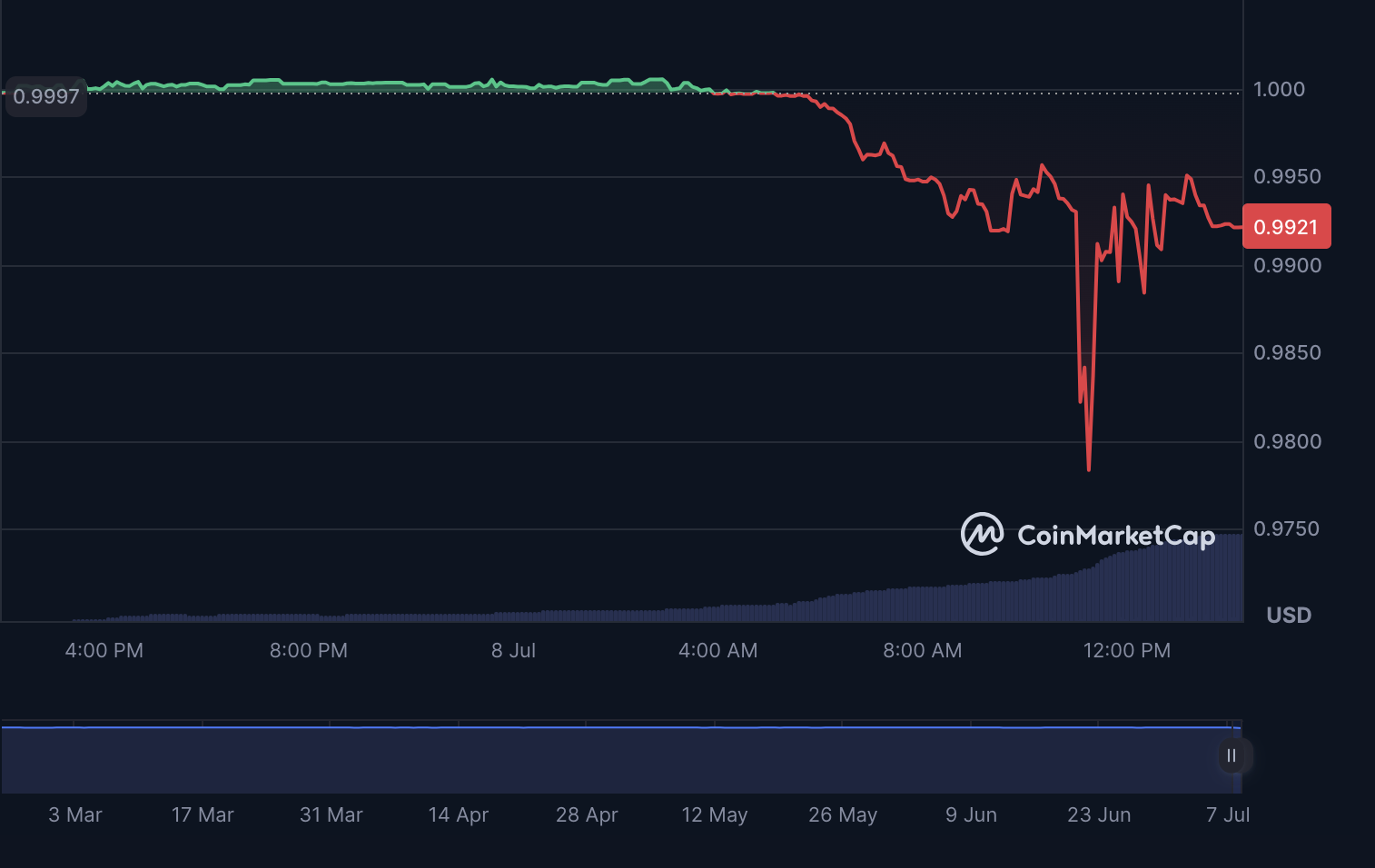
According to CoinMarketCap, the USDF price reached a low of $0.98.
According to Falcon Finance’s so-called “Transparency Dashboard,” USDF is 117% secured by a $635 million cryptocurrency.
However, $610 million of these reserves are held off chain, with only two categories: “Stablecoins”, just 15%, and “other” constitute the remainder.
On-Chain Assets Total only $25 million.
In its latest preliminary report dated yesterday, Assessor HT Digital states that the value of the asset is “based on the amount of collateral in the timestamp above, multiplied by the price data obtained from Coingecko at the end of the previous day.”
It does not mention the impact of liquidity, volatility, or estimated price on the liquidation of backing assets.
HT Digital also states that “we are not carrying out any steps regarding the management and ownership of the assets mentioned above, as well as whether security is placed on these assets.”
Replying to X’s criticism, Grachev said, “They are “I learned a lot todayand the dashboard will be updated to include itemizations with Stablecoins, BTC and Altcoins “by next week.”
DWF Lab
Despite being a relatively newcomer in the Crypto Market Making scene, DWF Labs has already seen a significant proportion of scandals.
If there is a suspicion of a lack of transparency, a hard-working crypto token for pumping and dumping, or if accused of a laundry transaction by a former Binance employee, the DWF was not far from the controversy.
In October, when the partner was accused, the company was scrutinized. Looking to drug potential new hires in Hong Kong.
Read more: DWF Labs partners are said to be trying to adopt drugs for job seekers
DWF theorizes that they may be using illiquid or low cap tokens that have market arrangements.
Similar tactics used by Curve Finance founder Michael Egorov exploded in an epic liquidation cascade that saw the price of CRV tokens plummeted by 30% last year.