


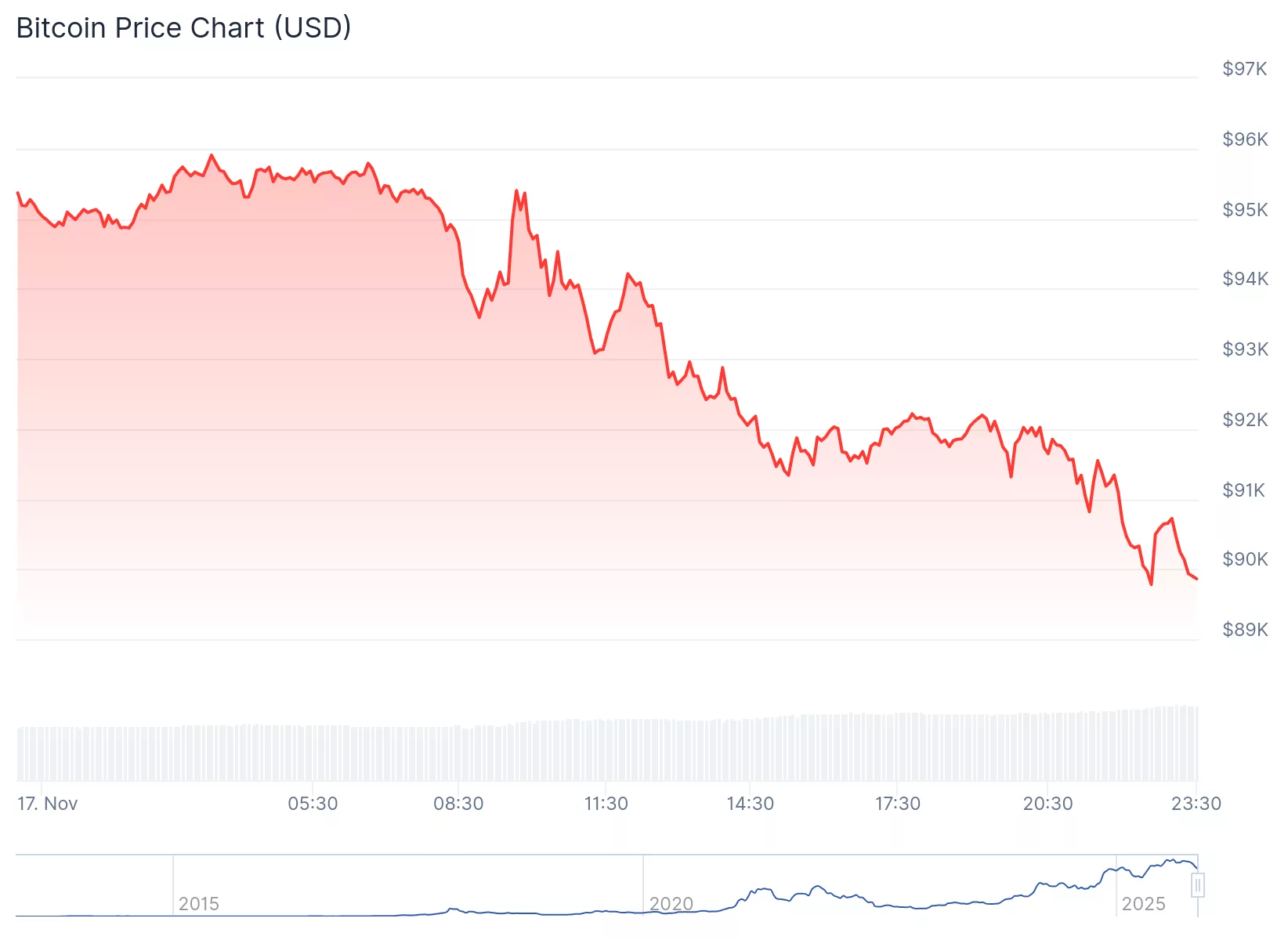
Bitcoin fell below $90,000, intensifying a month-long slide that erased 2025 gains and shook confidence across the digital asset space.
summary
- Bitcoin fell below $90,000, wiping out gains from 2025 and continuing a month-long decline from its October high of over $126,000.
- The downturn is believed to be due to rising economic concerns, including uncertainty over interest rate policy and overvalued speculative markets, causing traders to reassess risks.
- The October selloff resulted in more than $19 billion in liquidations, and financial institutions and digital asset government bonds are under pressure to adjust their positions as support levels decline, with individual participation waning.
The leading cryptocurrency fell as much as 2.4% during the Asian session, widening its decline from a peak of more than $126,000 in early October, Bloomberg reported. At last check, Bitcoin was hovering around $89,847. See below.
You may also like: BNB falls to $895 as technical indicators show weakness following President Trump’s controversial CZ pardon
The last time Bitcoin traded below this level was in April, when it finally plummeted to $74,400, when President Donald Trump’s tariff plans roiled global financial markets.
The downturn comes amid mounting economic pressures, including renewed concerns about interest rates and overvalued speculative markets. Risk sentiment worsens, leaving Bitcoin exposed to further losses as traders reassess the likelihood of the Federal Reserve cutting interest rates in December and stock markets retreat from recent highs.
$19 billion crash, liquidations shake investor confidence
Cryptocurrency markets have struggled to find stability since the October crash led to more than $19 billion in liquidations and wiped out more than $1 trillion in market value.
While institutional ownership is generally strong, individual participation and spot-on buying is waning, especially among speculative altcoins.
According to recent data from Coinglass, approximately $950 million in long and short positions were liquidated in the past 24 hours.
Digital asset treasuries, including Michael Saylor’s Strategy, which amassed large crypto holdings earlier this year, are under pressure to reassess their positions as prices fall below key support levels.
what’s next
Option traders are betting on further declines, with demand for downside protection at the $85,000 and $80,000 levels dominating recent market activity.
We expect individual investors, businesses, and governments to take advantage of this decline and accumulate Bitcoin.
For example, El Salvador acquired 1,091 Bitcoins worth over $100 million, adding them to its ever-growing crypto reserves. Since making Bitcoin legal tender in 2021, the country has consistently purchased Bitcoin during economic downturns, with the aim of building a long-term digital asset trove.
With this latest acquisition, El Salvador now holds a total of 7,474 BTC, worth approximately $688 million, further solidifying its position as one of the largest holders of Bitcoin among nations.
read more: The future of stablecoins in Southeast Asia: Grab, StraitsX explore Web3 integration