
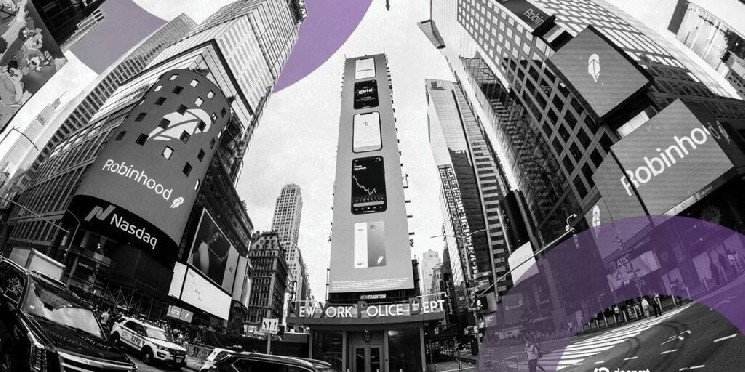
Robinhood will enable “custom combos” for users betting on pro football, highlighting efforts to flesh out its prediction market offerings as gambling heats up in the U.S. in tandem with the NFL postseason, the company announced Friday.
The contract is regulated by the Commodity Futures Trading Commission and is similar to parlays offered by traditional gaming companies DraftKings and FanDuel, allowing users to predict the likelihood of multiple outcomes at once, including the performance of individual players.
However, a Robinhood spokesperson said: decryption Custom combos and parlays are different, and the main difference boils down to Carsi’s role in facilitating bets across contracts that can combine up to 10 different predictions. Robinhood partnered with Carsi this summer for a college and pro football prediction market.
Traditionally, the “house” independently sets the bettor’s parlay odds, but the payout for custom combos is determined by so-called requests for quotation (RFQ).
When Kalshi issues an RFQ on the platform, market makers submit quotes anonymously to get the other side of the user’s stake, and the user is offered the best available price. A spokesperson said the RFQ is available to anyone through Kalsi’s API. This process requires more technical knowledge than browsing apps from your couch.
“While conceptually similar, the contract structure is completely different,” a Robinhood spokesperson said. “Unlike a house that sets odds unilaterally, any participant in a prediction market can submit a quote and stand on the other side of the RFQ.”
Robinhood first announced Custom Combos at an event in mid-December, during which CEO Vlad Tenev said prediction markets would change “the future of finance and news.” The blog post states that prediction markets are Robinhood’s “fastest growing product line ever by revenue.”
Robinhood stock was little changed on Friday at $110, according to Yahoo Finance. The company’s stock price has increased 140% over the past year.
said Joe Maloney, senior vice president of strategic communications for the American Gaming Association. Yahoo News Earlier this week, it was announced that the entire NFL postseason leading up to the Super Bowl is one of the busiest events of the year for bettors.
“The NFL has complete control of the betting calendar when it comes to big moments,” he said. “This simply reflects the growing confidence in legal sports betting in this country and the popularity of the NFL, football and the excitement of the playoffs.”
Robinhood’s use of the term signals growing tensions in courtrooms across the country over how prediction markets should be regulated. While companies like Karsi claim to offer discovery financial products under the authority of the CFTC, critics and states argue that the platforms resemble well-disguised casinos in accordance with local law.
A Robinhood spokesperson said Custom Combo is available in all U.S. states except Maryland and Nevada, where access to prediction markets is restricted.
Analysts at investment bank Compass Point wrote in a note in October that they became bullish on Robinhood, citing professional sports as a big tailwind for retail brokerages and helping popularize day trading and meme stocks through commission-free trading. The company charges a fee of 1 cent for each contract traded in its Kalsi-powered prediction market.
As of last week, Karsi generated $1.8 billion in trading volume from sports markets, which accounted for 91% of the platform’s activity, according to Dune’s dashboard. During the same period a year ago, Kalsi did not generate any trading volume from the sports market.
“At what point do you agree that it’s not a ‘prediction market’ anymore?” an X user mused earlier this week, noting that sports account for a major 40% of Polymarket’s volume. This post has been viewed over 500,000 times.
Parlays are growing in popularity among sports bettors in the United States, according to a study released in July by the National Council on Problem Gambling. As of 2024, 30% of Americans will bet on sports through parlays, nearly doubling from 17% in 2018.
The NCPG added that the increase raises “concerns about loss-chasing behavior”, with bettors stacking multiple legs in hopes of bigger payouts.