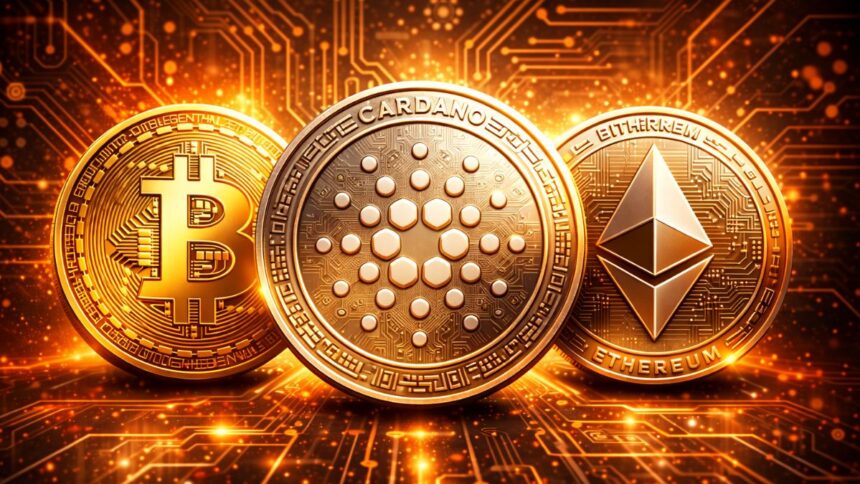
The Cardano ecosystem will test new technology features that directly extend interoperability with Bitcoin and Ethereum.
On January 21, the FluidTokens team announced that Cardano smart contracts can now verify cryptographic signatures from both networks. Enables atomic swaps performed entirely by contractThere are no intermediaries or assets involved.
This feature is already available, as explained by the team Works on test network Allows demonstration of direct exchange such as swap It communicates between Ether (ETH) and Cardano’s native token, ADA, using smart contracts that autonomously validate external transactions.
The following screenshot shared on the FluidTokens X account reflects this exchange process between ADA and ETH.
This proposal is swap As reported by CriptoNoticias, Atomic is in line with Cardano founder Charles Hoskinson’s plans to bring Bitcoin-based decentralized financial applications to Cardano.
What does it mean for users and the Cardano ecosystem?
In practice, this allows for atomic exchanges. (atomic swap, English) real, a mechanism based on time-locked contracts and cryptographic conditions.
in swap 2 users of this type They can block funds on their respective networks and claim funds only if agreed conditions are met.
If something goes wrong, the funds will be automatically returned to the owner after a defined period of time. Everything is done without parental authority and without the need for one party to trust the other.
At this early stage, the tool is aimed at developers and technical testers. execute swap You have to interact with multiple networks, sign transactions, and wait for confirmations, a process that can still be complicated for regular users.
Cardano atomic changes for BTC and ETH are based on Plutus
Plutus is Cardano native smart contract systemCriptoNoticias reports that it has been active since 2021 after the Alonzo update. Written in the Haskell programming language.
The core of that system, known as Plutus Core, is code that runs directly over the network.
Based on this, there are also other languages that compile Plutus, which are used for the development of financial applications, decentralized markets, and other services.
The advances announced by FluidTokens are supported by the inclusion of native functions. Enables Plutus to verify digital signatures associated with transactions generated on other networks.
Simply put, this is the ability of smart contracts on Cardano to verify that transactions performed outside of their own chain were actually approved by the rightful owners of those funds.
This link is possible because both Bitcoin and Ethereum use the same cryptographic scheme for signing transactions: Elliptic Curve Digital Signatures known as ECDSA, which is based on the secp256k1 curve.
By including native support for validating these types of signatures, Cardano “understands” and Verify cryptographic proofs from both networks.
Historically, this process required external bridges, oracles, and intermediaries, creating additional risks and dependencies on third parties.
In this way, when implemented on the main Cardano layer, users can perform exchanges between ADA, Bitcoin, and Ether from a single application in a few steps without resorting to a centralized bridge.