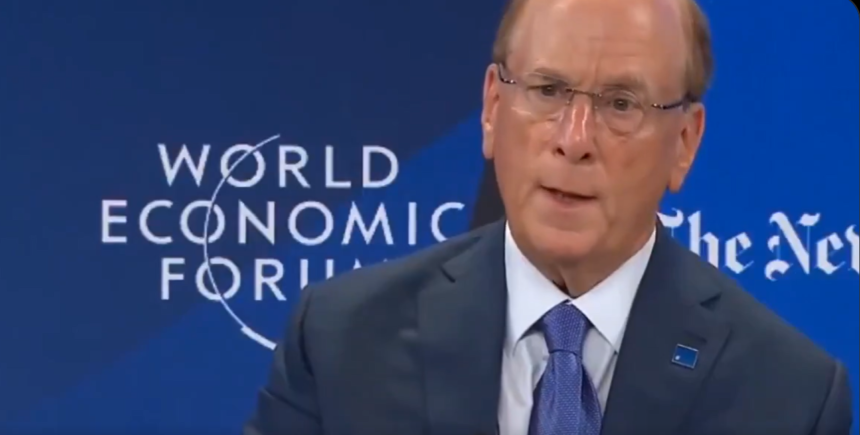

BlackRock CEO Larry Fink argued on stage at the World Economic Forum that tokenization should move from pilot programs to market pipes and suggested that shared blockchain standards could reduce costs and even “reduce corruption.” Debate within the cryptocurrency community, especially Ethereum.
Fink did not name the network. But the combination of BlackRock’s on-chain product space and its own research positioning makes Ethereum the most natural candidate for what he implicitly refers to as “one common blockchain.”
Fink’s remarks, delivered in the language of infrastructure rather than cryptocurrency evangelism, leaned heavily on the operational case for digital assets and interoperable payment rails.
“I think there needs to be a move towards tokenization and decimalization. It’s ironic that two emerging countries are leading the way in tokenizing and digitizing their currencies: Brazil and India. I think we need to move very quickly to do that.”
He then pushed the argument beyond payments to capital markets. “If we had all our investments on a tokenized platform where they could move from tokenized money market funds to stocks and bonds and back and forth, we would reduce fees and reduce more fees, creating more democratization.”
The most provocative line was his call for standardization and the compromises he implied followed it. “(If) you have one common blockchain, you can reduce corruption. So I would argue that we have more dependence on one blockchain. We can talk all about this, but activities will probably be processed and more secure than ever before.”
BlackRock CEO Larry Fink told the World Economic Forum that he believes a move toward tokenization and digitalization is necessary. We have to move very quickly to do that. Corruption can be reduced with one common blockchain.
“One common blockchain” mentioned by Larry Fink… https://t.co/sMMcg4oyN1 pic.twitter.com/VhRvuwCx00
— Ethereum Daily (@ETH_Daily) January 22, 2026
Why Ethereum Appears
Abstractly, “one common blockchain” can be read as a general appeal for shared rails. In fact, BlackRock’s public market cryptocurrency lineup and tokenization efforts are focused on Bitcoin and Ethereum.
On the ETF side, BlackRock’s leading U.S. spot products track Bitcoin and Ethereum (iShares Bitcoin Trust (IBIT) and iShares Ethereum Trust (ETHA)). ETHA launched in 2024 and currently sits at the center of the company’s public Ethereum exposure.
On the tokenization side, BlackRock’s first tokenized fund, the BlackRock USD Institutional Digital Liquidity Fund (BUIDL), debuted on Ethereum through Securitize in March 2024, making Ethereum the first issuance network to become one of the most closely watched institutional RWAs in the market.
BUIDL has expanded to multiple networks over time, but the core of Fink’s “common blockchain” framing is that Ethereum has become BlackRock’s primary starting point for public chain issuance. This is a meaningful signal in a market where the “standard” already tends to follow those with the deepest liquidity, widest consolidation surface, and most conservative trading counterparties.
There was more compelling news this week, not from Davos soundbites, but from BlackRock research. In its thematic outlook for 2026, BlackRock explicitly presents the idea of Ethereum as an infrastructure layer that collects “tolls” based on the scale of tokenization. One slide asks, “Could Ethereum represent a ‘toll road’ for tokenization?” And stablecoin adoption could be an early proxy for tokenization “in action,” from which “blockchains like Ethereum” would be positioned to benefit, he added.
In the same section, BlackRock cites RWA data “as of January 5, 2026” and notes that “more than 65% of tokenized assets are on Ethereum,” highlighting the network’s lead in today’s tokenized asset stack.
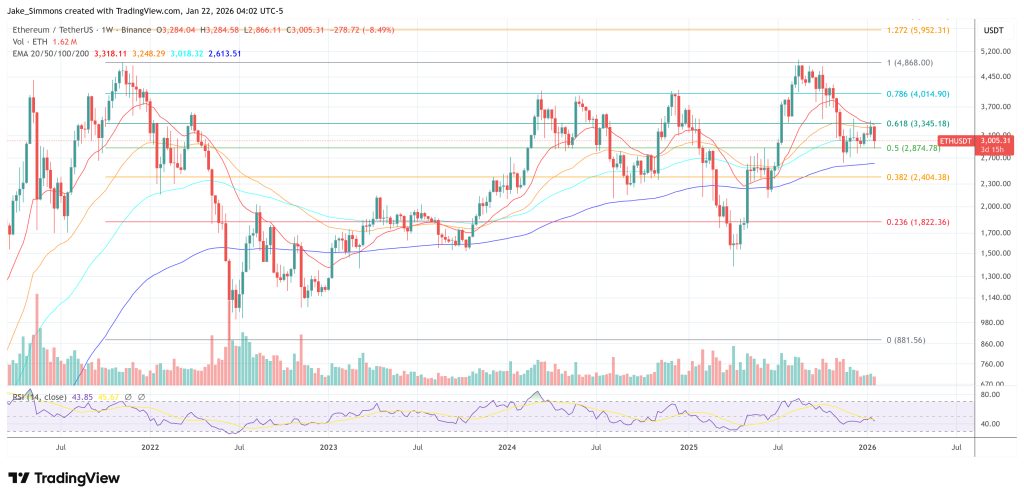
At press time, ETH was trading at $3,005.
Featured image created with DALL.E, chart from TradingView.com
editing process for focuses on providing thoroughly researched, accurate, and unbiased content. We adhere to strict sourcing standards and each page undergoes diligent review by our team of top technology experts and seasoned editors. This process ensures the integrity, relevance, and value of the content for readers.