


U.S.-listed spot Bitcoin and Ether exchange-traded funds (ETFs) suffered heavy redemptions on Thursday, with nearly $1 billion canceled in a single trade as crypto prices plummeted and risk appetite disappeared.
Investors withdrew $817.9 million from the U.S. Bitcoin Spot ETF on January 29, the largest single-day outflow since November 20, according to SoSoValue data. The Ether ETF also continued to sell, posting a loss of $155.6 million on the day.
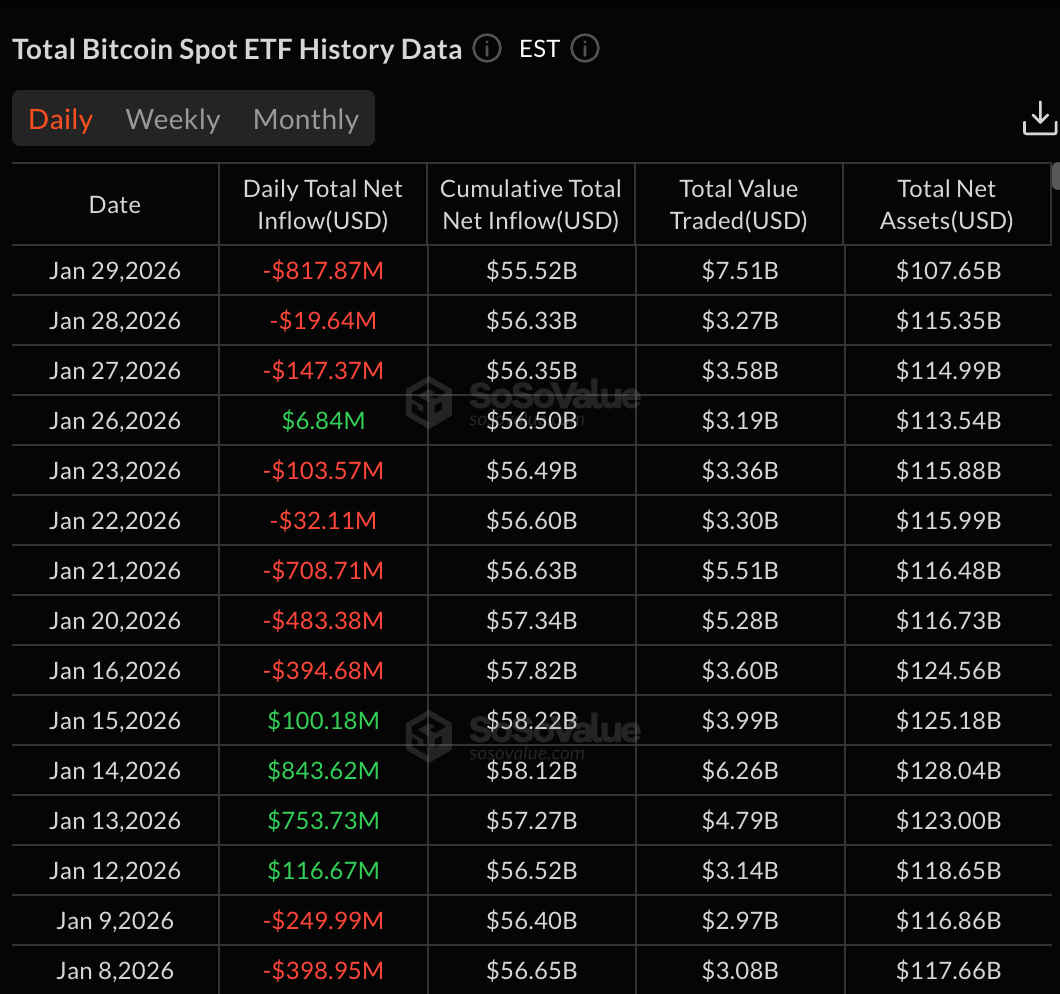
The outflow coincided with a sharp drop in cryptocurrency prices. Bitcoin fell to $85,000 during U.S. trading hours, then slumped toward $81,000, but was nearing the $83,000 level by mid-morning Asian time on Friday. Ethereum fell more than 7% on the day.
BlackRock’s IBIT took the brunt of Bitcoin ETF redemptions, cutting $317.8 million. Fidelity’s FBTC suffered a loss of $168 million, while Grayscale’s GBTC experienced a withdrawal of $119.4 million. Smaller products were not overlooked either, with Bitwise, Ark 21Shares, and VanEck all recording significant breaches.
Ether ETF followed a similar pattern. BlackRock’s ETHA lost $54.9 million, Fidelity’s FETH lost $59.2 million, and Grayscale’s ETHA lost $59.2 million. $ETH The product continued to drain assets. The Ether ETF’s total assets were $16.75 billion, down from more than $18 billion earlier this month.
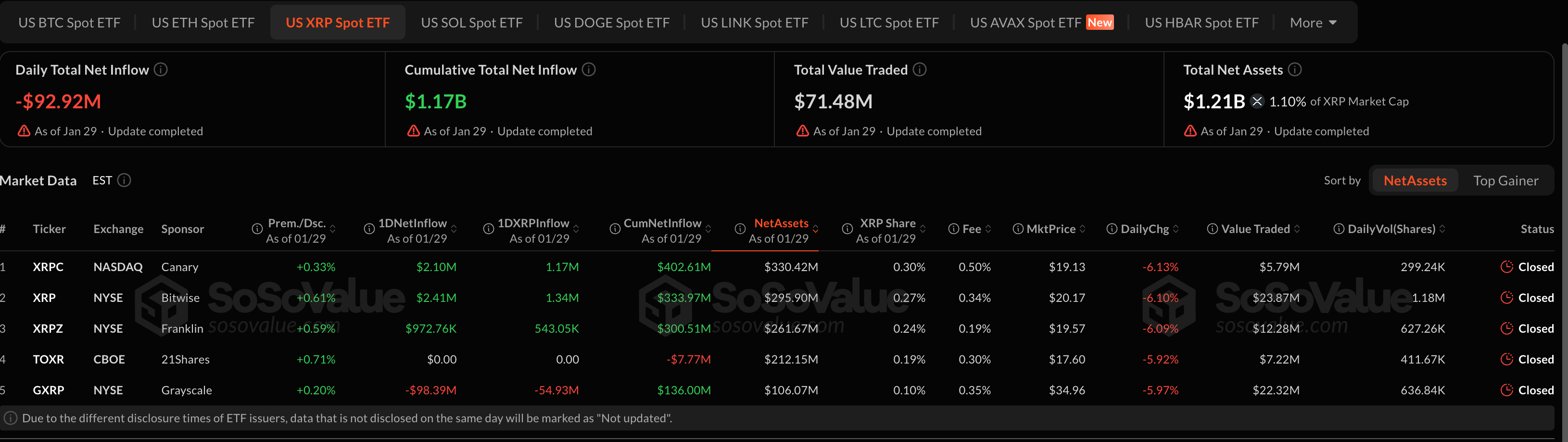
The simultaneous sales between Bitcoin and Ether ETFs suggest that institutional investors were reducing their overall crypto exposure rather than rotating between assets. This marks a change from early January, when inflows into Ether funds often offset weakness in Bitcoin products.
The decline comes amid rising volatility across risk assets and renewed uncertainty over U.S. economic policy, with analysts viewing Federal Reserve candidate Kevin Warsh as bearish on Bitcoin.
Rising implied volatility, weak stock prices and speculation over the future leadership of the US Federal Reserve weighed on prices.
At the same time, leveraged positions in the crypto market were actively unwound, putting pressure on spot prices.
For now, ETF flows seem to be following rather than leading price trends. Analysts say they expect demand for ETFs to remain fragile as long as Bitcoin and Ethereum remain under pressure, with investors waiting for volatility to subside before re-entering.
“Bitcoin crashed to $81,000 due to a wave of risk-off: hawkish Fed maintenance with rate cuts coming soon, massive spot BTC ETF outflows (recently over $1 billion), geopolitical tensions (US-Europe trade tensions, Middle East), and a temporary decline in gold and silver,” Andri Fauzan Azima, research leader at Bitru, said in a Telegram message.
“This triggered massive leverage liquidation after breaking key support (100-week SMA of around $85,000), creating a self-reinforcing sell-off in the midst of poor liquidity. This is a weeding out of leverage amid macro pressures and is not the start of a bear market, with the potential for a rebound if support holds,” Azima added.