
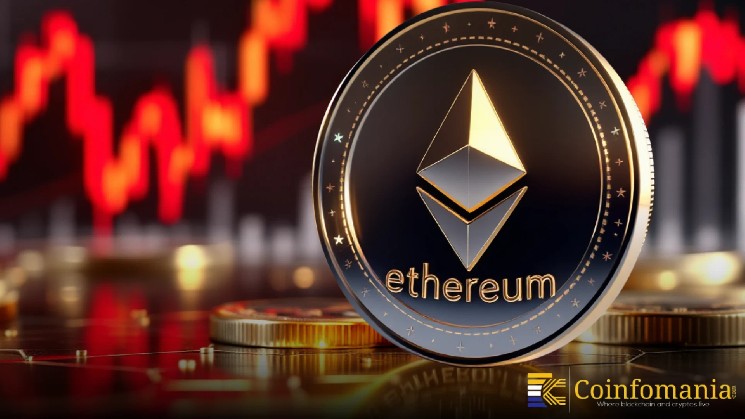
Ethereum recorded a sharp change in on-chain capital movements within a day as data revealed $168 million in net bridge outflows. This development highlights the growing sensitivity among traders and liquidity providers to transaction costs, execution speeds, and network efficiency. Ethereum Bridge outflows often increase as users actively redeploy funds across the ecosystem, and the recent spike suggests increased short-term decision-making across decentralized markets. Market participants are increasingly moving funds instead of waiting for long-term confirmation.
At the same time, Solana achieved a notable performance milestone of outperforming TRON in 24-hour network charge generation. Solana’s network fees have increased due to its use of powerful decentralized exchanges, automated trading activity, and high transaction throughput. This change reflects an increased involvement in economic activities, not just speculative interests. As the Ethereum bridge leak and Solana fee increases coincided, investors began to re-evaluate where real activity is currently concentrated.
🚨 Massive: $ETH records $168 million in net bridge outflows in less than 24 hours, $SOL flips TRON in 24 hours of fees. pic.twitter.com/Tti1YoBjGU
— MSB Intel (@MSBIntel) January 29, 2026
What is the cause of the sudden increase in Ethereum Bridge leaks?
Ethereum bridge outflows represent the movement of assets from Ethereum to other blockchains via cross-chain bridges. These movements increase as traders seek lower fees, faster confirmations, or new yield opportunities. The outflow of $168 million within 24 hours suggests a planned and coordinated reallocation rather than a random withdrawal. Users actively deployed capital across the chain rather than holding idle balances.
Gas fees are still a key factor behind Ethereum bridge outflows during periods of high activity. Even moderate congestion can increase transaction costs for frequent traders and users of decentralized applications. As a result, participants explore alternative networks that offer predictable costs and faster execution. This behavior is consistent with a broader trend in cross-chain activity where flexibility is prioritized over ecosystem loyalty.
Solana network charges reflect strong economic activity
Solana’s network fees are higher than TRON’s, indicating a significant increase in actual on-chain usage. Fee generation acts as a reliable demand signal because users only pay fees if the transaction provides value. Solana handles high trading volumes while maintaining low average costs, making the network attractive for active trading strategies and decentralized applications. This balance fosters sustained engagement rather than temporary spikes.
Decentralized exchanges are a major contributor to the increase in Solana network fees. High-frequency traders prefer environments with minimal lag and stable performance. Solana’s infrastructure supports rapid execution during peak demand periods and strengthens confidence among institutional and retail participants alike. As activity increases, Solana network fees reflect deeper ecosystem participation.
TRON faces increasing pressure from high-throughput rivals
TRON has historically dominated the daily fee rankings due to its high stablecoin transfer volume. However, recent data shows that its position is weakening as new networks capture a wider variety of activities. While TRON continues to support global payments use cases, competition is now focused on the broader application ecosystem. Solana and similar networks offer comparable transaction efficiency, along with richer decentralized finance options.
Cryptocurrency flows increasingly favor networks that support multiple use cases within a single environment. Users prefer platforms where trading, lending, and automation coexist seamlessly. TRON’s narrow focus puts it at a disadvantage as demand shifts to integrated ecosystems. Price rankings change quickly as user behavior evolves.
Future direction of Ethereum and Solana
Ethereum developers continue to advance scalability efforts aimed at reducing congestion and costs. Increased adoption of Layer 2 could help mitigate future Ethereum bridge leaks by keeping activity within the ecosystem. These improvements could stabilize capital distribution while preserving Ethereum’s leadership role.
Solana is focused on enhancing reliability and increasing application versatility. Solana network price increases suggest continued engagement rather than temporary hype. As developers introduce new protocols, economic activity may deepen further. This growth supports long-term ecosystem resilience.
A broader market now operates within a fluid multi-chain environment. Cryptocurrency capital flows remain sensitive to performance signals. The Ethereum Bridge leak and Solana’s fee leadership indicate healthy competition rather than structural weakness. This dynamic will define the next stage of blockchain evolution.