

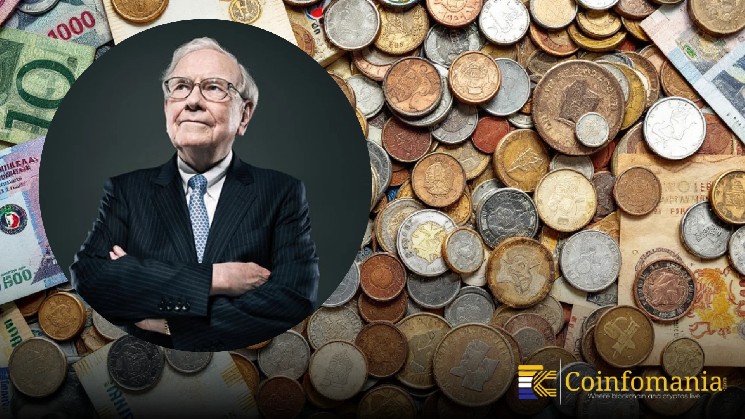
Warren Buffett’s recent comments are especially important because he rarely comments casually on financial developments. The market took notice when he suggested that holding multiple currencies other than the US dollar might be wise. His words come at a time when investors are already questioning inflation, rising debt and fiscal sustainability. These factors give his statements a deeper relevance than a speculative weight.
Buffett’s view does not suggest panic or an immediate drop in the dollar. Instead, it reflects a disciplined way of thinking about long-term resilience. He has always focused on preserving purchasing power rather than pursuing short-term profits. In this context, his remarks confirmed the need for a currency diversification strategy amid heightened global uncertainty.
This discussion is not just about currency. We will also touch on portfolio construction, economic balance, and the future structure of global finance. Buffett’s comments urge investors to rethink concentration risk in an increasingly interconnected world.
Massive: 🇺🇸 Warren Buffett says it might be a good idea to “own a lot of other currencies” besides the US dollar. pic.twitter.com/75lZlSmdoa
— Crypto Rover (@cryptorover) January 31, 2026
Why Buffett questions over-reliance on the US dollar
The US dollar still underpins global trade and finance, but dominance does not eliminate vulnerability. Rising government debt and persistent budget deficits are weighing on long-term confidence. Even if nominal values appear stable, inflation further reduces purchasing power. These realities have increased awareness of the risks of the US dollar among global investors.
Buffett understands that history rarely favors financial monocultures. No key currency can maintain absolute dominance forever. Despite the ongoing strength of the dollar, structural imbalances raise legitimate concerns for decades to come. Prudent investors prepare for change rather than reacting to it.
By recognizing these risks, Buffett is reinforcing principles he has followed for decades. Wise investing requires recognizing uncertainty while ensuring durability. This idea naturally supports broader global currency exposure.
The true meaning of currency diversification strategy
A currency diversification strategy spreads financial exposure across multiple currency systems rather than relying on one. This approach reflects traditional diversification between sectors or asset classes. Investors reduce risk by avoiding over-reliance on a single economic framework.
Currency exposure often manifests itself indirectly through business operations, investments, and revenue sources. Buffett prefers companies that generate profits around the world because currency fluctuations naturally balance them out. Such businesses transform global fluctuations into long-term stability.
For individual investors, diversification may include international stocks, global mutual funds, or foreign bonds. These products help you diversify your currency exposure without the need for active trading. This objective focuses on balance, not guesswork or timing.
Restructuring the way we think about currency due to changes in the world economy
The world economy no longer revolves around a single financial center. Emerging markets continue to expand their trade influence and financial independence. Several countries now settle trade in local currencies, reducing their reliance on dollar-based systems. These changes will gradually reshape global currency exposures.
Central banks are diversifying their foreign exchange reserves beyond the dollar. This action reflects risk management rather than political intent. Still, this indicates a growing awareness of USD risk within institutional finance.
Mr. Buffett’s perspective is consistent with these structural changes. He avoids reacting to headlines, but respects slow and powerful trends. Currency diversification strategies fit naturally into this evolving global framework.
What Buffett’s message means for long-term wealth protection
True wealth protection focuses on preserving purchasing power over the long term. Inflation quietly erodes concentrated holdings even while markets are stable. Diversification across currencies helps preserve real value during economic transitions.
Having assets tied to multiple economies increases resilience. It also aligns portfolios with global growth rather than country dependence. This balance supports sustainable wealth creation.
Buffett’s comments are not a sign of fear, but of preparation. Currency diversification strategies strengthen portfolios against uncertainty while respecting long-term fundamentals. Its lessons remain timeless.