- PIP-82 proposes to recycle up to $1 million of Polygon PoS base gas fees for eligible agent commerce and x402 transactions.
- Any $POL Anything not recycled will be sent to a burn collector, and the program will end after $1 million has been recycled or on December 31, 2026.
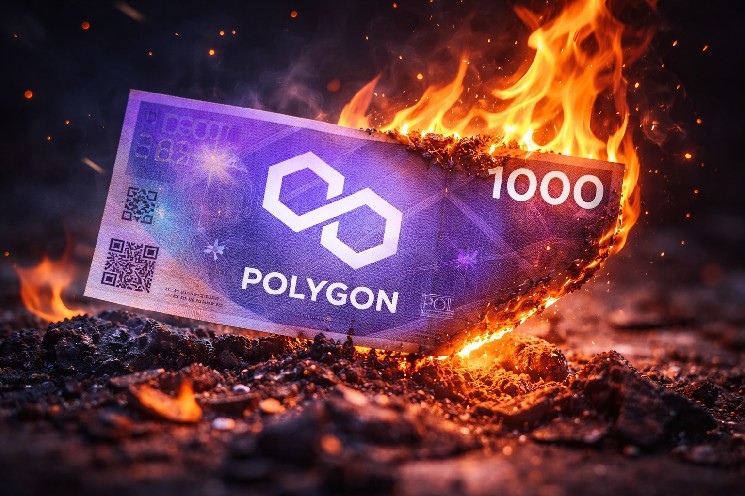
Polygon has proposed a new incentive plan to reduce the base gas cost of agent-to-agent payments in PoS. of suggestionThe program, entitled PIP-82 “Proxy Commercial Gas Program,” establishes a mechanism to recycle up to $1 million worth of gas fees from eligible commercial commercial transactions. Any $POL Any portion not recycled by the program is sent to the existing write collector address. That is, unused portions are burned rather than redistributed.
PIP-82 states that agent commerce must perform high-frequency, low-value payments at low cost. This proposal combines the requirements as follows: of polygons The goal is to support autonomous AI agents that perform transactions in real-time. It also mentions x402. This is a payments approach that uses HTTP 402 status codes to allow software agents to initiate on-chain payments for data, services, and APIs without manual checkout flows. As CNF reportedHedera has become the latest chain to implement x402.
Agent commerce cannot scale without friction. Payments must be made instantly with predictable, near-zero fees.
PIP-82 proposes to recycle up to $1 million in base gas fees to enhance transactions between agents through the Polygon x402 facilitator.
If agents are the future of payments… https://t.co/Nvm87cijOH
— Polygon | $POL (@0xPolygon) February 12, 2026
Polygon PoS has attracted 20.3% of x402 transactions and 10.4% of total x402 volume since the beginning of the year. The proposal also points to previous AI agent activity on the network. It says OpenClaw has completed the first fully autonomous AI-to-AI commerce on Polygon, covering listing, pricing, negotiation, execution, and payment in a single flow.
Recently, CNF covered Polygon has joined the Enterprise Ethereum Alliance and is seen working on institutional payment rails and global on-chain payments. The initiative will work with Polygon’s Open Money Stack, which targets compliant remittances and links stablecoin rails to access tools for merchants and users.
PIP-82 changes polygon writing mechanism
To operationalize the recycling process, PIP-82 proposes changing where EIP-1559 writes are sent in Polygon PoS. The write recipient changes as follows: 0x7A8ed27F4C30512326878652d20fC85727401854 to 0x3ef57def668054dd750bd260526105c4eeef104f. This is implemented by adding a new entry to the burntContract configuration in the specified hard fork block of Bor’s genesis file.
Additionally, the program uses the existing PIP-65 fee distribution system to periodically recycle eligible base fees based on Agentic Commerce rules. The initial scope applies recycling to public Polygon x402 facilitators using the initial list of facilitator addresses referenced in the proposal. For basic charges that are not covered, $POL It will still be sent to the current write collector’s address and the write will occur there.
PIP-82 sets exit criteria based on budget or time. Recycling will end when $1 million is completely recycled or December 31, 2026, whichever comes first. The proposal states: $POL Each recycling transaction is valued at the prevailing market rate and the corresponding amount is deducted from the $1 million reserve.
Additionally, Biron has introduced an on-chain lending protocol on Polygon for tokenized asset lending rather than a typical DeFi money market. CNF noticed Billon introduced segregated loan pools with exposed risk parameters to set leverage, collateral, and liquidation rules for tokenized RWA.
At the time of reporting, $POL was trading with $0.09495top 4% Although the 24-hour trading volume increased, twenty four% It amounts to approximately $105.3 million.