
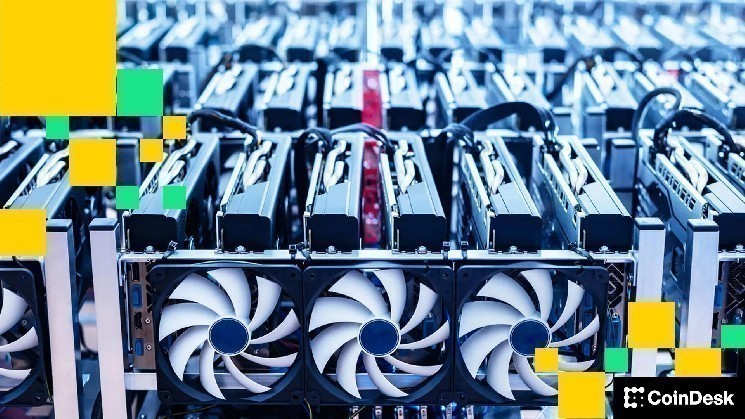
Riot Platforms (RIOT) shares rose nearly 9% on Wednesday after activist investor Starboard Value LP released a letter urging the company to accelerate its transition from Bitcoin mining to AI infrastructure provider. Riot’s objective is to pursue lucrative artificial intelligence and high performance computing (AI/HPC) hosting deals.
Starboard said Riot’s 1.7 gigawatts of fully available power capacity puts the company “well-positioned to execute high-quality AI/HPC transactions,” and highlighted Riot’s two Texas-based locations, Corsicana and Rockdale, as “premier” locations for data center development.
Starboard said if Riot can monetize its power in line with recent deals in the space, it “could generate more than $1.6 billion” in annual EBITDA. The group praised Riot’s recent deal with AMD, which is expected to generate $311 million in revenue over 10 years.
Texas-based Riot, with a market capitalization of $4.25 billion, is the fifth largest Bitcoin mining company in the United States. The company’s stock price has risen 19% over the past year, but remains about 80% below the highs reached during the 2021 Bitcoin bull market. It also underperformed miners like IREN, Cipher Mining, and Hut 8, which recognized earlier and transitioned to AI strategies.
Starboard was Riot’s fourth-largest shareholder at the end of last year, and this isn’t the first time Starboard has put pressure on the company. In December 2024, Starboard asked Riot to convert some of its Bitcoin mining sites into data centers that could host HPC machines to support large tech companies.
Riot Platforms has built its business around Bitcoin mining, but a pivot to AI infrastructure could diversify its revenue as power-hungry models such as OpenAI’s GPT-4o drive demand for data centers. Riot’s power access, a rare commodity in today’s energy-constrained data center market, could be used to lease capacity to large AI companies.
Starboard called on CEO Jason Leth and Executive Chairman Benjamin Yee to act “with immediate effect” and position Riot as a long-term infrastructure provider for AI workloads.