
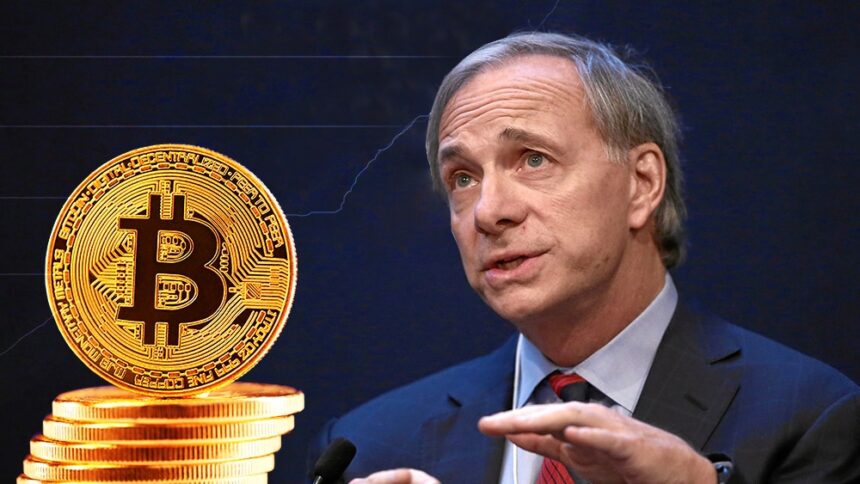
Ray Dalio, founder of Bridgewater Associates and one of Wall Street’s most influential voices, stopped talking about risks and pointed out that the world order established after 1945 is collapsing and thus the planet has officially entered a stage of open conflict.
The trigger for this dark analysis was the unusually violent rhetoric coming out of the Munich Security Conference, which concluded in Germany a few days ago. In a wide-ranging publication on February 19, 2026, Dalio explained that the intervention of Western leaders has confirmed that the world has moved out of “Stage 5”, which is characterized by internal tensions. Enter “Stage 6” of his Great Cycle theoretical framework.
To gauge the seriousness of this announcement, one needs to refer to the book Principles for Coping with a Changing World Order (2021). In this 80-year historical model, Dalio points out that the current situation represents a turning point where shared rules disappear, coercive force becomes rampant, and conflict between great powers becomes inevitable.
This paradigm shift was verified in real time by the protagonists themselves. The Munich Security Report 2026, with its big title “Under Destruction”, served as the backdrop for an approval that would have been unthinkable a decade ago.
German Chancellor Friedrich Merz and French President Emmanuel Macron join Mr Macron in recognizing the death of Europe’s security architecture. He explicitly urged the continent to prepare for a war economy.
Viewed from the other side of the Atlantic, the position was equally blatant. Secretary of State Marco Rubio described this scenario as follows: A “new geopolitical era” in which the old world has definitively disappeared.
For Dalio, these statements are empirical evidence of a “wrecking ball policy,” in which great powers no longer seek to reform the multilateral system, but rather actively seek to dismantle the structures of their rivals.
Shelter for transition and disorder
The transition to ‘Stage 6’ has significant implications for capital management. Dalio warns that traditional strategies that assume a stable dollar and perpetual growth in U.S. stocks have become a high-risk trap that could subject assets to corrections of 50% or more.
His recommendations were previously foreseeable loss of value of fiat currency during wartime;investors reduce their exposure to cash and US-concentrated markets. The alternative, as reported by CriptoNoticias, is to spread risk across a “basket” of real assets, prioritizing physical gold and inflation-linked bonds, historical havens that central banks have amassed over the years.
Additionally, Dalio reiterates Bitcoin’s usefulness in this defense. He describes it as “digital gold”, which is attractive to a new generation due to its non-sovereign asset nature. Although the investor said he only held a “small amount” for diversification purposes, his involvement highlights growing distrust in the solvency of the traditional system.
As it turns out, that final message is: Uncertainty is no longer a variable, it is a constant. While the financial sector tries to digest the end of globalization, the political and economic consensus is aligned in one direction, where it is understood that the rules of the game have changed and those who continue to invest according to the 20th century manual risk losing everything.