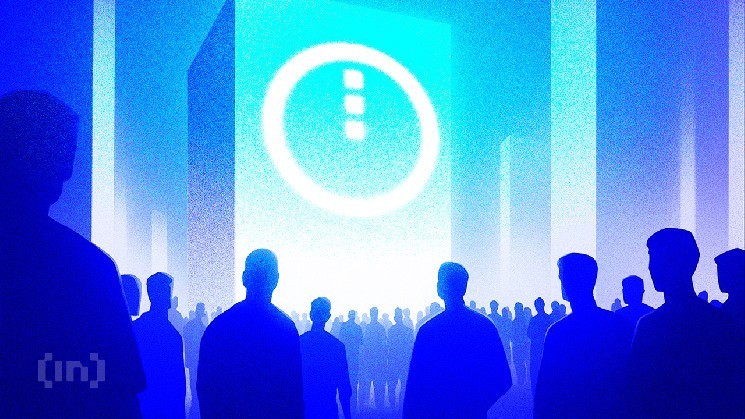
The Midnight Foundation has added Blockdaemon and Shielded Technologies as federated node operators for the Midnight Network, expanding the initial set of operators to four as the project prepares for mainnet.
The companies join Google Cloud and AlphaTON Capital, which Midnight has already named as a launch partner to support the initial infrastructure layer of the network.
This is part of Midnight’s “rational privacy” approach, which uses zero-knowledge systems and selective disclosure. This is increasingly becoming a prerequisite in regulated on-chain markets, where participants require verifiability and auditability without putting sensitive data on a public ledger.
The mainnet is scheduled to go live at the end of March 2026, and the network is expected to move beyond a federated model in the second half of 2026.
Federated node operator description
According to the Midnight Foundation, the mainnet will start with a small group of federated node operators (individual organizations operating the protocol together based on explicit rules for participation and coordination). The Foundation will frame this as a startup stage structure designed to prioritize operational stability, then move to a more decentralized setup over time.
In reality, these operators are responsible for running the core node software that enforces protocol rules and maintains the peer-to-peer layer of the network. Midnight’s own documentation describes nodes as infrastructure components that implement protocol logic and manage the network, and a broad architecture intended to support both permissioned and trustless participation.
Midnight also notes that operators are already present in the pre-production network and bringing them to the mainnet is intended to provide an enterprise-grade foundation for early live applications while the decentralization roadmap continues through 2026.
Why is this important for educational institutions?
Public blockchains make activity readable by default, allowing sensitive information such as trading partners, positions, pricing logic, and customer IDs to be written into an immutable record that anyone can analyze.
This is where zero-knowledge systems step in. Zero-knowledge proofs allow one party to prove that a statement is valid without revealing the underlying information. In short, “prove what you need and keep the rest secret.”
In this way, Midnight provides selective disclosure, revealing only certain attributes when necessary (e.g., for eligibility checks), while keeping other data confidential. This is an approach designed to withstand environments with legal and operational disclosure requirements.
Midnight describes this as “rational privacy,” meaning privacy that is situational rather than absolute. Internally, it is built around zero-knowledge smart contracts that use public governance tokens (NIGHT) and shielded resources (DUST) for execution.
What each launch operator brings
- Blockdaemon sells node and staking infrastructure to large customers and touts itself as having secured more than $110 billion in digital assets for more than 400 institutions. Midnight is building Blockdaemon nodes as a way to provide banks, custodians, and funds with a privacy-enabled network that they can operate and monitor using familiar operating standards.
- Shielded Technologies describes itself as an input/output (IO) spinout and Midnight’s core technology partner. This means we are already deeply involved in the encryption and engineering that underpins Midnight’s privacy model. Operating a federated node effectively assumes production responsibility for the infrastructure that Shielded has helped design.
- Google Cloud is increasingly positioned as your security and reliability partner. Midnight said Google Cloud’s Mandiant division will support threat monitoring and incident response, and Midnight’s ZK stack leverages Google Cloud Confidential Computing to protect sensitive data during processing.
- AlphaTON Capital adds distribution and adjacency reach to Telegram. AlphaTON is listed on Nasdaq (ATON), and the company publicly announced that it has contracted Midnight to provide one of its founding nodes and develop software that integrates Midnight’s privacy layer with Telegram and the TON ecosystem.
What happens next?
Midnight is currently rolling out a distinct watch. On February 17, 2026, Midnight Foundation announced Blockdaemon and Shielded Technologies as federated node operators, expanding its designated launch roster to four, along with Google Cloud and AlphaTON Capital.
The Feb. 18 summary tied that operator buildup directly to Sequence’s launch, reiterating that Midnight mainnet will go live at the end of March 2026 as part of Kōkolu’s “federated mainnet” phase.
In preparation, Midnight says it will publish additional technical readiness updates and details about node partners in the coming weeks of Genesis. For context on scope, AlphaTON’s node contract disclosure states that the launch set is one of 10 founding Midnight nodes, suggesting that the names of more operators are yet to be revealed. After launch, the foundation described the federation model as a bridge towards community-driven block production in late 2026.
market signals
The growing operator roster shows Midnight is prioritizing institutional-grade reliability at launch. Midnight explained that the mainnet starts with federated node operators running the protocol under explicit participation rules, with the stated intention of moving away from that structure over time.
Of course, privacy that stands up to compliance scrutiny depends on responsible infrastructure, as does encryption and selective disclosure.
Stay tuned for further operator additions, promised technical readiness updates ahead of mainnet launch at the end of March 2026, and first live deployments.
The article “Midnight Taps Blockdaemon Shielded to Run Federated Nodes Ahead of March Mainnet” originally appeared on BeInCrypto.