


A lone Bitcoin miner has achieved a rare victory by validating an entire Bitcoin block and securing a huge reward using hobby-level mining operations and on-demand hashrate.
The miner earned 3.125 Bitcoins ($BTC) According to blockchain data and a post from Bitcoin mining company Brains, successfully mining block 938092 would result in a block reward worth approximately $200,000 at current prices.
Brains said the miner relied on on-demand hashrate, spending about 119,000 Satoshis (about $75 at the time) to rent one petahash of computing power per second, paying a small solo mining fee in the process. The company said the miner was using CKPool, a service that allows individual miners to work independently while using a pool server to broadcast their work and submit solutions.
Although it’s rare to verify an entire block as a solo Bitcoin miner, even an investment of less than $100 in on-demand hashrate can lead to a lucky paycheck. On-demand hashrate is a cloud-based approach that allows would-be miners to rent computing power and mine cryptocurrencies without owning the hardware.
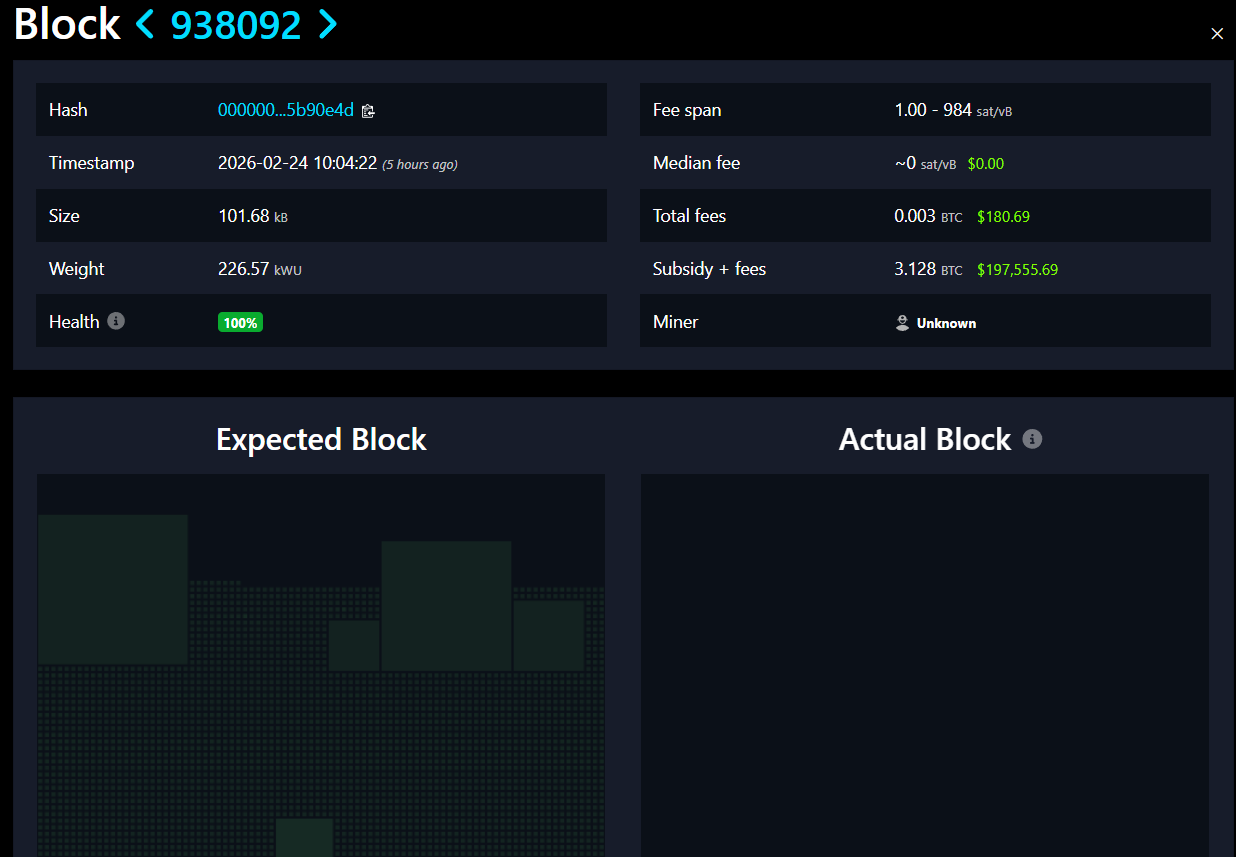
Bitcoin block 938092, verified by a solo miner using rented hashing power. Source: Mempool.space
According to blockchain data from Mempool.space, miners successfully verified Bitcoin block 938092 at around 8:04 a.m. UTC on Tuesday.
Related: A lone Bitcoin miner uses a small, cheap rig to earn blocks – a “one in a million chance”
Statistically, solo wins are still rare.
Validating a block as a single miner is a rare event, but over the past year, 21 Bitcoin miners have accomplished this feat, cashing in a total of $66. $BTCworth $4.1 million at current prices. This represents a 17% increase in solo blocks found over the past year, according to Solominer data aggregator Bennett.
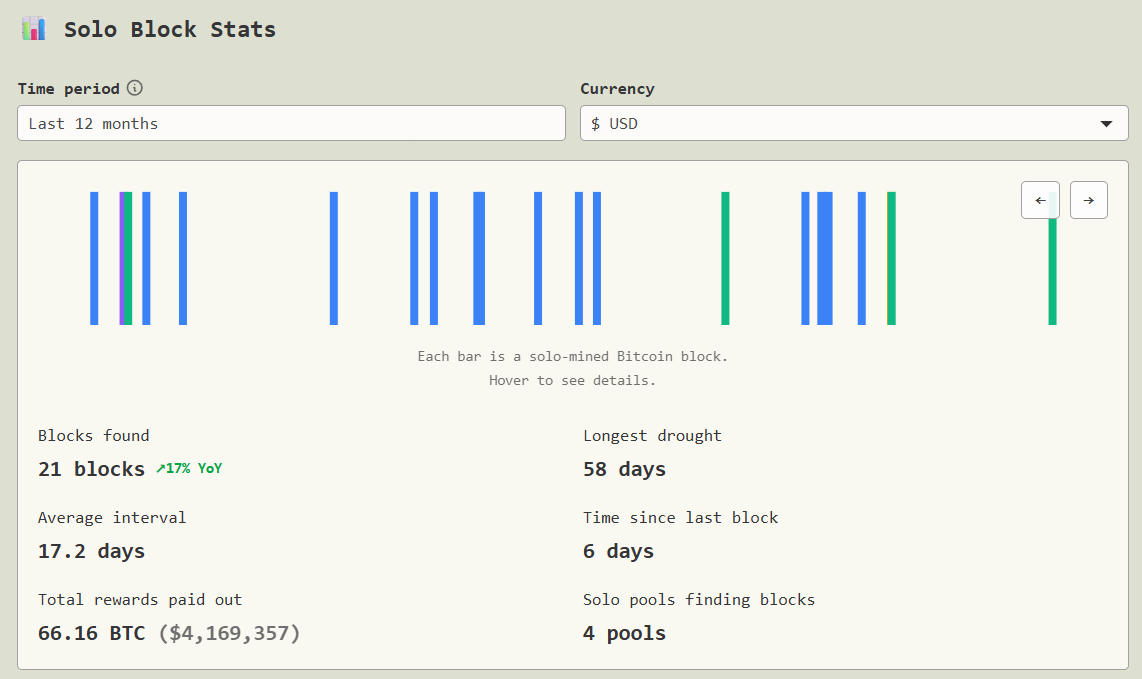
Solo Bitcoin mining block statistics. Source: Bennet.org
According to the data, solo blocks are mined on average every 17.2 days.
Related: How 5 individual Bitcoin miners each cashed out over $350,000 in 2025
Bitcoin mining industry recovers from US winter storm
After the latest adjustment, Bitcoin mining difficulty rose to 144.4 trillion, marking a 15% increase.
This correction reversed the 11% drop caused by severe winter storms in the US earlier this month, making it the steepest hashrate drop since China’s mining ban in 2021.
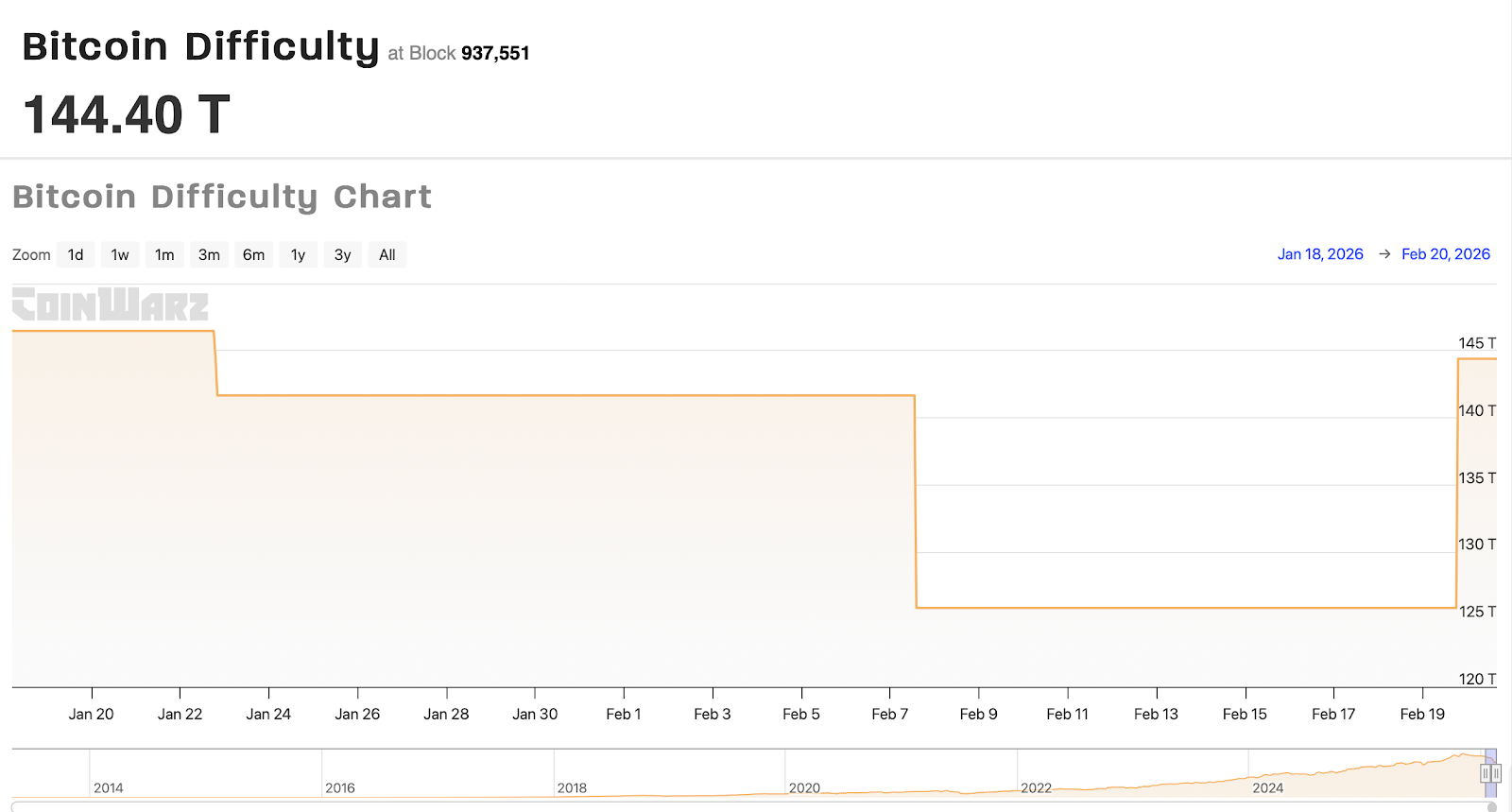
Bitcoin difficulty chart. Source: CoinWarz
Hashrate measures the total computing power behind the Bitcoin network. The network difficulty is adjusted every 2,016 blocks, or approximately every two weeks, to move block generation closer to the 10-minute goal.
magazine: Bitcoin could take 7 years to upgrade to post-quantum — Co-author of BIP-360