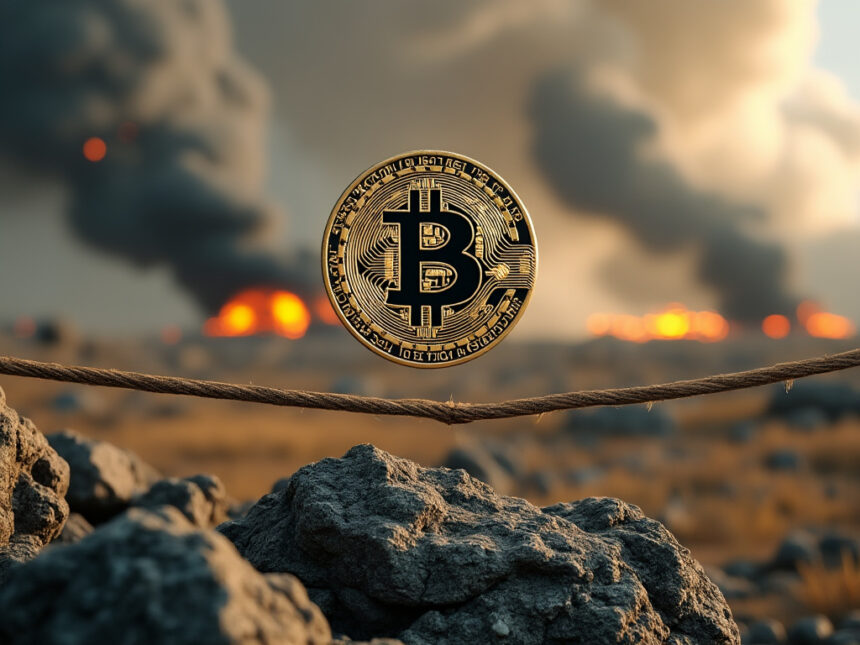
In a scenario of heightened geopolitical tensions, Iranian President Masoud Pezeshkian has issued a challenging message that resonates strongly with global markets. Bitcoin (BTC) is struggling to maintain stability amid fears of escalating conflicts in the Middle East, clinging to the $68,000 level after recently losing psychological support at $70,000.
In a televised statement, Mr. Pezeshkian assured that Iran would not bow to pressure from the United States and Israel. The president called the demand for “unconditional surrender” a “dream that I will take with me to my grave.” closing the door to an immediate diplomatic solution.
The president’s position signals a prolongation of hostilities, which poses serious economic risks to the entire region, according to Qatar’s energy minister.
How disputes affect BTC price
Historically, Bitcoin reacts as a risk asset to global instability. The drop to the $70,000 level was partly due to fears of all-out war.
But despite this Saturday’s warmongering rhetoric, BTC showed unexpected resiliencehas remained stable around USD 68,000.
It is important to mention that at the time we are writing this note, the price of the digital currency has fallen below this benchmark several times, and then returned to 68,000.
The relative calm may have come as a surprise to those who expected Mr. Pezeshikian’s words to intensify market fear and cause further declines.
Nevertheless, BTC price is not determined only by war. CriptoNoticias reported that factors such as the U.S. employment situation, the Federal Reserve’s interest rate decisions, and emerging concerns about advances in quantum computing are also swaying the Financial Services Committee.
Despite Bitcoin showing temporary strength, the technical outlook is cautious. Many experts claim that the asset has officially entered a downtrend, or “crypto winter.”
The big question for investors is whether this cycle will be shorter than previous ones, as Strategy founder Michael Saylor suggested, or whether the escalation of the war will cause prices to fall to new lows. For now, the market is closely watching both candlestick charts and military developments in the Middle East.