


The Bitcoin market has experienced significant price declines in recent weeks. After a series of sharp corrections that pushed the price to a local low of $60,000 in early February, the premium cryptocurrency is currently trading around $71,000, reflecting a 7.19% increase over the past month.
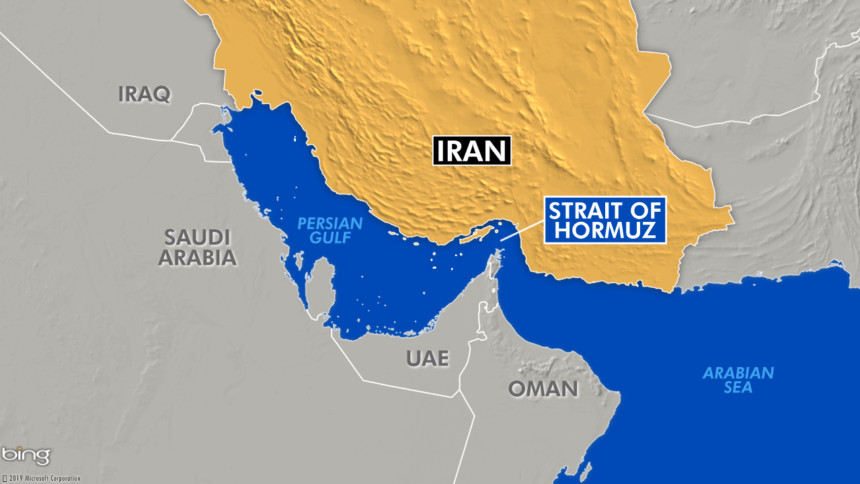
Meanwhile, global markets have been shaken up by heightened geopolitical tensions in the Middle East after the United States and Israel launched a coordinated attack on Iran. Among a number of retaliatory measures, the Islamic Republic of Iran has begun closing the Strait of Hormuz, a major trade route that restricts the passage of 20% of the world’s oil supplies.
Blockade of the Strait of Hormuz threatens global economic stability
In a QuickTake post on CryptoQuant, education and analysis page XWIN Research Japan shares key insights on the impact of the potentially prolonged Strait of Hormuz disruption on Bitcoin and the general market. Given the lack of equally effective alternatives, Iran’s opposition to trade through the Strait of Hormuz threatens to shock global energy supplies. If the current decline in shipping activity continues and oil and gas prices continue to rise, inflation is expected to rise accordingly, given the importance of petroleum products in daily life.
As for the impact on financial markets, central banks typically respond to such situations with tight monetary policies that raise interest rates to slow economic activity. In such an environment, investors are likely to move their capital into fiat currencies, such as the US dollar, to take advantage of interest rates commensurate with potential depreciation due to inflation. On the other hand, exposure to volatile assets has also decreased significantly.
Bitcoin’s fate amid oil supply problems
According to XWIN Research Japan, investor behavior towards Bitcoin during geopolitical stress events shows that they view the cryptocurrency as a risk asset rather than a financial haven. Therefore, if the Strait of Hormuz remains closed, there is likely to be a significant outflow of funds from the BTC market. However, this is only an initial reaction as the market is expected to stabilize later.
The impact of corridor disruptions will therefore depend more on the financial ecosystem response than on the energy shock itself. Key factors in this situation include global liquidity levels, policy responses, and general market leverage.

It is also important for investors and traders to monitor key derivative metrics such as open interest (OI) and funding rates. Because both indicators convey important insights about market conditions. For example, the combination of increased open interest and extreme funding rates indicates crowded market positioning and represents a risky market structure in the event of potential market shocks. At the time of writing, Bitcoin is trading at $71,639.
Featured images from Fox Business, charts from Tradingview
editing process for is focused on providing thoroughly researched, accurate, and unbiased content. We adhere to strict sourcing standards, and each page is carefully reviewed by our team of top technology experts and experienced editors. This process ensures the integrity, relevance, and value of your content to your readers.