



Nine out of 10 undersea internet cable failures over the past decade caused little or no disruption to the Bitcoin network, according to a new academic study.
Random failures and targeted cuts
The study, published in February by researchers Wenbing Wu and Alexander Neumuller at the Cambridge Center for Alternative Finance, tracked 68 confirmed cable failure events between 2014 and 2025.
According to the data, less than 5% of Bitcoin nodes went offline in 87% of these incidents. The price impact is essentially non-existent, and the correlation coefficient between cable failures and Bitcoin market value is -0.02, which researchers say is not statistically significant.
This study is the first to examine Bitcoin’s exposure to physical internet infrastructure over time.

Source: Wenbin Wu, Alexander Neumueller
Using a country-level cascade model built on peer-to-peer network data, researchers set out to answer a question that has been circling the crypto community for years: What would actually happen to Bitcoin if the internet suffered a severe blow?
Their answer, at least for random failures, is “not that many.” Between 72% and 92% of the undersea cables connecting countries around the world would have to fail before more than 10% of Bitcoin nodes would lose power.
Undersea cables carry approximately 99% of international internet traffic. Reaching this failure threshold would require a catastrophic and near-total collapse of the global Internet infrastructure. However, if the failure is intentional, the situation changes rapidly.
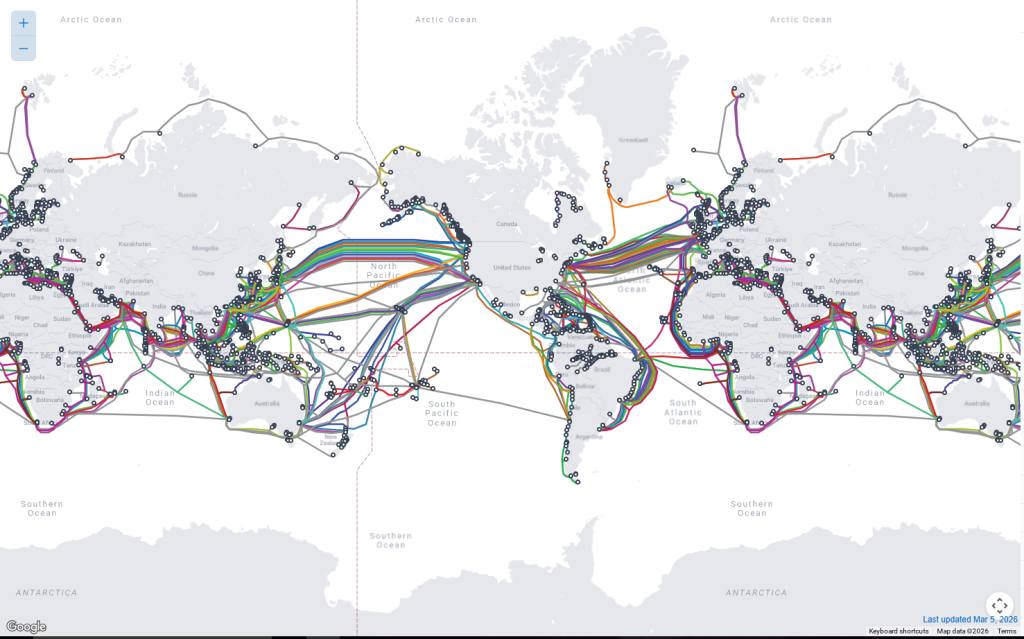
Image shows map of the world's undersea cable network. Source: SubmarineCableMap
There is another problem with choke points.
Targeted attacks on specific cable choke points can cause significant disruption with far fewer cuts. Officials said researchers found that the critical failure threshold dropped between 5% and 20% when attacks targeted high-traffic junction points. This threat is approximately an order of magnitude more powerful than random failures, the paper explains.
The gap between random and targeted risks is the report’s clearest finding. This suggests that Bitcoin’s exposure to physical infrastructure is not evenly distributed.
Some cables are much more important than others, and attacking the right connections with the right adjustments can cause damage that years of accidental outages wouldn’t.
The geographic diversity of Bitcoin mining, which has expanded significantly since China’s 2021 crackdown moved operations to other countries, has done little to change this situation.
Reports show that the strength of infrastructure tracks the physical route of cables, not where miners happen to be located.
Tor adds a layer of complexity
One factor working in Bitcoin’s favor is the widespread use of Tor, a privacy-focused routing system that bounces traffic through a series of servers to hide users’ locations.
According to the report, 64% of all Bitcoin nodes will become virtually invisible to outside observers with the adoption of Tor. This detail complicates efforts to map and target networks.
Featured image from Unsplash, chart from TradingView
editing process for is focused on providing thoroughly researched, accurate, and unbiased content. We adhere to strict sourcing standards, and each page is carefully reviewed by our team of top technology experts and experienced editors. This process ensures the integrity, relevance, and value of your content to your readers.