
Financial analyst Charles Hugh Smith issued a notable warning this week that the global financial system is sitting on a ticking time bomb built on cheap credit.
While it’s not new for someone to make this diagnosis, the mechanism Smith describes is more accurate and more alarming than common blackmail behavior.
The central argument is simple. Virtually unlimited credits can be created With just a few clicks, Productive investments grow gradually, slowly and expensively. According to the authors, that asymmetry is the key to everything that happens next.
Where does that surplus credit go if it cannot be absorbed into a productive project? To existing assets?. For already built homes, stocks, bonds, and businesses.
The richest people, with greater wealth and higher credit ratings, have access to the cheapest money and use it to buy things that others cannot afford.
“Starting a new company takes time and comes with risks. “It’s much easier to buy existing assets,” Smith says. The result is a spiral. More credit increases the price of assets, and more expensive assets act as collateral to get more credit and start again.
Smith explains this problem with two hard facts. If the S&P 500 had grown in line with GDP since the 2008 crisis, it would have been around 3,450 points instead of the 6,500 it is now. And if U.S. home prices had followed inflation, they would be worth 40% less than they are today.
According to the author, these are not minor abnormalities; Traces of decades of misassigned credits.
The discussion becomes more explosive when Smith talks about: private equity. Private equity funds aren’t interested in creating something new, he says. your business is acquire an existing businessestablish regional monopolies and raise prices.
private equity I have no interest in starting a new company. are interested in establishing a regional monopoly because it is highly profitable and has low risk.
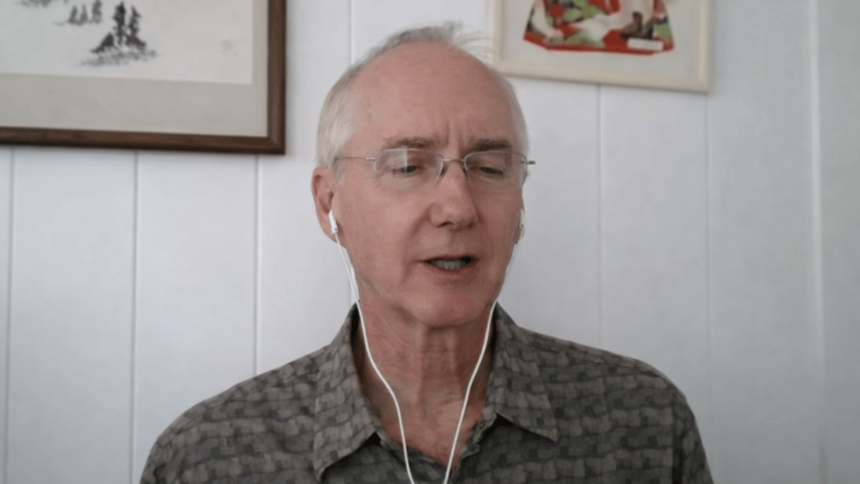
Charles Hugh Smith, author and financial analyst.
What makes that strategy possible is exactly what makes housing bubbles possible.: Cheap and plentiful credit for people who already have a lot of credit.
the richest people pay less tax
There is another point that Mr. Smith points out that deserves emphasis. It is a fiscal mechanism that allows the richest to live without paying taxes. Instead of selling an asset and reporting a capital gain, they borrow that asset to cover their current expenses.
Interest is subject to deduction. There is no income and no income tax or social insurance premiums are payable. This system is designed not only to concentrate wealth, but also to ensure that no taxes are paid by this concentration, whether intentionally or unintentionally.
Who built this system? Smith doesn’t shy away from the answer: The Federal Reserve (FED). According to him, when people feel rich, they spend more money. What no one has calculated, or what no one wants to calculate, is that the only people who truly feel rich are those who are already rich.
Economists who predicted 2008 speak of a ‘perfect storm’
Smith’s diagnosis doesn’t come alone. As CriptoNoticias reported on March 16, economist Richard Bookstaver, known for predicting key developments in the 2008 crisis, new york times Converging warnings: The current financial system is more fragile than indicators suggest.
Bookstaber’s core concept is a “tightly coupled” system, where local failures can escalate to global collapse. and The weakest link in this system is precisely private credit.: a market that has grown rapidly outside of traditional banking regulation and is showing the first signs of strain today.
Large funds such as BlackRock’s HPS and Blackstone’s BCRED are already having to accommodate withdrawal requests that exceed their quarterly limits.
Growing liquidity problems
The structural problem is liquidity. Stocks are sold in seconds, but there is no fast market for lending to private companies.
Therefore, when investors demand your money all at once, Managers will be forced to sell their most liquid assets — typically big tech stocks — to raise cash; Diffusion of market stress From private to public.
Add to this the specific threats that Mr. Bookstaver accurately points out. Artificial intelligence could render obsolete the business models of many software companies that are financed by private credit today.
An analysis by Swiss financial services firm UBS estimates that this could lead to up to $120 billion in additional defaults by the end of 2026. In extreme scenarios, default rates could reach 15%.
Funding is already closing the door
What until recently was a theoretical warning now has a name, a last name, and a number.
On March 13, CriptoNoticias guest author Iñaki Apesteguia recorded the exact moment when tensions ceased to be hypothetical:private credit“America’s largest fund, the most stable asset on the planet with a fairytale volatility of 1.71%, has ignited just that fantasy.”
The most specific case documented by Apestegia is that of Cliffwater Corporate Lending Fund (CCLFX), one of the largest private credit funds in the United States with $32.5 billion under management.
The fund promised investors the possibility to withdraw capital every three months up to 5% per quarter. Withdrawal requests reached 7% (some reports say 14%), breaking that limit, forcing the fund to liquidate emergency assets, and offers reaching levels 10% below the amount it had declared.
“We are not facing a simple temporary disagreement.”
“What we are seeing is not a small revision of their values; this is the first big warning that there is dirt in the ‘safe’ return system,” Apesteguia wrote.
Similar to Bookstaver’s analysis, the trigger is artificial intelligence, according to Apesteguia.: Currently, 19% of funds are being loaned to software companies struggling with advances in AI, with geopolitical noise coupled with panic over the closure of debt-ridden companies leading to investors favoring an exit.
“What we are facing is not a simple temporary discrepancy. “We are witnessing how an asset sold as insurance loses its fundamental value,” he concludes.
Ransom not available
The question Smith, Bookstaver, and Apesteguia are asking from various angles is how long this situation will last. The Fed already has more than $2 trillion in mortgage-backed securities on its balance sheet.
When the current bubble deflates, Smith says “if,” not “if,” there won’t be the same kind of relief available as there was in 2008. “Asymmetry in scale will yield to gravity,” he writes.
Smith concludes with two ideas that sound simple but carry weight. The thing is, without debt, things won’t go well. and When fear comes, it escalates much faster than greed. In a system built on asymmetric credit and illiquid assets, the speed can be devastating.
Will Bitcoin and cryptocurrencies benefit?
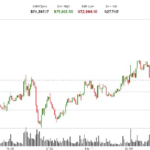
Since the 2020 coronavirus disease (COVID-19) pandemic, Bitcoin has shown to maintain a high correlation with traditional markets. Therefore, every time a major index declines…Bitcoin typically follows the same downward path.
but, What if this time was different? Mr. Apesteguia points out in the text mentioned here: Private credit disruption could act as a catalyst for two options. Something that is already taking shape.
- The first is Bitcoin. Unlike private credit funds, it “provides global liquidity 24/7”, “its prices are set every second by the real market and reflects reality instantly”, and it “has no intermediaries that ‘shut the door’ when the market gets tense or contracts that lock you into outdated sectors”.
- The second is tokenized real world assets (RWA).According to Apezteguía, projects such as Ondo, Centrifuge, Maple, Goldfinch, and Figure offer exactly what traditional structures cannot offer today: full transparency and real-time assessments that can be audited on the network.
The most glaring contradiction he points out is that BlackRock is suspending withdrawals from its traditional private credit funds while ramping up its BUIDL tokenized fund by bringing it to Uniswap.
“We are not facing the end of private credit, but rather its decisive transformation,” Apesteguia writes. “Smart money is moving away from opaque, locked-in structures into the infrastructure of Bitcoin and cryptocurrencies, solving trust issues that Wall Street can no longer hide.”