


Bitcoin (BTC) has corrected after hitting a record high of over $125,000, but technical indicators suggest the asset still has room to reach $160,000 in the coming months, analysts said.
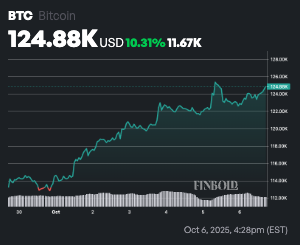
At the time of writing, Bitcoin is trading at $124,874, up about 1.2% in the past 24 hours, and has risen more than 10% over the past week.
Now, according to the insight from trading shotsBitcoin’s rally towards an all-time high of $125,700 confirms that it has broken through a long-standing resistance level.
in TradingView In a post on October 6, experts noted that this level provided strong support and reinforced the ongoing bullish cycle pattern.
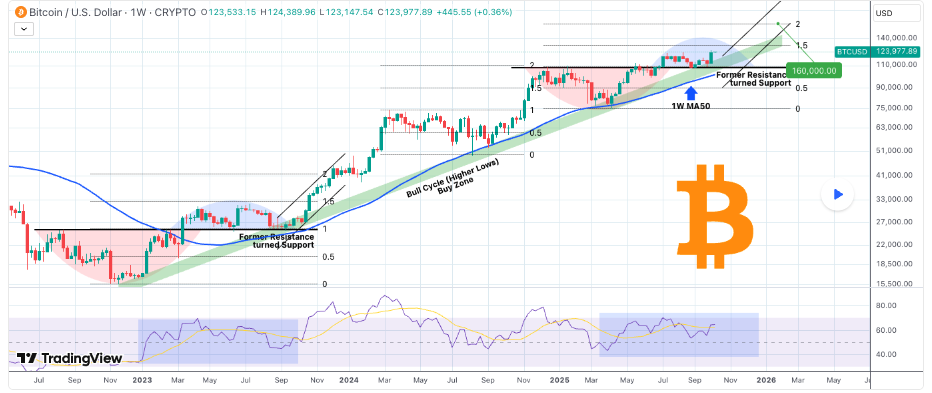
The outlook noted that Bitcoin has formed a series of lows within a clear uptrend line, supported by the 50-week moving average (MA).
This setup reflects the bullish phase observed in August 2023 that led to significant price increases and indicates continued upward momentum.
The analysis also highlighted Fibonacci extension levels as a key indicator for future price targets. Currently, this rally appears to be tracking the 2.0 Fibonacci extension, which has historically coincided with past market peaks.
Based on this pattern, Bitcoin’s trajectory will head toward the $160,000 level in the first quarter of 2026, or around January.
Bitcoin potential target is $200,000
Meanwhile, another outlook from a pseudonymous cryptocurrency analyst mickey bull Compared to gold’s rise, he suggested that Bitcoin could soar to $200,000.
In an October 6th post, the same analyst suggested that Bitcoin’s ongoing market cycle is similar to gold’s historic rally in the 1970s.
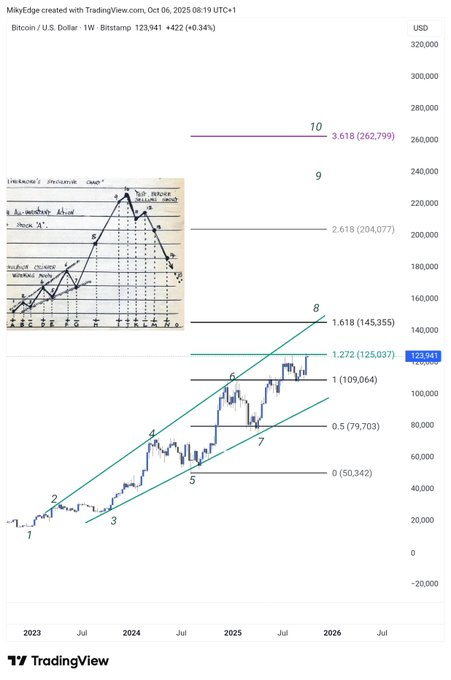
According to this forecast, Bitcoin’s price pattern continues to mirror gold’s long-term performance over a decade marked by high inflation and speculation.
This comparison therefore suggests that Bitcoin, like gold at the time, may be entering the speculative phase of the cycle, supported by Livermore’s speculative indicators predicting a potential high above $200,000.
From a macroeconomic perspective, this trend reflects increased inflation risk rather than robust economic growth, suggesting that investors may increasingly view Bitcoin as a hedge similar to gold’s role in the past.
Featured image via Shutterstock