


Cryptocurrency investors have accused quantitative trading firm Jane Street of squeezing the price of Bitcoin with programmatic selling every day during U.S. market opening hours, but market analysts and data suggest this pattern is inconsistent and no single company can push Bitcoin into a prolonged bear market.
The allegations proliferated online a day after Terraform Labs’ court-appointed administrators sued Jane Street for insider trading related to trades that further exacerbated the collapse of Terra’s algorithmic stablecoin ecosystem in May 2022.
Several market watchers, including crypto influencer Justin Bechler, have claimed that Jane Street’s holdings in BlackRock’s iShares Bitcoin Trust exchange-traded fund (ETF), known as IBIT, could conceal a net short position in Bitcoin through hedging not disclosed in public filings. Bechler claimed that Jane Street was manipulating Bitcoin by orchestrating the algorithmic sale of Bitcoin at 10 a.m. ET every day ($BTC) Price to buy ETFs at discounted prices.
“While Jane Street reports that it owns $790 million in IBIT stock, its filings do not indicate whether those shares are hedged with puts, offset with futures shorts, or whether the company’s net Bitcoin exposure is zero or my “There is no word on whether it is wrapped in a collar that makes it eggplant,” Bechler wrote, adding that “the actual position could be a huge short position,” which under current disclosure rules looks like an “invisible” long position.
Julio Moreno, head of research at CryptoQuant, cautioned that the activity described by Bechler is not unique to one company. He said buying physical exposure while selling futures is a common approach for delta-neutral funds that seek to capture spreads rather than directional price movements.
Jane Street’s latest 13-F filing revealed holdings in Strategy, Inc., as well as sizable positions in Bitcoin mining companies BitFarms, Cipher Mining, and Hut8.
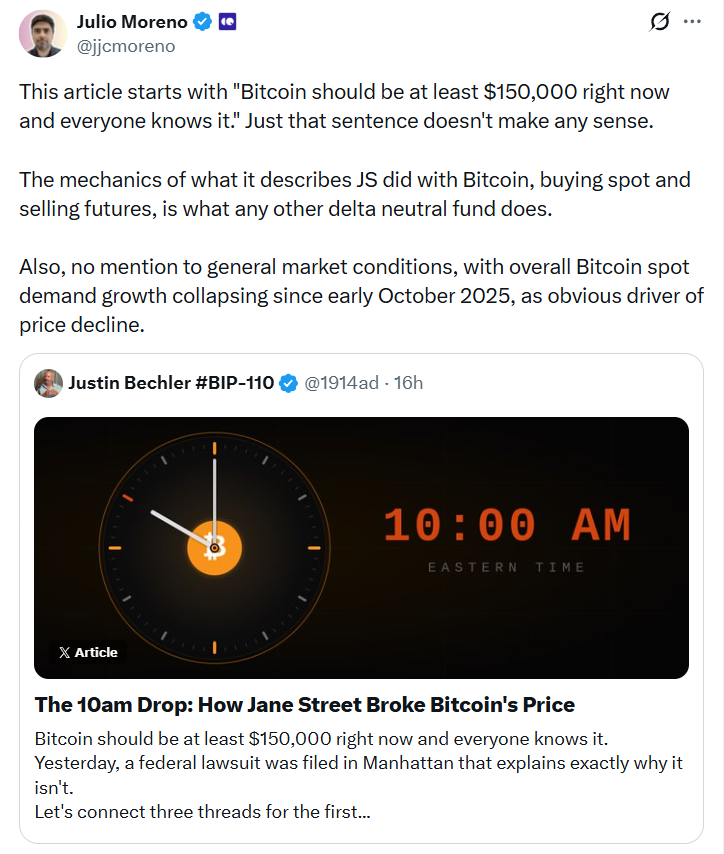
sauce: Julio Moreno
Claim focuses on Bitcoin dumping at 10am
Online stories have focused on the idea that Bitcoin regularly drops just after 10 a.m. Eastern time, which coincides with the start of U.S. trading. On-chain analyst Nonji posted an hourly chart of Bitcoin on Wednesday, claiming that Jane Street had been “manipulating” the market at the time for months.
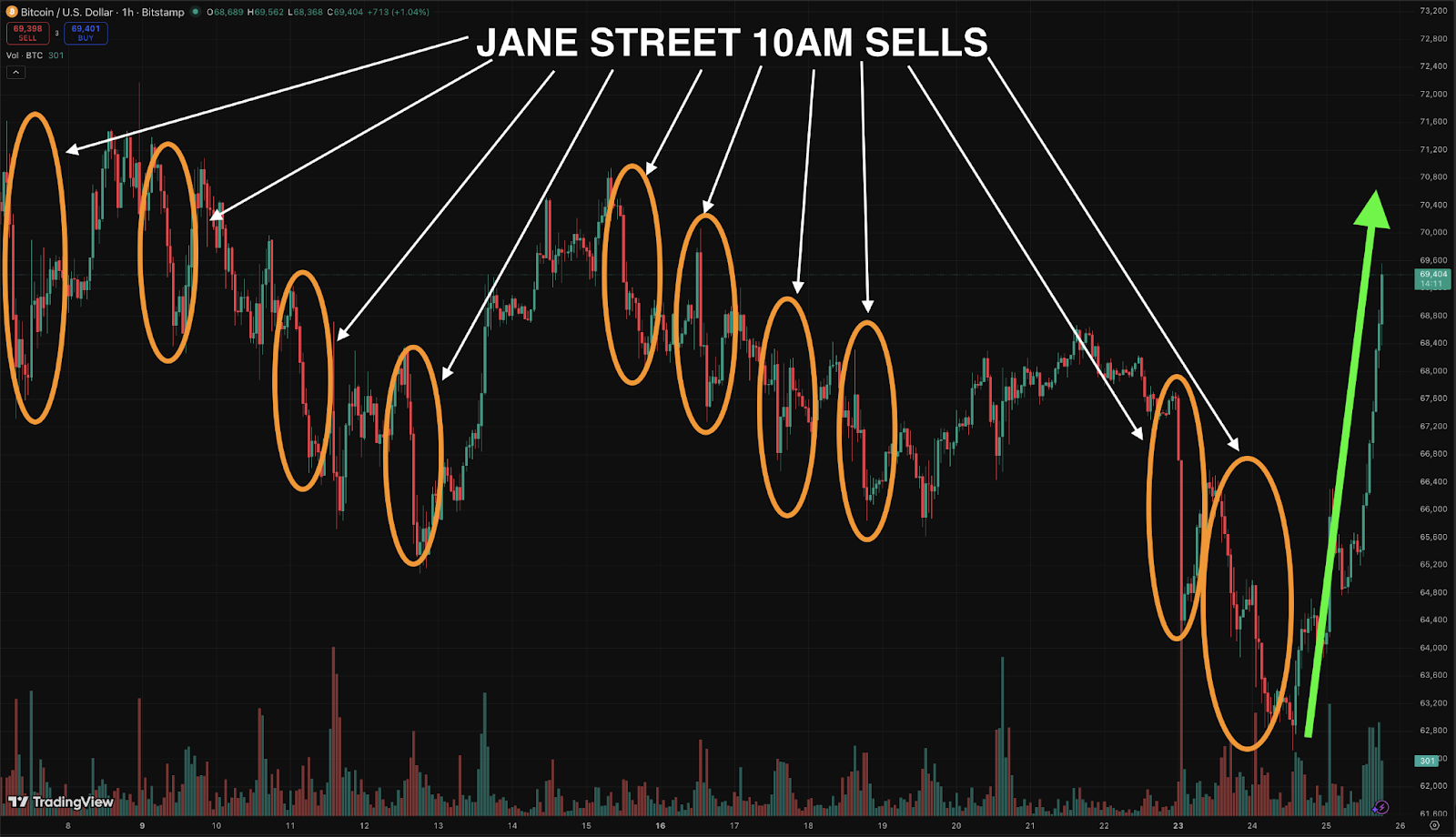
sauce: I don’t know
Cryptocurrency market watchdog account Whale Factor claimed that Bitcoin has been experiencing consistent daily declines of 2-3% within minutes of U.S. trading, and that the program has been manipulated since early November.
Related: Bitcoin government bonds record rare consecutive sell-off $BTC Traded for nearly $66,000
“Many traders have noted that Jane Street’s massive $2.5 billion+ position in BlackRock’s IBIT is likely the driving force: a liquidity sweep designed to accumulate spot ETFs at a discount,” Whale Factor said in a Dec. 9 X post.
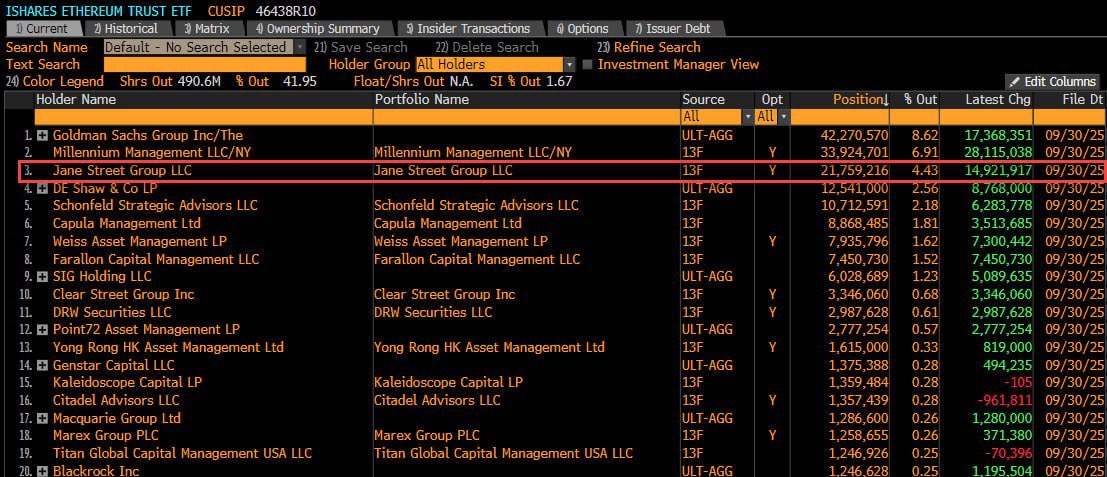
sauce: whale factor
Macro analyst Alex Krueger disputed this framework, sharing blockchain data showing that Bitcoin had a cumulative return of 0.9% from 10:00 a.m. ET to 10:30 a.m. ET since January 1, arguing that this was not a “systemic dump.”
“Everyone says Bitcoin crashes at 10am every day. I pulled the data and that’s not true,” Krueger wrote in a Thursday post, adding that the “10am crash” theory is a repricing of a broad range of risk assets that track the price performance of the Nasdaq Stock Index.
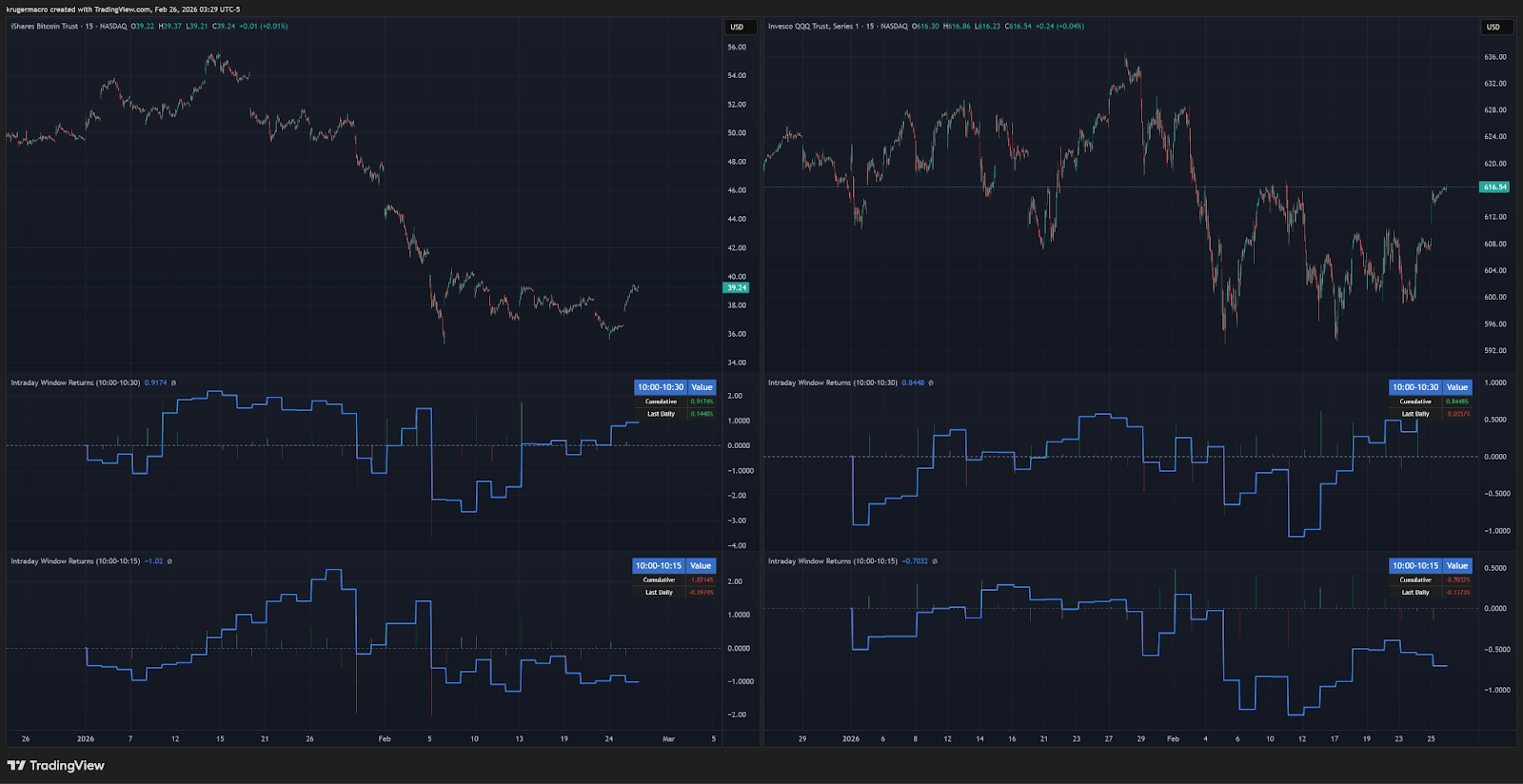
sauce: alex kruger
Analysts say no single company can drive a bear market
Some market participants said it was unlikely that one entity could dominate a global market as deeply fragmented as Bitcoin, even if certain trading strategies amplified volatility on U.S. exchanges. “Regardless of market manipulation or not, the price of Bitcoin is not driven by just one company, no matter how influential they are. Bitcoin is not a meme coin,” said Nick Pucklin, co-founder and chief market analyst at education platform Coin Bureau.
“It is understandable that investors with strong beliefs in Bitcoin are looking for villains during a major economic downturn. However, the reality of Bitcoin market dynamics is more nuanced.”
Pucklin said Bitcoin’s recent weakness can be well explained by a combination of geopolitical uncertainty, global liquidity conditions, and competition for investor attention from the burgeoning artificial intelligence sector.
magazine: Bitcoin’s “biggest bullish trigger” will be Saylor’s liquidation — Santiment founder