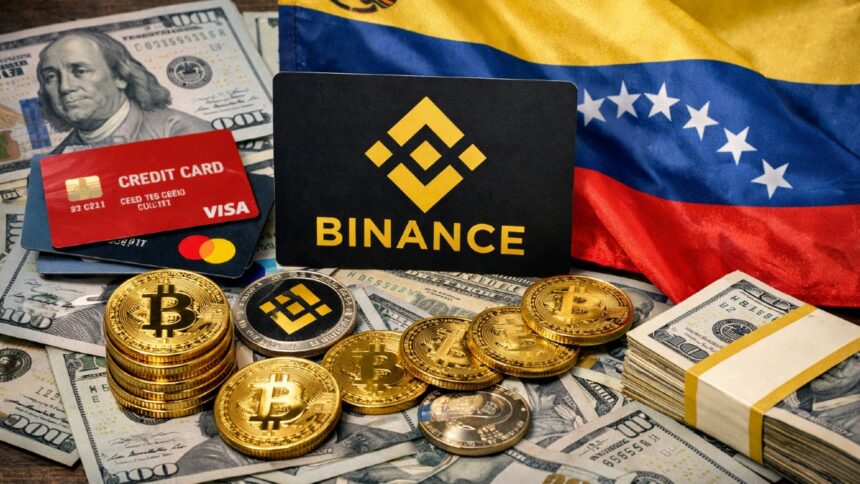
Cryptocurrency exchange platform Binance recently reported that credit and debit card payment channels are inconvenient for Venezuelan users and risk controls have been tightened.
According to an official statement released through a community channel, virtual currency purchasing operations using dollar-denominated virtual cards issued in Panama such as Zinli and Wally, as well as virtual cards financed by Venezuelan banking institutions, are prohibited. We are experiencing high rejection rates and operational limitations.
According to information provided by the exchange, the most recurring issues detected in recent weeks include failure to receive verification codes (OTPs), addition of virtual card limits, and in some cases Card payment options for certain profiles disappear completely.
Due to this situation, Significant increase in customer service requestsThe company says it monitors restrictions imposed by payment processors and banking companies.
Venezuela’s new “exchange bicycle”
The issues reported by Binance do not occur in isolation. Currently, the Venezuelan market is experiencing arbitrage dynamics reminiscent of the “quota scraper” era experienced in 2014-2015.
The phenomenon, dubbed the new “exchange bicycle” by analysts, is due to the difference between the official exchange rate of the national bank US dollar and the exchange price of a stablecoin linked to the secondary market dollar USD Tether (USDT).
This arbitration process is based on a cycle in which users obtain foreign currency at the official rate at local banks. Transfer to international debit card Or a virtual wallet like Zinli or Wally. They then use those funds to buy USDT on platforms like Binance, and then liquidate those assets on peer-to-peer (P2P) markets at very high rates.
According to data from the analytics platform P2P.Army, acquisition costs in the banking industry average 515 bolivars per dollar, while the exchange value in digital markets could be closer to 580 bolivars.
It should be noted that despite the failures detected in direct card purchases within the global platform, no incidents have been reported in Binance’s P2P (person-to-person) marketplace operations for buying and selling Bitcoin and other digital currencies.
This method continues to be the main liquidity method for Venezuelan users, People avoiding traditional payment processors Direct transactions between individuals.
Use of international cards of public and private banks
Despite certain restrictions indicated by Binance for direct purchases of digital assets, users of the domestic banking system have reported that they cannot use international cards issued by institutions such as Banco de Venezuela, Banesco, and Banco del Tesoro. Maintain operations of other global services.
According to user reports, these financial products can currently be used for payments on platforms such as Facebook, PayPal, Roblox, Fortnite, Shein, and Amazon.
However, in the digital asset ecosystem, its use for direct purchases on Binance.us appears to be limited to US residents only.
To successfully complete these transactions in a licensed business, Must have available balance in foreign currency and have online payment option enabled. However, be aware that random rejections may occur depending on the destination platform.