

The Strait of Hormuz has once again become one of the most sensitive points in the world economy. Tensions in the Middle East are putting energy transport through the Strait of Hormuz at risk. Any disruption to its operations would have an immediate impact on energy markets, inflation, and financial assets, including Bitcoin (BTC).
The Strait of Hormuz connects the Persian Gulf and the Gulf of Oman and forms one of the most important energy routes on Earth.
It circulates around 20% of the world’s oil and a significant portion of its liquefied natural gas, making it a strategic hub for the world’s energy supply. Traffic through the route has been partially blocked since March 3 amid a military escalation between the United States, Israel and Iran, a situation that has affected maritime trade and energy exports in the region.
And the impact on the market was immediate. Crude oil prices exceeded $100 per barrel for the first time in more than three years, approaching $120, and the rate of increase has since slowed slightly. As of this writing, the price as of March 10th is $89.
The situation is further exacerbated by the decisions of the region’s major producers. Saudi Aramco, the world’s seventh most valuable company, cut production at two oil fields, with the United Arab Emirates, Iraq, Kuwait and Qatar also implementing cuts.
Macroeconomic impacts: inflation and monetary policy
Rising oil prices have a direct impact on the global economy. As energy prices rise, the costs of transportation, industrial production, and daily necessities also rise, increasing inflationary pressures.
This scenario has direct implications for monetary policy decisions. Jasper de Meere, strategist and OTC trader at crypto trading firm Wintermute, explained the rise in oil prices as follows: Market expectations regarding US interest rates are changing.
“Brent crude rose 26% for the week on concerns about long-term energy restrictions,” he said.
Due to this increase in energy costs, The US Federal Reserve (FED) eases monetary policy. “Markets are currently pricing in only one rate cut in 2026, whereas two weeks ago the consensus was split on two or three rate cuts,” Demere said.
As CriptoNoticias explains, lower interest rates make credit cheaper and increase liquidity in the financial system. That environment typically favors riskier assets like BTC and cryptocurrencies. Investors tend to seek higher returns.
Bitcoin resists conflict disruption
The charts created by the company show weekly comparisons between different asset classes, including stocks, bonds, commodities, and digital assets.
During the week of March 2nd to 8th, BTC was one of the best relative performing assetsMeanwhile, most of the financial markets recorded losses.
According to De Meere, this behavior surprised many operators. “It’s not just macroeconomic conditions that are worth noting. Bitcoin has performed well at a time when most traders were expecting the opposite,” he said.
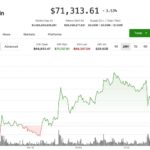
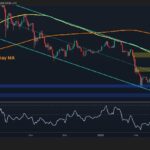
Bitcoin is currently trading near $70,000 as the market continues to focus on two key factors.: Developments in the Middle East conflict and the next (FED) meeting.
Further escalation in regional developments or more limited changes in monetary policy could reintroduce volatility in financial markets. But so far, BTC has shown more resilience than other assets in the face of the uncertainty created by the energy crisis.