



Based on CoinWarz data, Bitcoin’s hashing power increased its difficulty by about 15% on Friday to just over 144 trillion. The move reversed an earlier 10% drop due to widespread power outages in parts of the United States.
The numbers are straightforward. The machine went quiet during the extreme weather event, but then came back online and rebalanced the protocol itself.
Winter power outage and its recovery
Foundry USA’s pool saw dramatic fluctuations in computing power, dropping to nearly 198 EH/s and then rising from around 400 EH/s. Many carriers in the affected areas have temporarily suspended operations to protect equipment and support the power grid during the winter storm, according to reports.
Some of the space hosting miners was coordinated with utilities. Power saved. Power has been redirected.
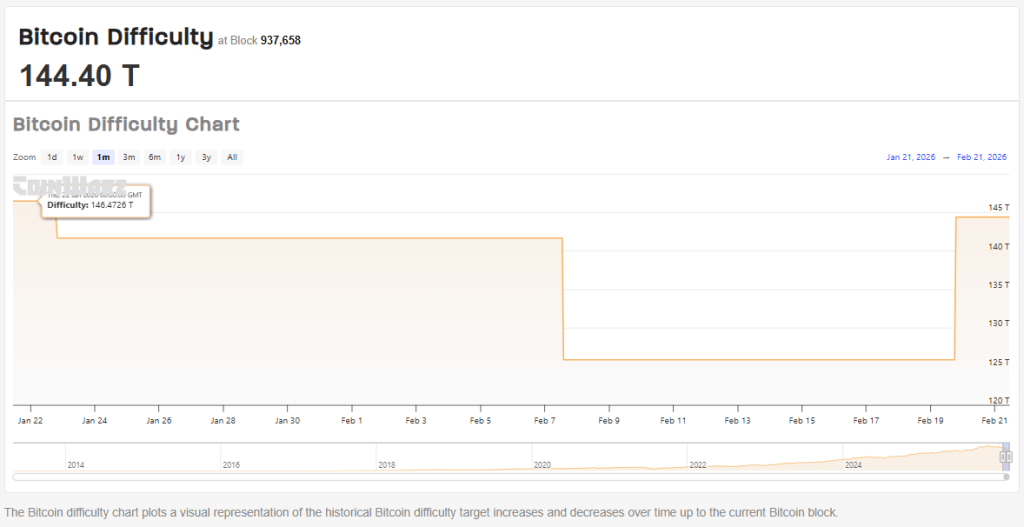
Bitcoin mining difficulty graph. Source: CoinWarz
Flexible power trading has changed the game
According to the report, several miners went beyond suspending their work. LM Funding America reported that it has cut down on machines, sent contracted power back to the grid, and obtained abatement payments that will help offset lost mining time.
Canaan also said its U.S. locations are participating in demand response efforts with local partners. These arrangements are part of the reason why many facilities can afford to go offline when grid relief is needed and restart when conditions improve.
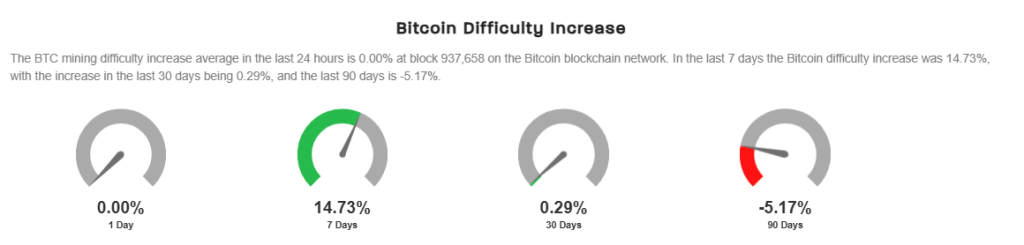
Source: CoinWarz
What does it mean to be difficult?
Bitcoin difficulty is designed to reset every 2,016 blocks to bring the average block time closer to the 10 minute goal. As more hashing power is returned, the difficulty of the algorithm increases. This makes it harder to attack the network and increases the amount of work required to earn block rewards.
For miners, higher difficulty earns fewer Bitcoins per unit of compute, squeezing margins on older rigs and equipment with higher electricity costs.
Price trends are always linked to headlines
Bitcoin traded near $68,000 as the market reacted to rising geopolitical tensions, especially between the US and Iran. Trading is becoming more cautious. The volume has become lighter. Prices have stalled after rebounding in headline-driven flows, indicating that investor moods are still fluctuating due to global news.
At the same time, network metrics continued to change behind the scenes. This is a reminder that technical and macro factors can point in different directions.
According to the Cambridge Center for Alternative Finance, the US currently supplies most of the world’s hashing power. This means that U.S. regional events, weather, and grid policy are critical to global security and the mining economy.
Some companies have started treating mining as a flexible load that can stabilize the grid during times of stress, creating new sources of income beyond pure block rewards.
Politics and market conditions
Politician comments and geopolitical developments increase friction. References to US President Donald Trump in recent headlines are tied to broader market tensions. Geopolitics could reduce risk appetite and keep crypto prices range-bound.
The rebound of difficulties itself did not cause large price increases. Rather, it confirmed the simple truth that while the protocols dealt with the shock, the miners were feeling the squeeze.
Featured images from Pexels, charts from TradingView
editing process for is focused on providing thoroughly researched, accurate, and unbiased content. We adhere to strict sourcing standards, and each page is carefully reviewed by our team of top technology experts and experienced editors. This process ensures the integrity, relevance, and value of your content to your readers.