


Bitcoin mining companies have released a significant portion of their Bitcoin reserves in recent months, marking a shift from the self-funded strategy that dominated the industry during the 2024-2025 market upcycle.
According to TheEnergyMag’s Miner Weekly newsletter, publicly traded miners sold more than 15,000 Bitcoins ($BTC) From October. That month marked the market’s peak before a historic flash crash triggered widespread deleveraging across the industry.
Several major miners contributed to the sale. The newsletter highlighted Cango’s February sales of 4,451 units. $BTCsimilar to BitDeer, which reportedly liquidated its entire Bitcoin treasury last month, representing about 60% of its reserves.
We also pointed out multiple issues with Riot Platforms. $BTC Sales volume in December and Core Scientific’s sales plan is approximately 2,500 units. $BTC During the first quarter.
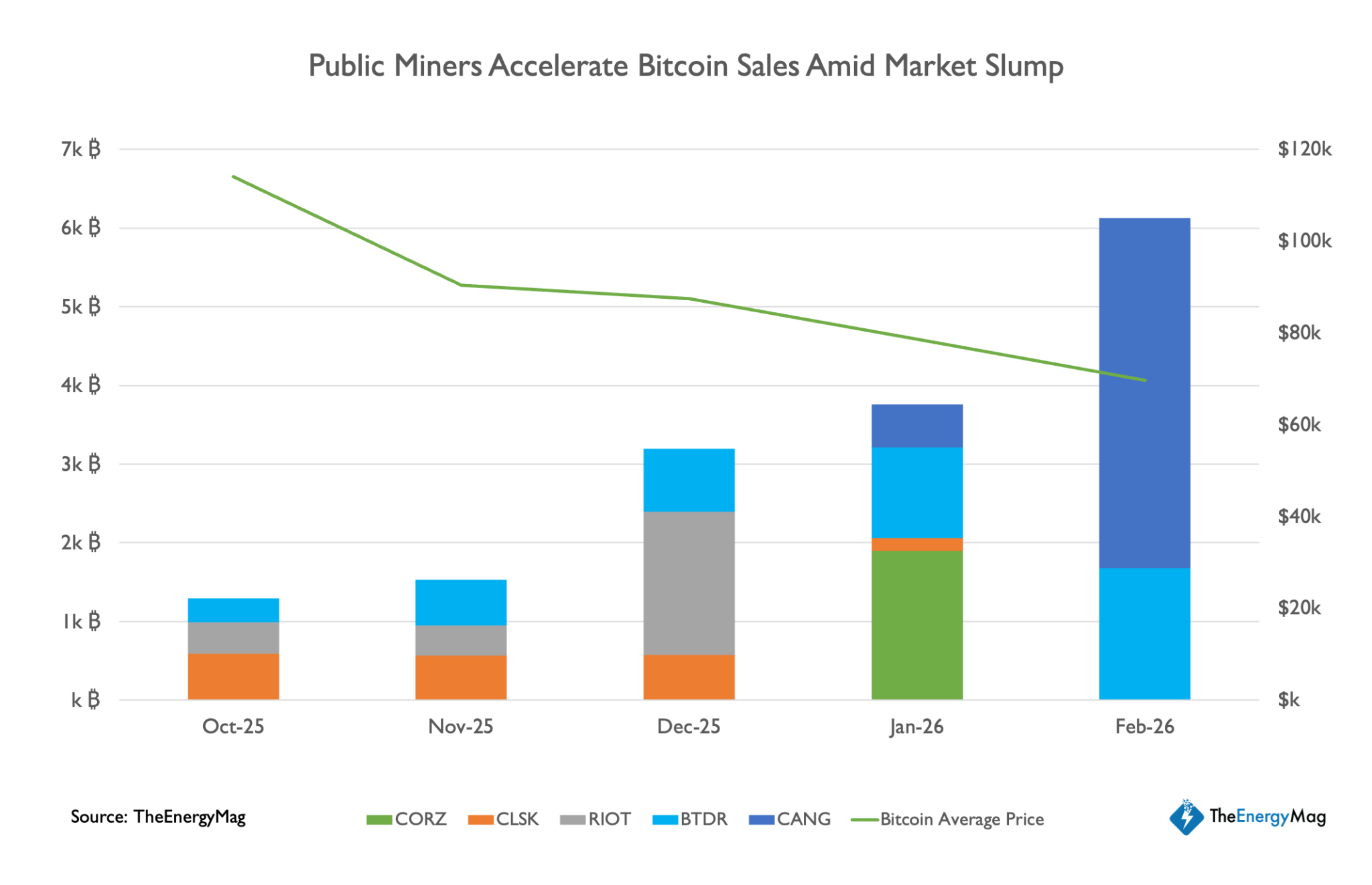
Data compiled by TheEnergyMag suggests that sales of miners’ vaults have accelerated since October. sauce: minor weekly
MARA Holdings, the largest publicly traded Bitcoin miner, made headlines this week after indicating in its latest regulatory filing that it may both buy and sell Bitcoin to maintain flexibility and discretion.
The market initially focused on the potential sale, prompting Vice President Robert Samuels to clarify the company’s position that while the filing allows for a flexible sale, it does not imply a majority liquidation.
MARA currently holds over 53,000 $BTCbecoming the second public company holder of Bitcoin after Michael Saylor’s Strategy.
Related: Bitcoin Mining 2026 Prediction: AI Turnabout, Margin Pressure, and Fight for Survival
Mining companies shift strategy as profit margins shrink
Bitcoin miners’ recent sales figures represent a significant departure from previous cycle trends, when many companies adopted what was effectively a “financial strategy” of retaining a larger share of the coins they mined. $BTC It’s on their balance sheet.
At the time, research from Digital Mining Solutions and BitcoinMiningStock.io suggested that holding patterns reflected expectations for further price appreciation. This also coincided with efforts by several miners to strengthen their financial footing while expanding into adjacent businesses such as AI infrastructure, high-performance computing, and data center services.
However, conditions in the industry have worsened since October, with some observers describing the current environment as the most severe margin pressure on mining companies in history.
That pressure is starting to show on its balance sheet. For example, CleanSpark has fully repaid its Bitcoin-backed credit facility, which the company said is aimed at reducing financial risk as industry margins tighten.
Related: US Bitcoin boosts hashrate with 11,298 new mining machines