
Major Bitcoin mining companies are increasingly selling some of their Bitcoins. $BTC As we pivot towards artificial intelligence (AI) infrastructure, reserves are also increasing. This shift highlights how miners are pursuing more predictable revenues from AI data centers at a time when mining margins are volatile.
Cryptocurrency miners move from Bitcoin government bonds to AI data centers
For years, major Bitcoin mining companies have adopted a financial strategy based on the long-term belief that Bitcoins are mined and held, increasing their value through scarcity. This philosophy has helped some companies accumulate assets worth hundreds of millions of dollars. $BTC It’s on their balance sheet.
Now, that strategy is starting to change. A quiet wave of selling has begun across a group of miners that control over $8 billion in Bitcoin. The Bloomberg report highlighted a clear trend, with companies monetizing their digital asset reserves to fund new opportunities, although the motivations vary, from shareholder pressure to rising energy costs and shrinking mining margins. That opportunity is artificial intelligence.
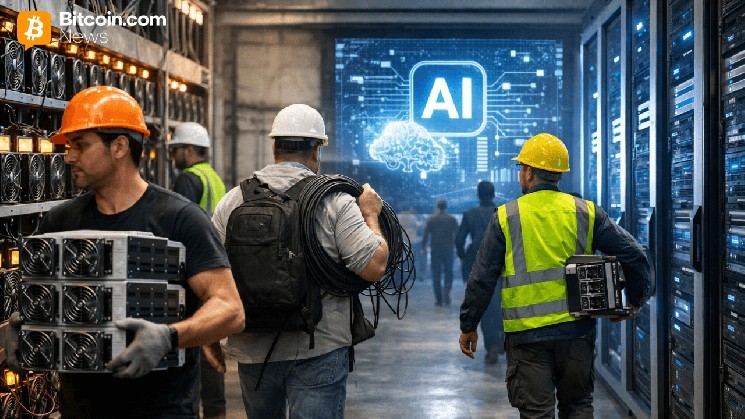
Many of the same large facilities once dedicated to mining, complete with high energy capacity and specialized infrastructure, are increasingly being repositioned for AI and high performance computing (HPC). Compared to Bitcoin mining, AI computing can provide a more stable and predictable revenue stream.
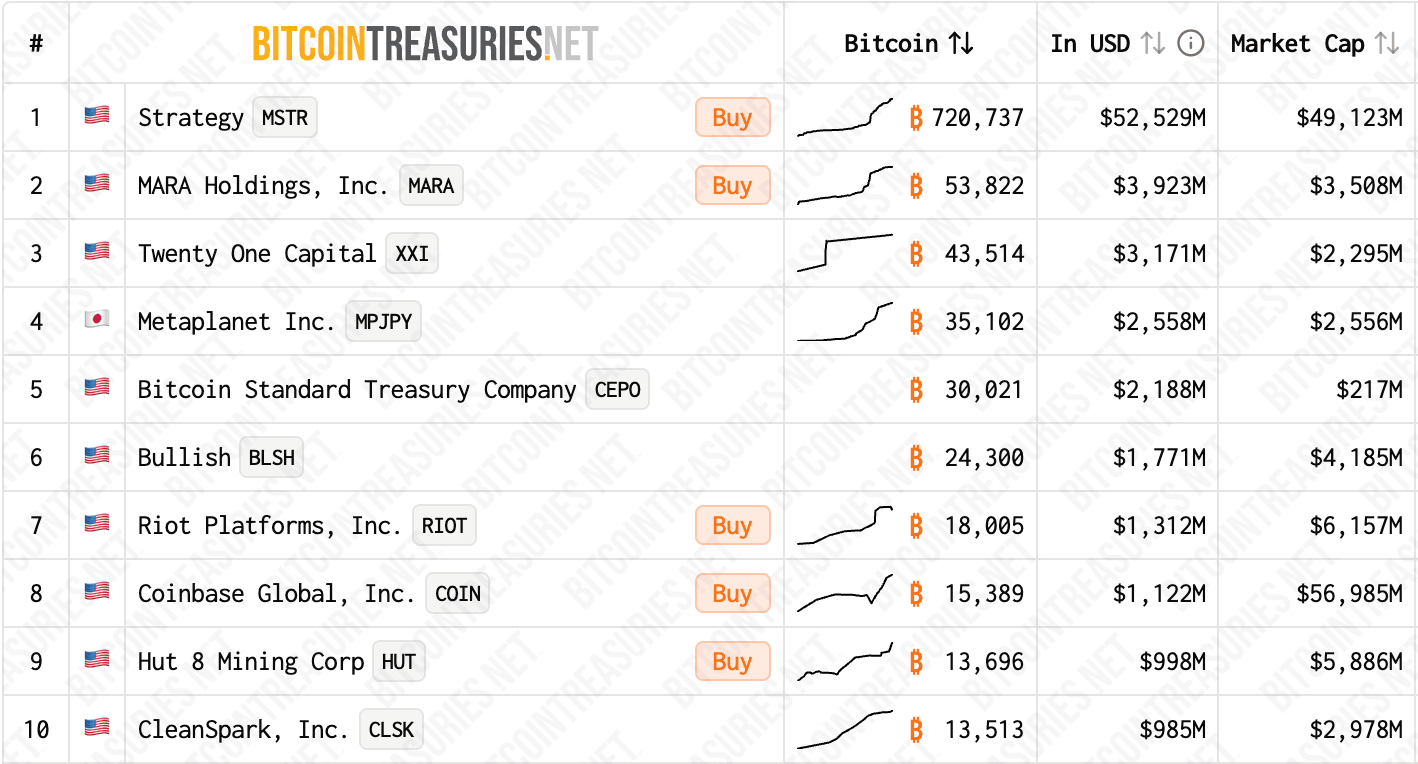
MARA, Riot and Cleanspark are in the top 10 public list $BTC holder.
Some major companies have already begun to pivot. MARA Holdings, one of the largest holders of Bitcoin with around $4 billion in reserves, has indicated it may sell some of its assets. Riot Platforms and Cleanspark have restructured their leadership teams to accelerate their AI efforts, while Bitdeer Technologies has already fully liquidated its Bitcoin reserves. Core Scientific sells most of its products. $BTC Stored in Q1 2026 to fund AI expansion.
Industry observers say the economics are compelling. Megawatts of power devoted to mining generate returns that are tied to factors outside of the miner’s control, such as Bitcoin’s price, network difficulty, and halving. By directing that same energy to AI workloads, you can generate more predictable contract revenue.
Meanwhile, Bitcoin’s price volatility increases the urgency of this change. The asset has fallen more than 40% since October’s all-time high of around $126,000, but has recently rebounded to above $70,000.
Still, analysts suggest the miner’s sale is more due to strategic repositioning than distress. As demand for AI soars globally, mining companies appear increasingly eager to trade the computing infrastructure and digital gold that will power the next technology boom.
Frequently asked questions 🌍
- Why are Bitcoin miners selling Bitcoin? $BTC Stocks?
Many miners sell some of their reserves to fund investments in artificial intelligence data centers. It provides more stable and predictable returns compared to the volatile economy of crypto mining. - Which mining companies are leading the transition to AI?
Major companies such as MARA Holdings, Riot Platforms, Cleanspark, and Bitdeer are either starting to sell Bitcoin or restructuring their operations to focus on AI and high-performance computing infrastructure. - How does AI computing compare economically to Bitcoin mining?
AI data centers typically operate under long-term contracts with tech companies and provide stable income, while mining revenue fluctuates based on Bitcoin price, network difficulty, and energy costs. - What does this trend mean for the global cryptocurrency market?
For investors, the miner sell-off could increase short-term supply pressure on Bitcoin, but it also signals broader integration between crypto infrastructure and emerging technologies such as AI.