


BitGo Europe GmbH has started offering crypto-as-a-service across the European Economic Area. This will enable fintechs and banks to integrate regulated cryptocurrency storage, trading, and fiat on- and off-ramps under the EU’s Market for Cryptoassets (MiCA) framework.
According to Tuesday’s announcement, the expansion will make BitGo’s API-based infrastructure available in all 30 EEA countries, allowing institutions to embed wallet, onboarding and payment services directly into the platform. The service includes a multi-asset wallet and Single Euro Payments Area (SEPA) fiat rail.
BitGo says its custodial wallet is conditionally insured up to $250 million and includes configurable policy management and 24/7 operational support. The platform supports the purchase, sale, and holding of Bitcoin (BTC) and other supported digital assets within partners’ existing interfaces, with payments processed through BitGo’s infrastructure.
The product was previously available in the US through BitGo Bank & Trust, and now operates in Europe through the company’s locally regulated entity, BitGo Europe GmbH.
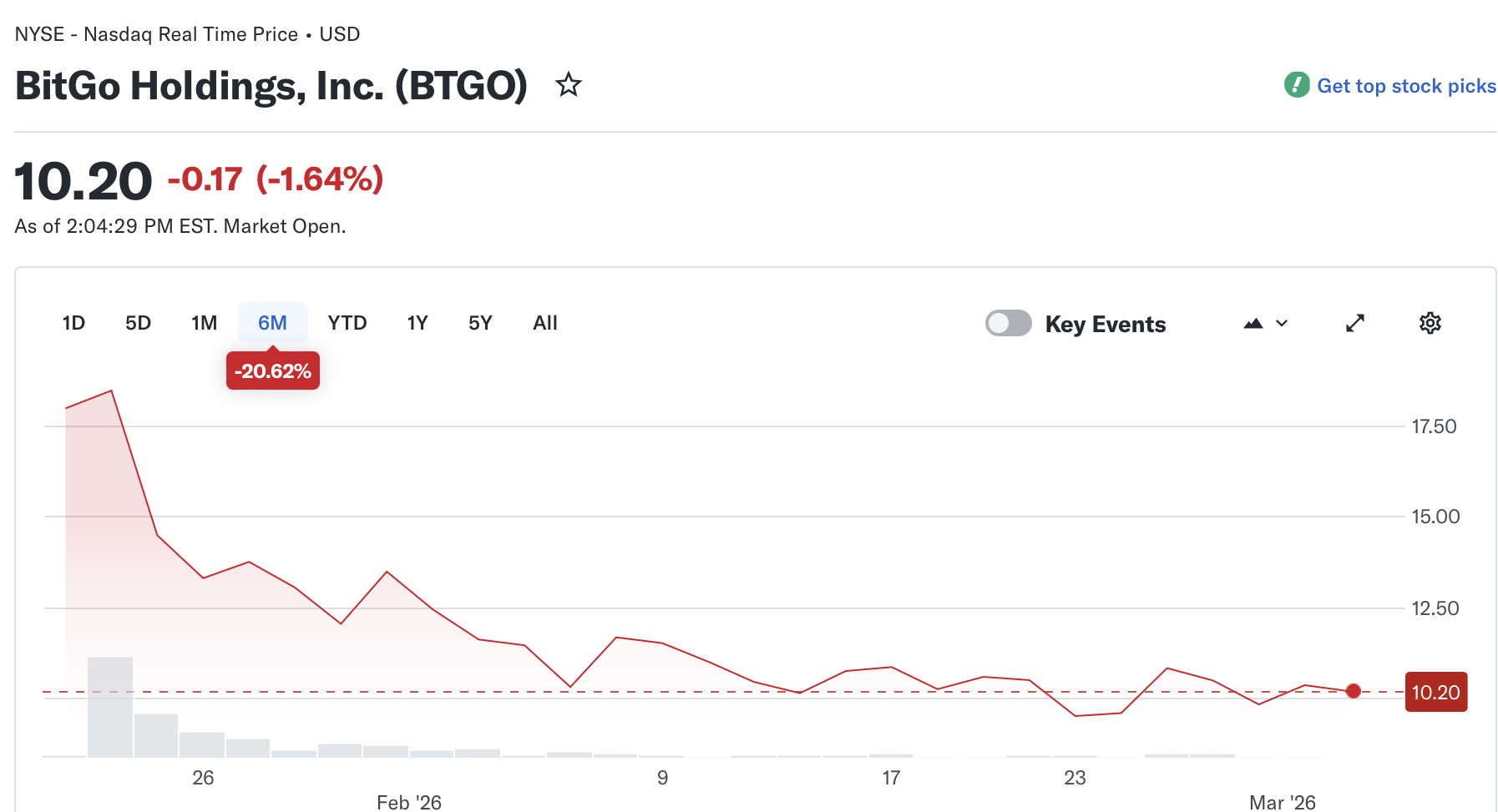
BitGo has been operating since 2013 and provides custody, wallet, staking, trading, lending, stablecoin, and payment services to institutional investors around the world. The company went public on January 22, trading on the New York Stock Exchange under the ticker BTGO.
At press time, BitGo shares were trading at $10.20, down about 1.6% on Tuesday and about 20% since going public, according to Yahoo Finance data.
Related: Stablecoins could undermine European bank lending and monetary policy: ECB
Storage infrastructure expands in Europe
This development reflects the widespread growth of regulated custody infrastructure across Europe following the introduction of MiCA, as financial institutions formalize digital asset services under the EU’s licensing regime. Some banks have chosen to work with specialized cryptocurrency companies rather than building internal custodial systems.
In July, Deutsche Bank moved towards custody of cryptocurrencies through a partnership with Bitpanda’s technology division and Taurus, a Swiss digital asset infrastructure provider.
Spain’s BBVA announced in September that it would rely on Ripple’s institutional custodian platform to support Bitcoin Ether (ETH) trading and custody services due to MiCA compliance.
At the market infrastructure level, Clearstream, part of Deutsche Börse, announced that it will offer Bitcoin and Ether storage and settlement to institutional customers through its Swiss subsidiary Crypto Finance AG.
Some companies have chosen to structure their custodial services through licensed European entities. In January, Standard Chartered announced plans to start digital asset custody in Europe after obtaining a license in Luxembourg and establishing a dedicated EU entity to provide the services directly.
magazine: Crypto lawyer warns that transparency laws risk repeating Europe’s mistakes