

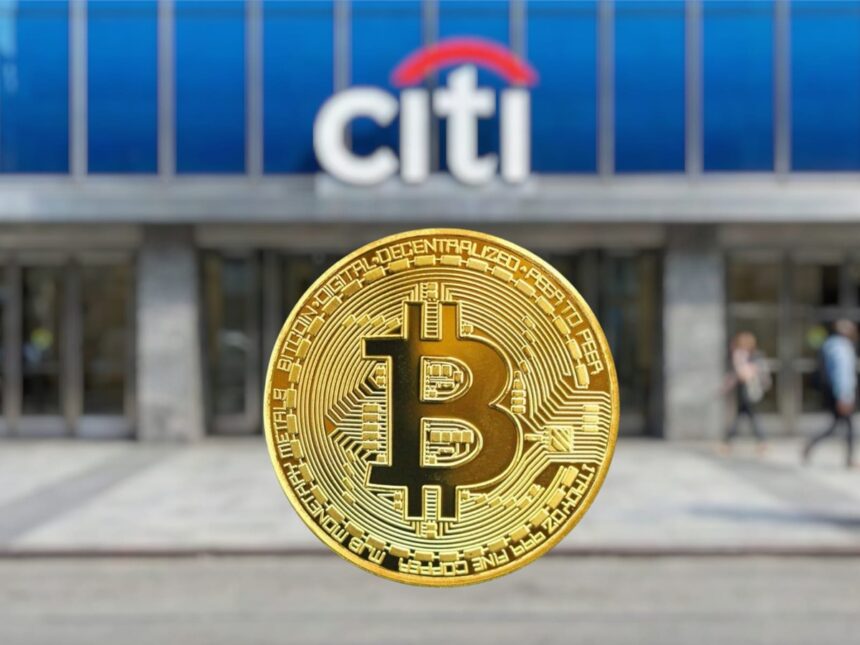
Global banking continues its strategic approach to digital assets, and now it’s Citigroup’s turn. The American financial giant has confirmed that it is developing the infrastructure to integrate Bitcoin into its institutional systems in 2026.
The announcement was made by Nisha Surendran, the bank’s head of digital asset custody, during the Strategy World Conference in Las Vegas. In his presentation, he explained that Citi is working to make Bitcoin “bankable,” adapting its systems and processes to meet current demands and making the asset available 24/7. It is known that it will be released this year, but Surendran did not reveal if a date has been set.
Citigroup’s plans will focus on incorporating Bitcoin into its core organizational systems. What the bank aims for Support storage, servicing and collateral management Report on BTC alongside traditional assets. Simply put, customers will soon be able to manage their digital assets through the same rails they use for stocks and bonds.
Citigroup’s strategy is based on three pillars
The bank’s strategy will focus on three main steps. The first pillar is institutional level custody. There, we plan to provide advanced key management and secure storage infrastructure, and integrate Bitcoin within the same operational framework we use for approximately $30 trillion of traditionally held assets.
To achieve this, the company combines traditional infrastructure, including regulated custody in over 60 markets, access to over 220 securities and payment networks, and 24/7 US dollar support, with new network-based technologies such as crypto assets, currencies, and tokenized securities.
The second pillar is an integrated service model. Bitcoin positions will be integrated into the same reporting channels, accounting systems, and tax workflows as traditional financial assets. In effect, institutional clients will be able to view and manage their BTC exposure within the same operational architecture they use for traditional securities.
Clients will be able to interact with all assets through known channels such as SWIFT, APIs, and user interfaces (UIs).
The third pillar is business simplification. Citi recognizes that many institutions do not want to directly manage their own wallets, private keys, or addresses. Banks take on this technical complexity, eliminating friction and standardizing processes.
However, this initiative is not aimed at traditional retail customers. The project specifically targets institutional clients such as asset managers, hedge funds, banks, large corporations, and corporations that require regulated infrastructure, robust custody, and formal reporting standards before adding assets to their balance sheets.
Citigroup’s entry adds to a growing list of important financial companies developing services specifically for digital assets. Competitors such as JPMorgan Chase & Co., BNY Mellon, Goldman Sachs, and State Street are already expanding their capabilities to offer crypto custody, trading, and investment solutions. The race to integrate Bitcoin and other digital assets into traditional financial infrastructure is accelerating significantly, marking a turning point in institutional implementation.