


Looking at the latest volume data, it is hard to miss Ethereum’s structurally dangerous situation. The 34% drop in 24-hour trading volume is not a neutral cooldown, but rather a clear sign of a decline in participation at a time when ETH needs the most confidence. The current price is in the $2,900-$3,000 range, but the fact is that liquidity is declining rapidly.
Ethereum is not comfortable
Ethereum remains below key moving averages on the price chart. While the 200-day EMA is uncomfortably above the price, the 50-day and 100-day EMA have reversed and are acting as dynamic resistance. This compression exposes ETH. If this pullback fails, it could be a sign of a more significant trend change rather than a simple correction.
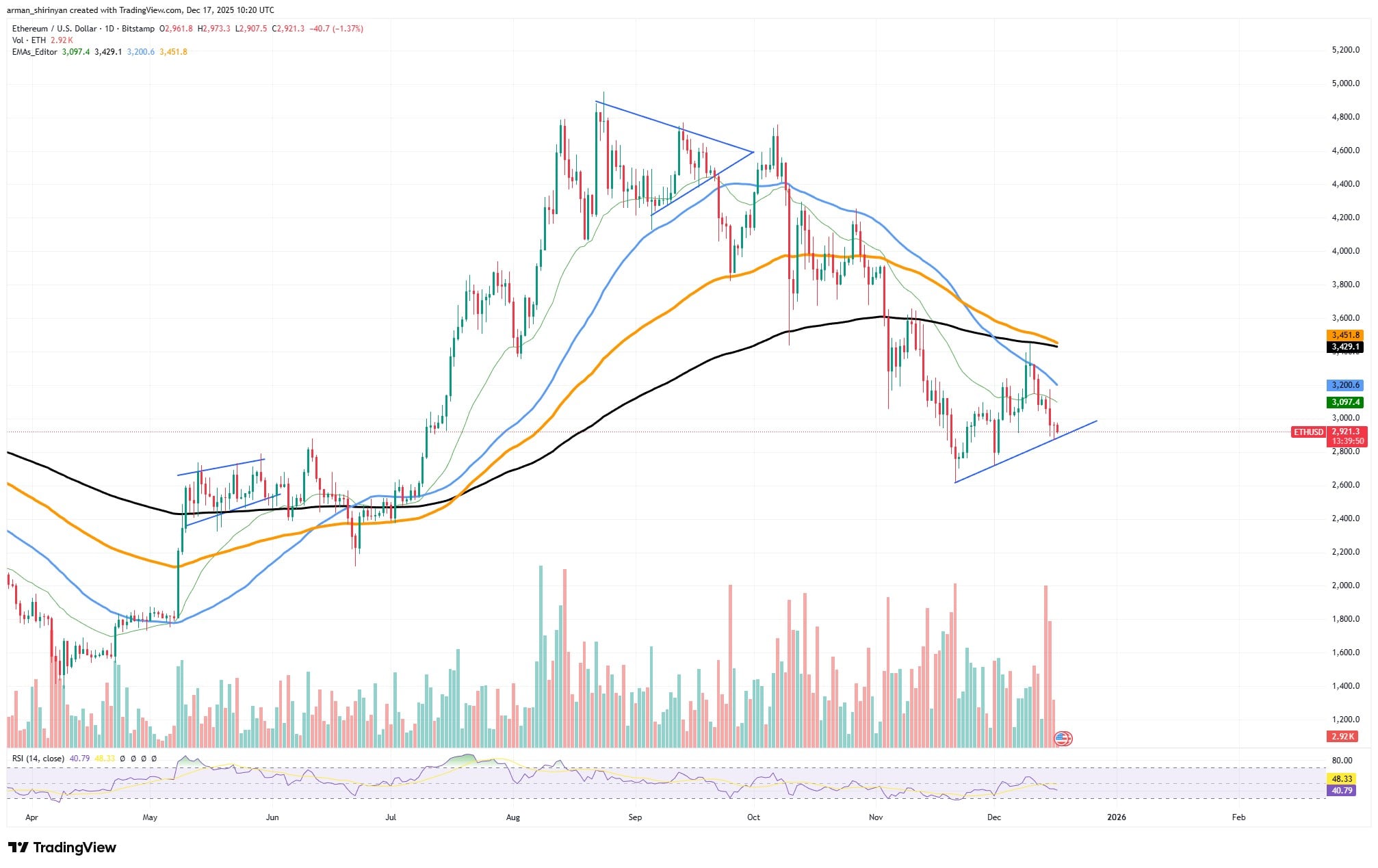
This view is supported by the RSI in the low to mid 40s. It’s not oversold enough to push buyers in, but it’s weak enough to indicate that momentum has stalled. The collapse in volume is particularly concerning as this is occurring after a previous spike in volume that was mostly bearish.
Forced activities such as liquidations, panic exits, and aggressive short positions were reflected in earlier spikes. It appears that sellers have already done their damage as sales volumes are down, but buyers have yet to emerge.
Volume is low, bids are low, and bleeding is slow, so the market goes down without much drama. Data on derivatives supports this picture. Despite the deteriorating structure, traders remain bullish as the long/short ratio remains skewed towards longs. If the price falls below $2,850-$2,800, the imbalance increases the likelihood of another flush.
Opportunity for market stability
From an investor’s point of view, it is not appropriate to blindly buy stocks at this point. In order to stabilize its market position, Ethereum requires a significant volume recovery, with consistent participation and not just a green candle. A rebound in its absence is likely to be a correction rather than the beginning of a recovery.
Volume determines what happens next. If ETH can recover between $3,050 and $3,100 while increasing volume, the damage could still be contained. Otherwise, the current low volume environment may cause more serious failures. This is not yet a cause for alarm, but it is a warning sign and you would be foolish to ignore it.