



Justin Bonds, founder and chief information officer (CIO) of CyberCapital, offered a candid and disturbing take on where Bitcoin could go over the next decade. In a detailed memo shared with heading towards complete collapse Within the next 7 to 11 years, this Networks pay the price for security and the continued decline in block rewards.
Will a complete collapse of Bitcoin occur due to a decrease in miner payments?
Bitcoin is known for its halving cycle, in which the block reward given to miners decreases by approximately 50% every 210,000 blocks, which is approximately four years. Bonds’ critique focuses on this event As the reason why Bitcoin’s network security will ultimately fail and cause the complete collapse of the major cryptocurrency.
as The block is cut in half Bonds believes Bitcoin is drifting toward a point where it can no longer reliably fund the miners securing the network, posing a series of risks that become harder to ignore with each cycle.
Many Bitcoin proponents will argue that the Bitcoin network remains highly secure because the hash rate is increasing. However, according to Justin Bonds, advances in mining hardware will reduce the cost of hash generation, potentially increasing the hash rate even as the actual security is weakened. The most important thing is how much money actually made by minersThat’s because the numbers represent the profitability and costs that attackers need to match or exceed.
Graphs tracking block rewards and miner profits show that Bitcoin is economically secure. Already lower than before years ago. To maintain security at its current level, he said, either transaction fees would have to become so high that users would stop using the network, or the price of Bitcoin would have to double every four years at a rate that would quickly outpace the size of the global economy.
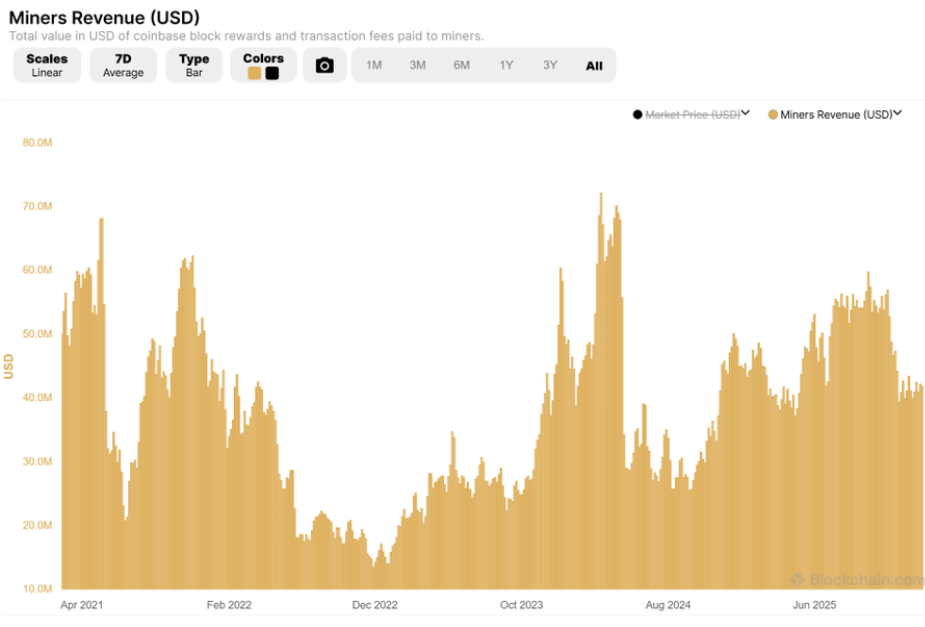
Bitcoin miner earnings. Source: @Justin_Bons from X
Prediction: Bitcoin will plummet after 2-3 halvings
The seven to 11 year period for Bitcoin’s collapse outlined by Bonds is directly tied to the halving schedule. Industry experts say the cost of continually attacking the Bitcoin network could fall within a few more halvings to the point where such attacks become economically attractive.
Bonds believes that if miners’ payouts are low enough, the potential rewards from attacking multiple exchanges and protocols could outweigh the cost of carrying out the attacks. The most likely scenario where this would happen is due to a double-spend attack on an exchange.
An attacker who controls 51% of the total mining capacity could deposit Bitcoin, exchange it for another asset, withdraw those funds, and then roll back the blockchain to get the original coins back.
He also highlighted data showing that the security budget relative to Bitcoin’s total market value has been declining over the years. This means that Bitcoin does not automatically become more secure as it grows.
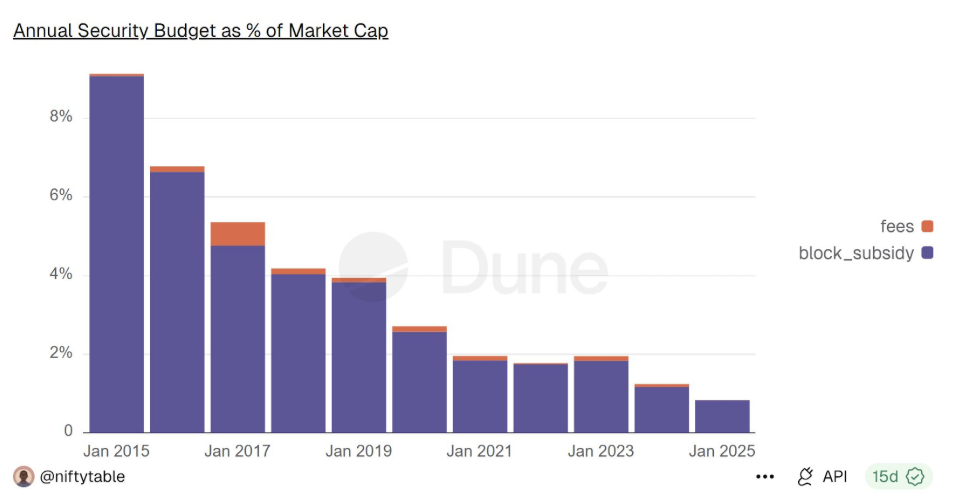
Bitcoin security budget as a percentage of market capitalization. Source: @Justin_Bons
This will eventually force Bitcoin to hit a breaking point. From here, either the network increases the fixed 21 million supply cap to restore incentives for miners, a move that is likely to break the chain, or the entire Bitcoin ecosystem accepts the risk of double-spending attacks.
Featured image from Unsplash, chart from TradingView
editing process for is focused on providing thoroughly researched, accurate, and unbiased content. We adhere to strict sourcing standards, and each page is carefully reviewed by our team of top technology experts and experienced editors. This process ensures the integrity, relevance, and value of your content to your readers.