


MoonPay, a cryptocurrency payments and stablecoin infrastructure company, has introduced a new software layer that gives its artificial intelligence systems direct access to blockchain-based financial networks. This allows AI agents to hold and move digital assets on their own, rather than relying on human intermediaries.
The product, called MoonPay Agents, is a non-custodial tool that allows AI agents or agent AIs to create wallets, hold digital assets, and perform on-chain transactions without human intervention once funding is complete.
The announcement reflects a broader push to integrate autonomous AI systems with crypto infrastructure, potentially allowing algorithms to interact directly with decentralized financial protocols and other blockchain applications.
“AI agents can reason, but they cannot act economically without capital infrastructure,” said Ivan Sotorite, founder and CEO of MoonPay, explaining that the product is permissionless and non-custodial.
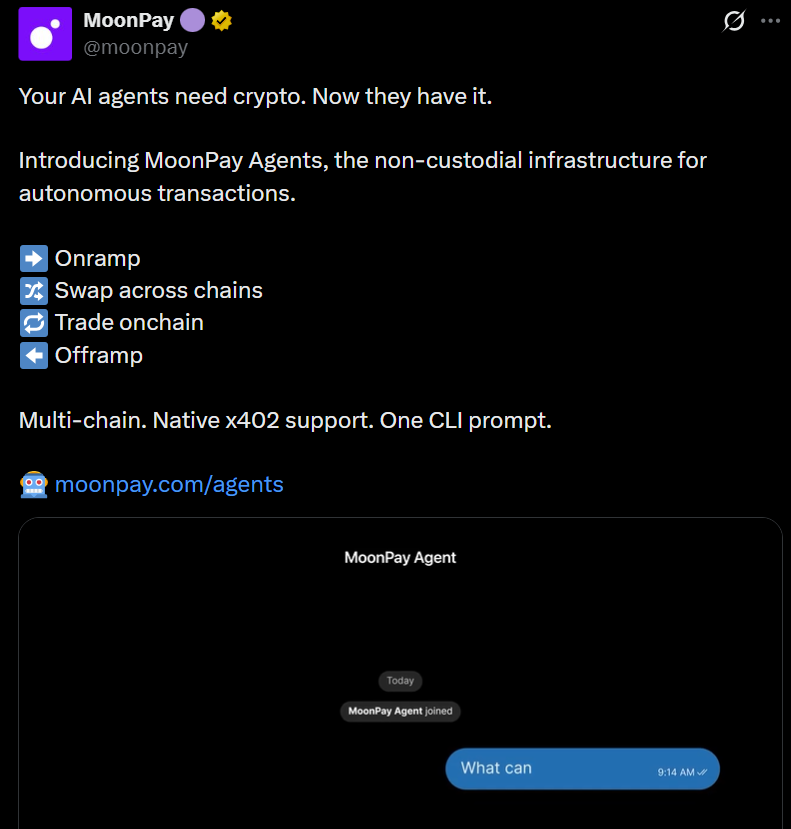
sauce: moon pay
Most AI systems are limited to analyzing data or generating recommendations, leaving humans in charge of executing transactions. MoonPay aims to bridge that gap by combining AI agents and programmable wallets to enable automated transactions and payments.
The move comes amid growing interest in stablecoin infrastructure and blockchain payment rails among traditional financial institutions. Intercontinental Exchange, the parent company of the New York Stock Exchange, is reportedly in early discussions about a potential investment in MoonPay and is aiming to raise capital at a valuation of $5 billion, according to Bloomberg.
Related: PayPal sparks acquisition interest after stock price drops 46%: Report
Agentic AI: A potential $236 billion market
Although the global market for AI agents is still an emerging market, some predictions indicate rapid growth.
A World Economic Forum study estimates that the sector could reach $236 billion in size by 2034, driven in part by the rise of what it calls “proxy commerce,” such as the AI-powered shopping tools that gained attention during the recent holiday season.
It appears that companies are increasingly adopting it. A recent McKinsey survey found that nearly a quarter of companies said they were expanding their use of AI agents.
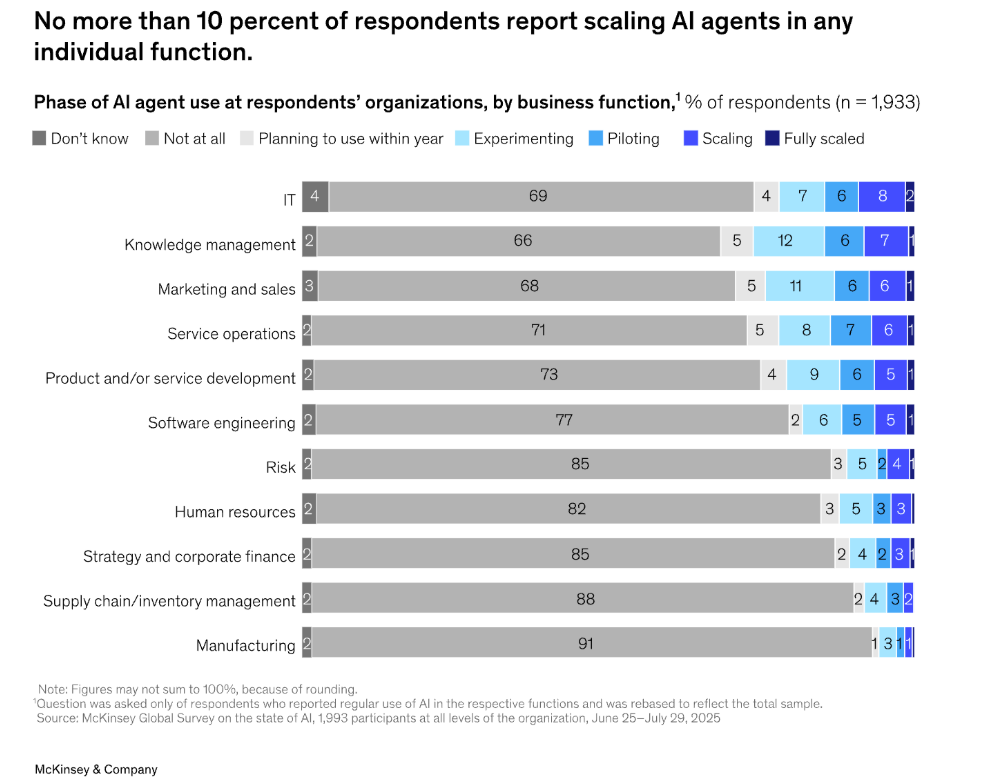
The use of agent AI within organizations is increasing. sauce: McKinsey
This trend is especially important for the cryptocurrency industry. As AI agents increasingly make economic decisions, the transactions underlying those decisions may require digital payment rails. Industry players believe that stablecoins and blockchain networks will play an important role, especially in cross-border and programmable transactions.
This trend was recently highlighted in a CoinGecko report on AI agent payments infrastructure, pointing to emerging standards such as Ethereum’s ERC-8004, which aims to give AI agents a verifiable on-chain identity, and Coinbase’s x402, a protocol designed to enable automated stablecoin payments over the internet.
Some cryptocurrency companies have already started building on that vision. Crypto.com co-founder and CEO Kris Marszalek recently announced ai.com, an AI-focused platform that plans to introduce autonomous agents that can perform tasks, including financial actions, on behalf of users.
Related: Human costs remain low, so AI agents are not worth the cost: tech executive