

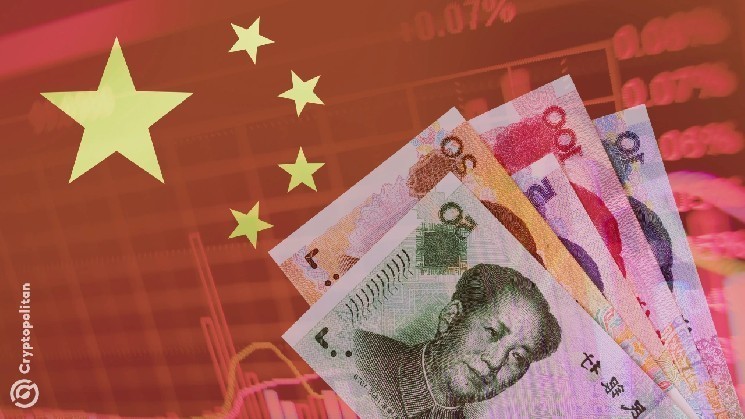
China offset $456 billion in liquidity pressures by getting the People’s Bank of China to inject nearly $87 billion to avoid seasonal cash shortages expected during the Spring Festival. The central bank also lowered the medium-term lending limit by 10 basis points to 1.4% from January’s 1.5% in a bid to revive economic growth.
The People’s Bank of China responded to expected seasonal cash shortages ahead of the Lunar New Year by increasing cash supply, and China Industrial Securities said the surge in cash demand followed predictable trends in household behavior. The People’s Bank of China wants to keep its financial pipes well-oiled to maintain economic momentum against intensifying headwinds.
The People’s Bank of China is committed to the recovery of China’s economy, charging some MLF lenders a record-low 1.4%, down from 1.5% in January and 1.55% in December. However, it is not yet clear how much of the $165 billion in MLF loans the central bank disbursed in January was given at low interest rates.
PBOC injection addresses estimated $461 billion liquidity gap
According to media reports, last week’s PBOC injection The approximately $86.5 billion in funding, together with approximately $504 billion more in additional funds that industrial securities expect before the Lunar New Year festivities begin on Sunday (February 8), will address a $461.16 billion liquidity gap. The People’s Bank of China expects a surge in withdrawals related to holiday spending and corporate demand for the yuan, draining money from the banking system.
“The central bank has ample room to roll over liquidity…The central bank is expected to be able to offset the funding gap through a combination of injections through traditional liquidity tools and stable-sized bond purchases.”
–MinminChief Economist of Citic Securities
Although analysts at Huaxi Securities predict that the traditional Chinese New Year hongbao cash gifts and travel will drain liquidity by around $130 billion, Ming Ming believes that bond market liquidity conditions will remain stable enough to offset these changes in household behavior.
However, part of the People’s Bank of China’s roughly $58.4 billion reverse repo is also expected to mature later this week, leading to further yuan outflows from the bank. According to UN Meisho Securities, China has brought forward the sale of government bonds, which could exacerbate the cash shortage. A full reverse repo maturity could result in an additional $72 billion flowing out of Chinese banks.
Local governments to unload $137 billion in bonds by mid-February
China’s local authorities have revealed plans to sell about $136.9 billion (950 billion yuan) of bonds in the first two weeks of February, nearly 18% more than January’s issuance, according to media reports. The People’s Bank of China is also expected to issue about $59.3 billion in bonds this month, reflecting its commitment to support the market during peak seasonal periods.
Meanwhile, Chinese economists expect the central bank to cut banks’ reserve requirements by at least 50 basis points (bp) and lower interest rates this year, but Sinolink Securities still believes liquidity will become tighter as exporters convert profits from US dollars to renminbi. However, inflation data released this week will guide expectations about how much the People’s Bank of China will contribute to policy support for the Chinese economy.
Meanwhile, analysts at Huazhuang Securities said the People’s Bank of China’s tendency to constrain liquidity is the least of the markets’ concerns this year. They observe that cash supply “remains very loose” despite fluctuations in repo rates due to seasonal factors.
Mr. Zou Lan, Vice Governor of the People’s Bank said Last month, it emerged that interest rate margins have shown signs of stabilizing in recent years. He also said cheaper loans from China’s central bank would not only benefit commercial lenders, which have long suffered from declining profit margins, but also an economy sinking under a prolonged real estate recession and deflationary pressures.
Meanwhile, Cryptopolitan previously reported China’s ability to effectively navigate this economic transition will also depend on its ability to maintain a steady flow of capital from overseas investment. Chinese policymakers are also taking steps to stabilize the economy through strategies aimed at restoring investor confidence in the renminbi.