I have a polka dot We have launched Polkadot Capital Group, the capital markets division that connects traditional finance with its blockchain ecosystem. This move will be placed at the centre of tokenization and defi to attract institutional players as digital assets gain traction.
The division presents practical use cases in the rapidly growing areas of decentralized finance, staking, and real world asset (RWA) tokenization.
By highlighting applications such as both RWA tokenization, staking, deficiency primitives, and centralized/decentralized exchange infrastructure, Polkadot Capital Group may facilitate use case development between parachines. This enriches the ecosystem and builds tangible value around the technical strength of polka dots.
The initiative follows the clarity of US regulations, including the Genius Act and other bills on crypto market structures, as well as anti-CBDC measures promoted by the House. The project is one of the first results of the US government adoption of encryption.
Institutions are the most profitable
This initiative will make it easier for agencies to access the Polkadot ecosystem, provide expert-led educational resources, and help them navigate the complex rules surrounding digital assets. This aggressive approach is intended to make it easier for institutions to learn about blockchain and to enhance their belief in the long-term viability of the platform.
Featuring relay chains, parachines, pooled cryptoeconomic security and high interoperability via XCM/XCMP, Polkadot’s architecture sets a strong foundation. The network could improve transaction speeds, reduce construction companies’ costs, and dramatically improve their appeal to institutional personnel.
Polkadot is set up to help institutions explore asset management, banking, venture capital, exchange and over-the-counter trading opportunities. David Sedacca, head of Polkadot Capital Group, says the team is already looking for a partner between asset managers, brokers and allocators.
Competition between blockchains
Meanwhile, several blockchain companies are changing plans to meet the needs of institutions in areas such as tokenization of assets, bond issuance, and stupid payments. According to on-chain data, tokenized assets show roughly $264.2 billion in RWA value on the chain. It has around 365,000 property owners and 262 issuers. This shows both participation and asset growth.
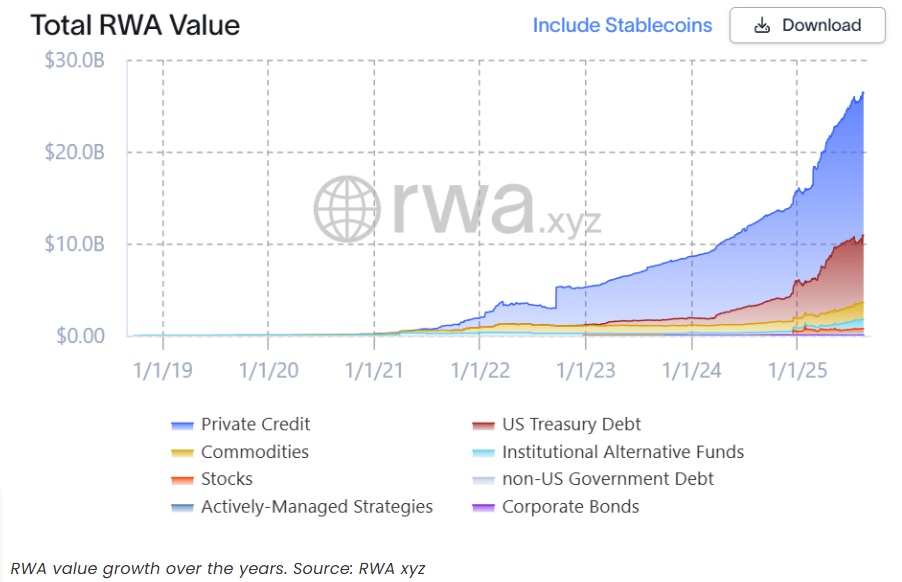
The real-world asset tokenization market has skyrocketed 380% over the past three years, reaching approximately $24 billion as of June 2025. The standard chartered forecast will be up to $30 trillion by 2034, while BCG recognizes the $18.9 trillion market potential by 2033.
For example, Prometheum, a business that creates tokenized securities, raised $20 million in December to help bring more traditional securities into the blockchain.
Additionally, Digital Asset has set aside $135 million to scale Canton Network, a blockchain built for regulated financial institutions already steering tokenization of bonds, gold and other assets.
Polygon is also working with Capital Système Invessisses to use USDC to issue bonds on behalf of Polygon to advance capital market planning through debt. According to obligate, it reduced intermediaries by 75% and increased the number of issuances up to five times.
Still, Aaron Kaplan Prometheum Co-CEO has expressed concern over speculative tokenization, comparing certain products that lack actual assets backed by gambling. He said regulatory compliance and investor integrity are important.
And despite the hype, liquidity remains fragmented. Most tokenized RWAs still suffer from high barriers such as limited secondary transactions, low number of participants, custody constraints, whitelisting, and limited regulatory frameworks.