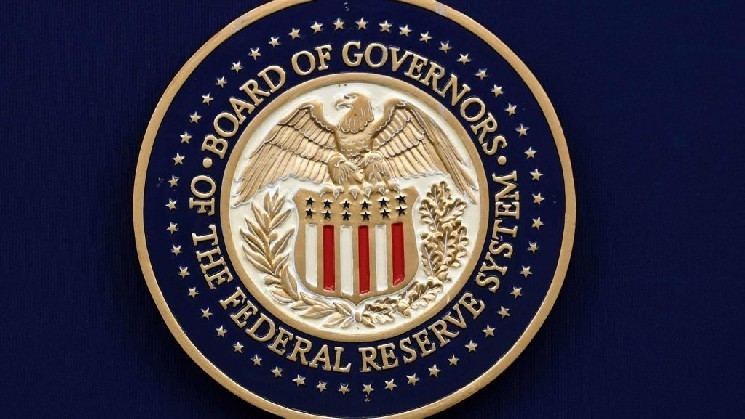
The instability created in global energy markets by the war with Iran in the Middle East could complicate the Fed’s interest rate cut plans. Rising oil and gas prices created new inflationary pressures and significantly dampened expectations for rate cuts.
Economists expect the Fed to keep interest rates unchanged at its March 18th meeting. However, many analysts had previously expected the first rate cut to occur in June. However, the war with Iran caused energy prices to rise rapidly, leading to a reassessment of these projections. Rising energy costs could lead to higher prices in many areas, including transportation, food and utilities, Wall Street analysts said.
This situation poses a difficult balance for the Fed. On the one hand, the central bank is trying to bring inflation down to its target level of 2% a year, but on the other hand, it must support a labor market that is showing signs of slowing. The personal consumption expenditure (PCE) index, one of the Fed’s most closely watched inflation indicators, was released on March 13 and showed that prices continued to rise in January. It is worth noting that this increase occurred before the full impact of the Iran war was felt in energy markets.
There’s a 99% chance the Fed will keep interest rates between 3.5% and 3.75% at its March 18 meeting, according to CME FedWatch data based on futures markets. The same tool calculates a 95% chance that the Fed will not change rates at its April 30th meeting, and a 77% chance at its June meeting. A month ago, these probabilities were 70% and 31%, respectively.
Rising energy prices have some economists thinking the Fed may not cut rates this year. Gregory Daco, chief economist at EY Parthenon, said he revised his base case as inflation expectations rose and now expects only one 25 basis point rate cut in 2026, likely in December. Darko said he can’t completely rule out the possibility that the Fed won’t cut rates at all in 2026.
Some analysts are even going further and suggesting the Fed could raise rates in 2026 to rein in inflation. Sonu Varghese, chief macro strategist at Carson Group, said the current situation is already tough for the Fed, and if inflationary pressures increase, the Fed could start discussing raising rates rather than cutting them later this year.
Another problem facing the Fed is a weakening labor market. U.S. employers laid off 92,000 people in February, a development seen as a surprise by economists. Gus Faucher, an economist at PNC, said the labor market has gradually weakened in recent years and inflation remains higher than the Fed would like.
The fundamental dilemma for the Fed, Fauci said, is that cutting rates to support the labor market could cause inflation to rise again, while holding interest rates steady could further weaken the labor market.
Meanwhile, the Fed’s future leadership is also a subject of debate. Gregory Darko said that if Kevin Warsh is confirmed as Fed chair, he will need to demonstrate that his monetary policy views are based on economic rather than political grounds.
*This is not investment advice.