


Tether CEO Paolo Ardoino and market analysts have pushed back against S&P Global’s downgrade on USDt’s (USDT) ability to maintain a dollar peg, saying the rating agency does not take into account all of Tether’s assets and earnings.
According to Ardoino, referring to Tether’s third quarter certification report, Tether Group’s total assets were approximately $215 billion at the end of the third quarter of 2025, and total stablecoin debt was approximately $184.5 billion. He added:
“As of the end of the third quarter of 2025, Tether had stablecoin reserves of approximately $184.5 billion, plus excess capital of approximately $7 billion, and an additional approximately $23 billion in retained earnings as part of Tether Group Capital.
“S&P made the same mistake by not taking into account the additional group equity and the approximately $500 million in monthly underlying profits generated from U.S. Treasury yields alone,” Ardoino continued.
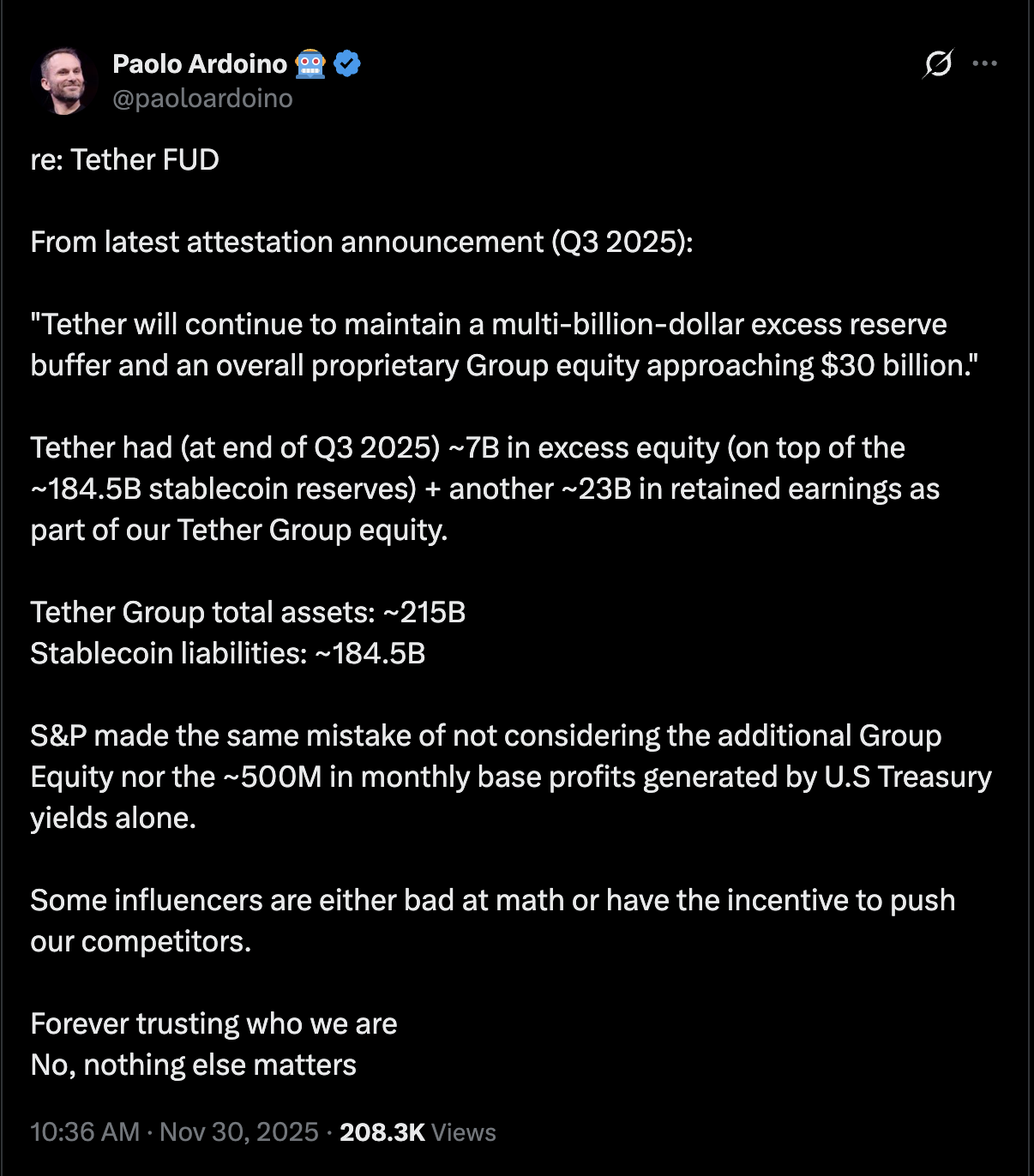
sauce: Paolo Ardoino
S&P Global on Wednesday downgraded USDt’s dollar-pegged rating to “weak,” the company’s lowest rating, raising fear, uncertainty and doubt from some analysts about the company, which has become a key part of the crypto market infrastructure.
Related: Tether accelerates entry into commodity financing with cash and USDt credits
Analysts discuss Tether’s balance sheet fundamentals
Arthur Hayes, a market analyst and founder of cryptocurrency exchange BitMEX, speculated that Tether may be buying large amounts of gold and BTC to make up for the lack of income due to lower U.S. Treasury yields.
Hayes said the value of gold and BTC should rise as the Federal Reserve lowers interest rates, but at the same time warned that a sharp correction in these assets could cause difficulties for Tether.
“If the gold and BTC positions decline by about 30%, the assets will disappear and USDt will theoretically become insolvent,” he said.
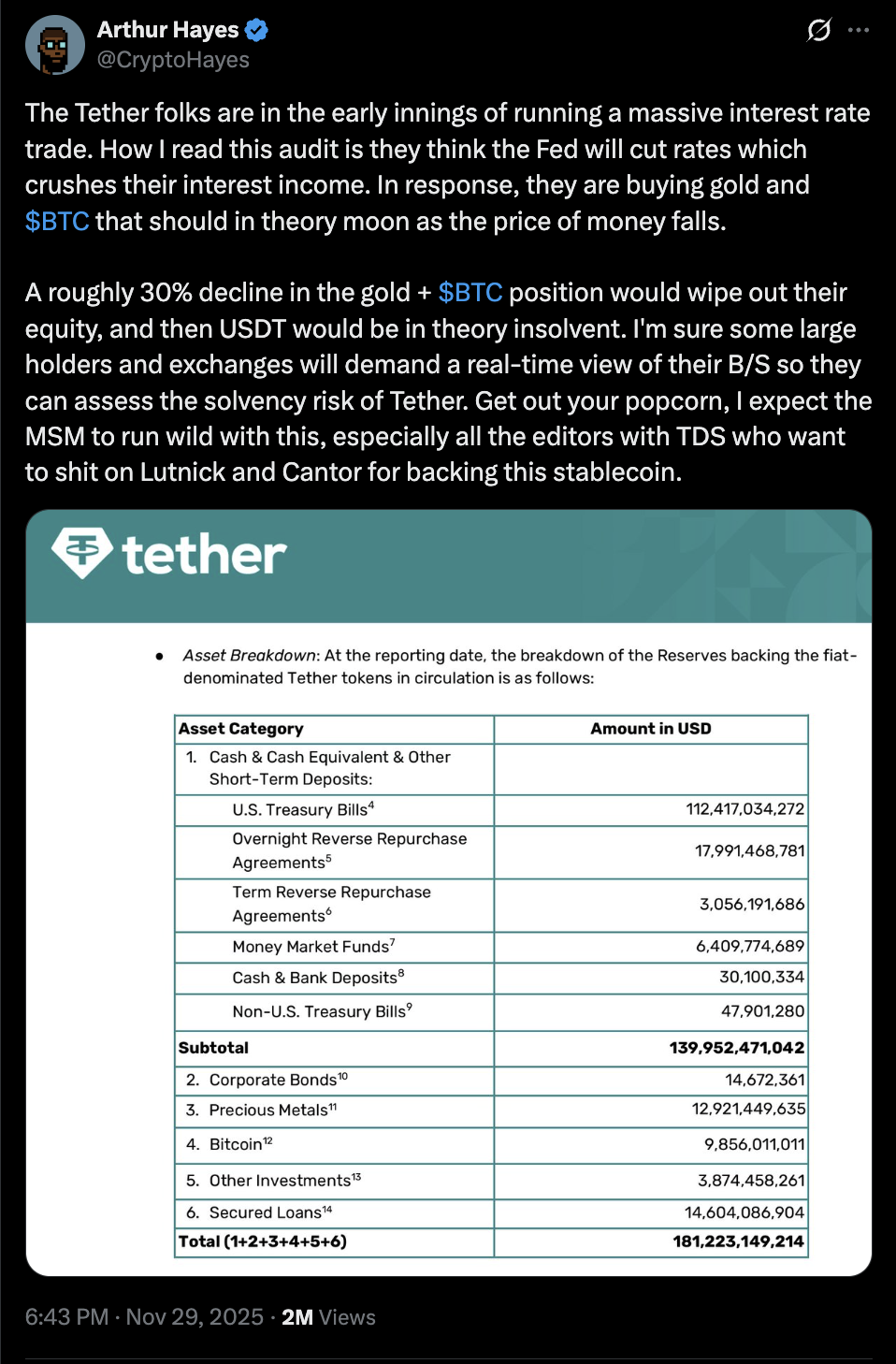
sauce: Arthur Hayes
Joseph Ayoub, former chief digital asset analyst at financial services giant Citi, said he spent “hundreds of hours” researching Tether as an analyst at the firm and rejected Hayes’ analysis.
Ayoub said Tether has more surplus assets than reported, has a highly profitable business generating billions of dollars in interest income with just 150 employees, and is better collateralized than traditional banks.
magazine: The GENIUS Act reopens the door to meta stablecoins, but will it work?