
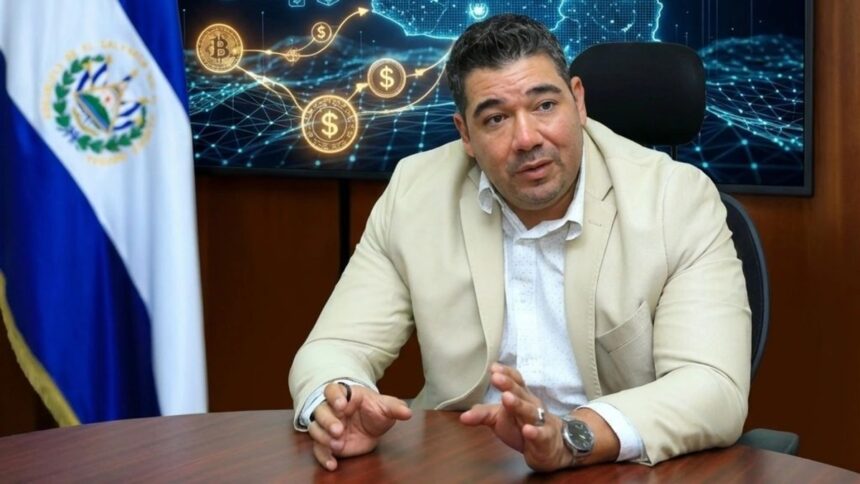
Bitcoin (BTC) and cryptocurrency peer-to-peer (P2P) markets have become important tools for millions of people in Latin America, particularly in countries with high inflation and low financial inclusion. But the expansion of these platforms without a clear regulatory framework has turned much of the continent into what he calls the digital “wild west,” according to Juan Carlos Reyes, head of El Salvador’s National Commission for Digital Assets (CNAD).
According to Reyes, “Many users walk a gray area between innovation and lack of protection.” In his view, the lack of clear regulation of P2P markets in most countries in Latin America puts users at risk and “creates a digital ‘wild west.'” “The lack of regulation leaves users vulnerable,” he said.
A P2P cryptocurrency marketplace is a system where buyers and sellers directly negotiate the price, payment method, and quantity of digital assets, with the platform acting solely as an escrow to secure the transaction.
Without proper oversight, he said, “thousands of people will fall victim to hopeless fraud.” He then cited the example of El Salvador, where “there are documented cases of people being imprisoned for falsely participating in money laundering schemes through unregulated platforms.”
Regarding the situation, he said: This is more serious in economies with unstable currencies.Argentina, Venezuela, Bolivia, etc. Continued devaluations in these countries are creating strong demand for more stable assets, he said.
According to Juan Carlos Reyes, P2P markets are more than just sending money. “However, it has become a black market for currency, exposing ordinary users to criminal risks that they do not even understand,” he warned.
What are the risks of P2P?
Alexis Lugo, a Venezuelan professor and director of the Cryptoneros Education Initiative, agrees with the Salvadoran regulator’s vision.
In a conversation with CriptoNoticias, Lugo pointed out that malicious activities related to P2P markets typically occur in different countries. If there are economic, financial or exchange distortions. In other words, the economic environment is not healthy.
“In a hyperinflationary economy, if you don’t have some kind of regulation, if you don’t have some kind of action within the platform, if you don’t have clear rules, then of course you could end up in the Wild West,” Lugo said.
According to digital economy expert Lugo, the most potential risks in using P2P are triangulation and fraud.
For him, the following can always happen when using P2P: A record of suspicious activity is submitted to authorities Percentage of countries that received funds from accounts or wallets identified as malicious.
Actually this is one of them Why people who operate in P2P are usually arrested or investigated. In the case of Venezuela, CriptoNoticias has heard cases of people summoned to appear before state institutions on accusations of triangulation. There have also been reports of closures or restrictions on dozens of bank accounts used to handle virtual currencies.
In this context, Lugo asserts that the best way to mitigate these risks is to keep banking data up-to-date and maintain the order of accounting records for activities performed P2P.
Be clear about what you’re doing, how you’re doing it, and show that you can prove in good faith that you’re not doing anything malicious if they find any records of suspicious activity or if you get a call from a national security agency because you’re embroiled in some kind of triangulation.
Professor Alexis Lugo, Director of Kryptoneros.
P2P also “an important alternative”
Despite the identified risks, Juan Carlos Reyes highlighted the benefits of P2P markets. He recalled that traditional remittances in Latin America are fraught with “long lines, excessive fees and unnecessary delays.”
In contrast, stablecoins and P2P platforms allow for “instant, free, global” transfers, he noted. On the other hand, for people who do not have bank accounts, These tools represent “significant alternatives” compared to traditional systems, he explained.
The business strategist also commented that external factors, such as tariffs imposed by President Donald Trump’s administration on traditional remittances, are accelerating the use of stablecoins as a tax-free option. In his opinion, This has led to rapid growth in the P2P market.
Indeed, recent data confirms the dynamism of these markets in the region. In Venezuela, the bolivar has established itself as the most active fiat currency on the Binance P2P system, according to a report from CriptoNoticias.
According to P2P.Army data, the currency registered more than 225,000 updates in its order book in one day and maintained an active offer volume of more than $5.3 million.
This level of activity reflects intense competition among traders who constantly adjust rates to ensure liquidity. Furthermore, it is The central role of digital assets in the Venezuelan economyexperienced years of instability and currency depreciation.
Similarly, the use of P2P markets is expanding through decentralized tools. On Telegram, the lnp2pbot bot, developed by Venezuelan programmer Francisco Calderon and active for more than four years, allows you to buy and sell Bitcoin directly without any Know Your Customer (KYC) protocols. The service has more than 30,000 registered users in nearly 100 countries. It only requires a Lightning wallet to work.
For Reyes, the rise of P2P commerce in the region is because this mechanism is “the best option for the unbanked, especially in rural areas and countries with low financial penetration.”
But he argued that the lack of protection is creating “silent suffering, including those who are victims of fraud, fraud and legal misunderstandings.”
So, according to computer scientists, the challenge is not to stop technology; But regulate it to protect those who depend on it.. «The average user has already chosen that they prefer efficiency, speed and freedom. Now we need to ensure that this choice does not become a text,” he stressed.