


Despite VALR CEO Farzam Ehsani’s bold macro predictions attracting attention, Bitcoin prices are firming up after a shallow 1% drop from the previous day.
His paper points out that there would be a significant upside if capital turnover were to shift away from precious metals. For now, Bitcoin needs to clear several short-term pressure zones before that scenario plays out.
Why VALR CEO thinks the upswing is delayed rather than ruled out
Ehsani’s view focuses on capital turnover rather than direct chart patterns. This is what he said in an exclusive article to BeInCrypto:
“It is likely that aggressive price increases for Bitcoin and Ethereum will begin after the rally in precious metals markets subsides,” he said.
He directly links Bitcoin’s sideways movement to the fate of global capital:
“Over the past year, the price of gold has increased by 69% and silver has surged by 161%. As a result, the upward momentum of major crypto assets has stalled somewhat,” he highlighted.
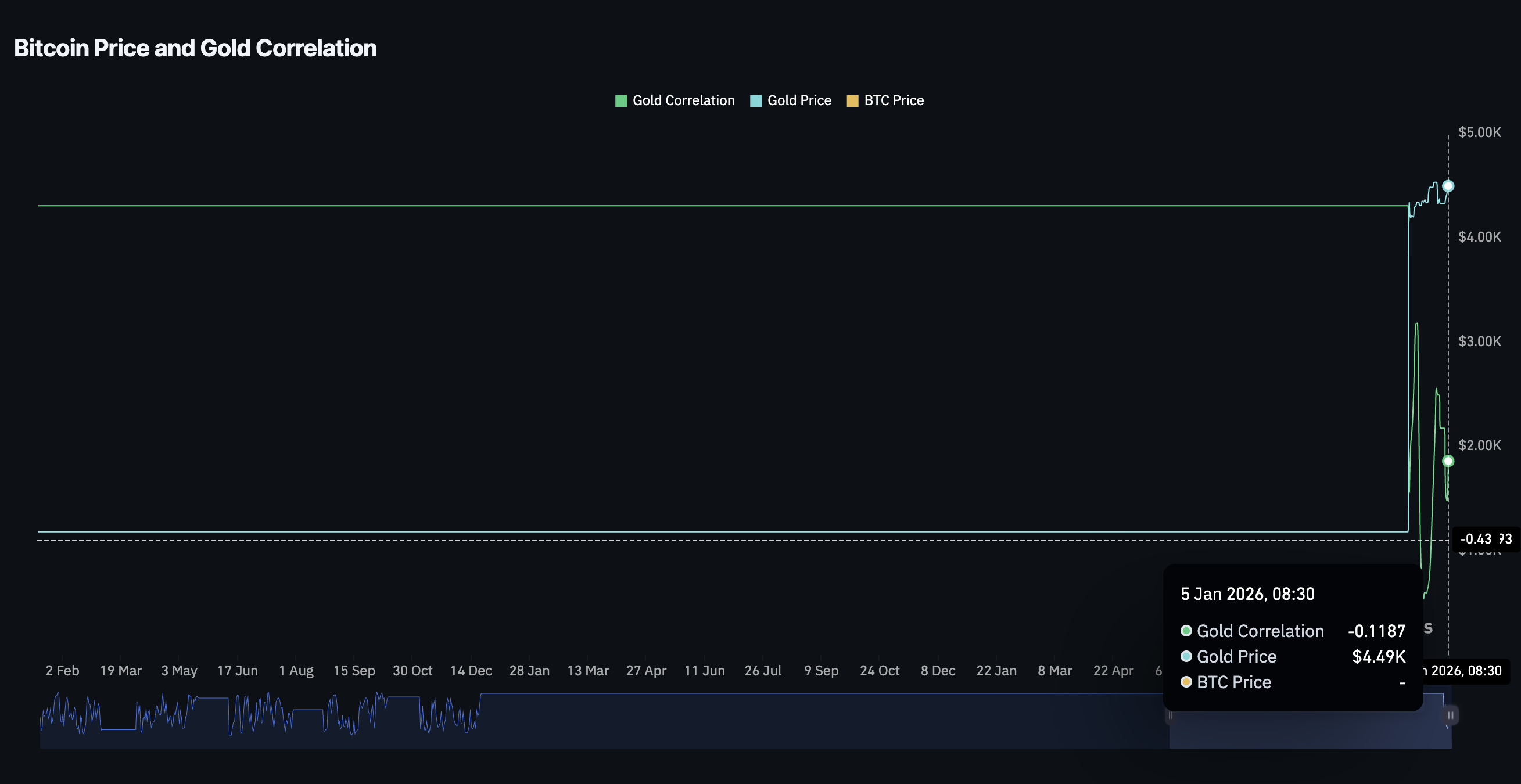
This relationship is visible in the data. The short-term correlation between Bitcoin and gold is currently around -0.11, indicating that the two assets are moving in slightly opposite directions. Cryptocurrencies may have become less urgent as capital chases metals amid geopolitical stress and liquidity crunch.
Want more token insights like this? Sign up for Editor Harsh Notariya’s Daily Crypto Newsletter here.
Importantly, Ehsani does not see this as a structural weakness.
“Long-term Bitcoin holders have stopped selling for the first time since July,” he said.
This would result in the loss of a major source of supply. He describes the current phase as follows:
“It’s the calm before the storm, which is typically followed by a broad rally in the crypto market,” he said.
His basic scenario assumes changes in the dynamics of metals.
“In the first quarter of 2026, Bitcoin could rise to $130,000…However, absent changes in the price trends of gold and silver, this scenario is unlikely to occur,” he further added.
The macro theory is clear. Bitcoin’s rise is postponed by capital allocation, but not undermined by fundamentals. However, on-chain also has some hurdles.
Short-term holders are creating their first real test
As Ehsani emphasized, long-term holders have pulled back from selling, but short-term holders are now in control of short-term price movements. Short-term holders are wallets that have acquired Bitcoin within approximately the past 155 days and tend to react strongly around the break-even point.
Its break-even level is the realized price for short-term holders, currently around $99,100. This is the average cost for recent buyers. Behavior changes around this zone. Below it is a holder underwater. Nearby they seek solace. And unless capital turnover comes in to make up for it, it could trigger a wave of selling.
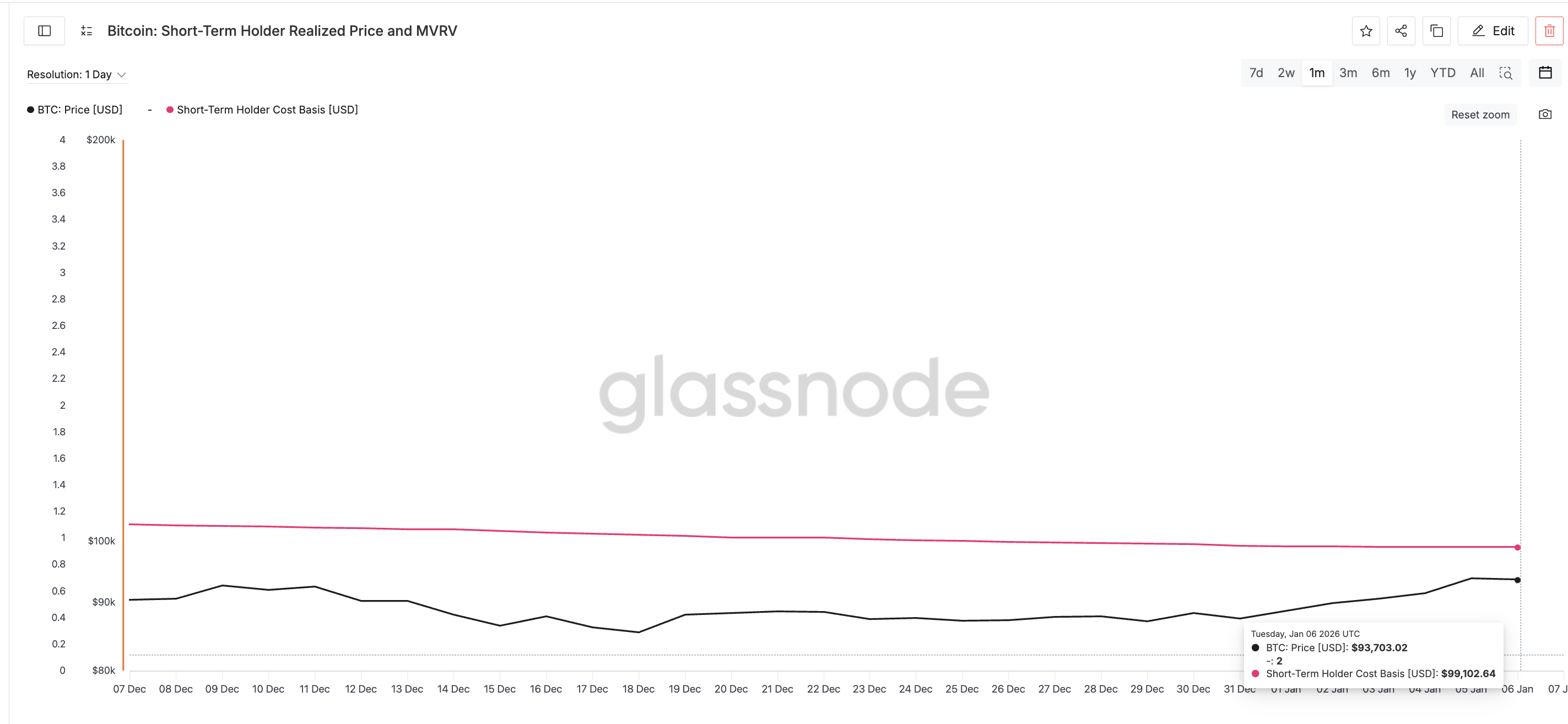
STH realized price: Glassnode
This pressure manifests itself in NUPL (net unrealized gains and losses) for short-term holders. On December 18th, short-term NUPL fell to around -0.18, indicating a significant loss. It has since climbed towards -0.05, meaning losses are narrowing.
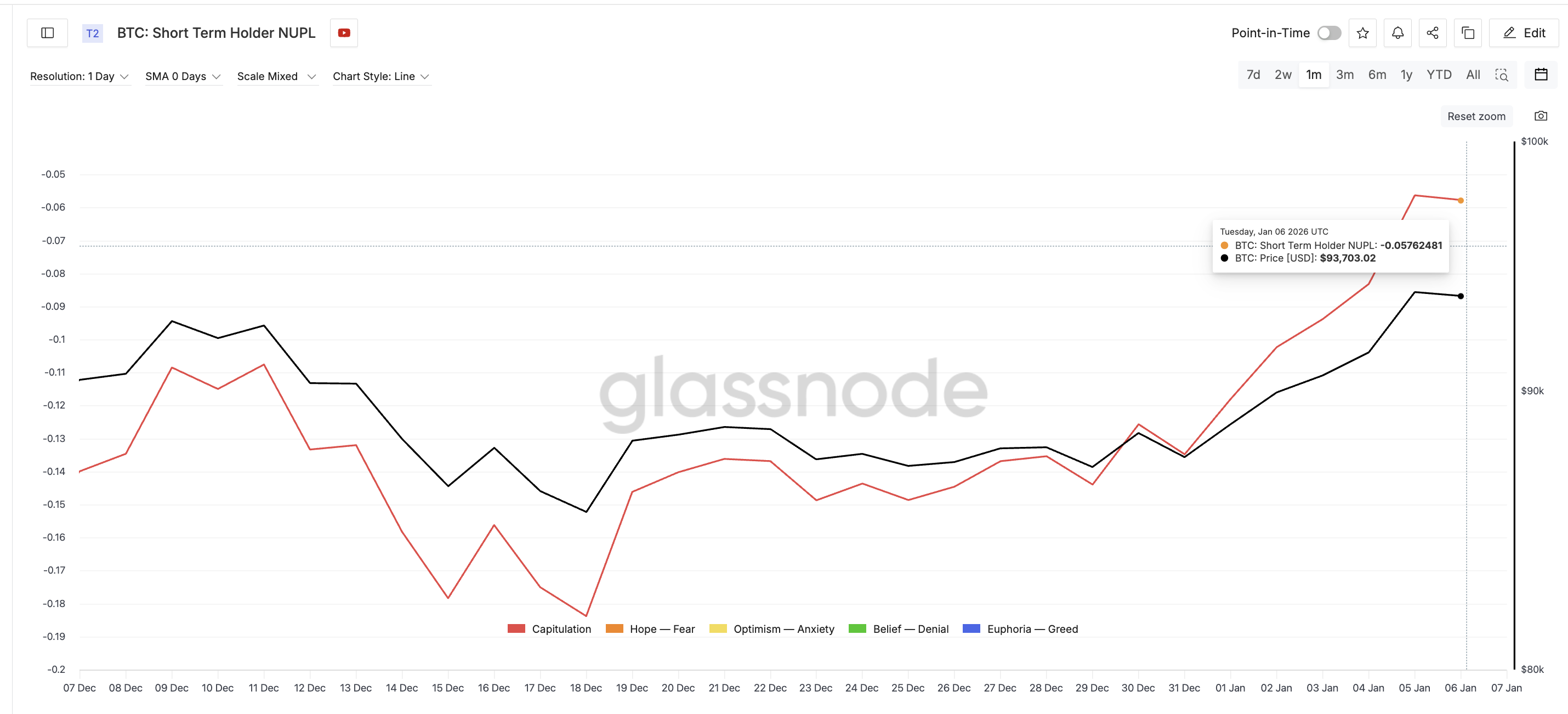
NUPL on the Rise: Glassnode
When NUPL approaches zero, selling often increases, not because the market is bearish, but because traders want to exit the trade without losing money. This explains why Bitcoin remains hesitant around $99,100 even as macro signals improve.
Bitcoin price level that determines whether the prediction is correct or not
Bitcoin’s price chart structure focuses on these pressures.
BTC price is consolidating within a cup-and-handle pattern, a bullish continuation structure, after rebounding from resistance near $95,180. For this pattern to resolve higher, Bitcoin will need to clear two important hurdles if a neckline breakout above $95,180 occurs first.
The initial price is around $99,400, roughly in line with the price realized by short-term holders. A daily close above this zone indicates that breakeven selling pressure has been absorbed.
The second hurdle is near $101,600, which coincides with the 365-day moving average. This moving average tracks Bitcoin’s long-term trend over a one-year period. Getting it back often marks a transition from consolidation to expansion.
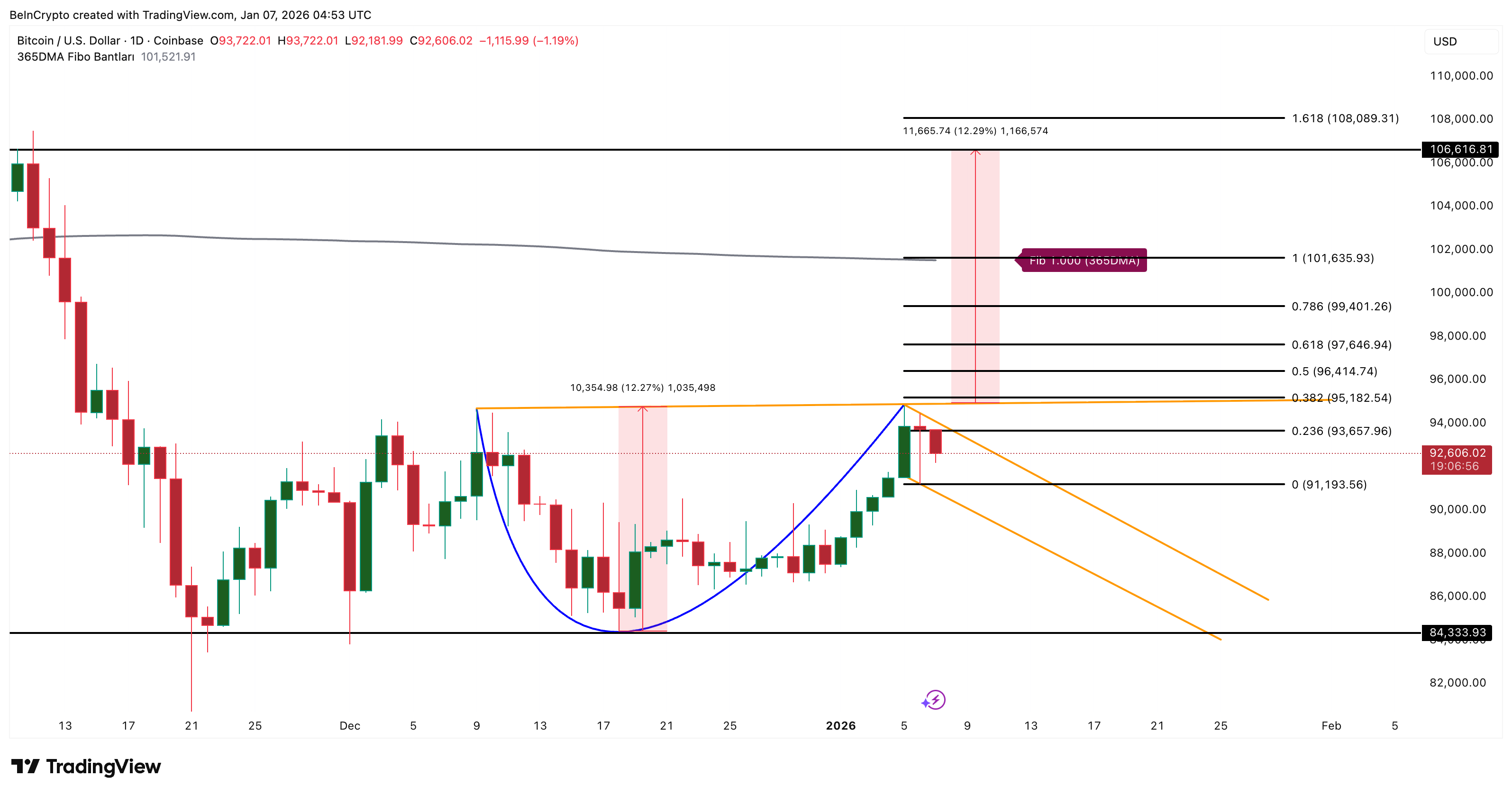
If the price regains both levels at the daily close, Bitcoin’s structure supports a continuation towards higher goals, consistent with Ehsani’s macro theory. Therefore, the first primary target will be $108,000 per chart expansion.
On the downside, the bullish setup remains in place above the lower end of the handle at $91,900. A further break below the cup floor at $84,300 would invalidate the structure and delay the upside, but it would not negate the broader theory.
Bitcoin’s long-term story remains constructive. When I say short-term, I’m just looking for evidence that goes beyond the short-term barrier. Removing pressure from short-term holders is the last step before capital turnover does the rest.
VALR CEO’s Bitcoin Bullish Predictions Face a ‘Short-Term’ Test This article was first published on BeInCrypto.