

U.S. stocks were mixed on Monday, shaking off early-morning declines tied to escalating Middle East conflict as investors reduced exposure to travel stocks and some tech stocks, while switching to energy and defense stocks.
Energy and defense stocks rise due to Middle East conflict, stock prices are in turmoil
The Dow Jones Industrial Average was down 0.08% to $48,936.56 by midday, after dropping more than 500 points early on. The S&P 500 rose 0.06% to 6,883.21 and the Nasdaq Composite rose 0.35% to 22,746.56, rebounding from the sharp decline recorded in the morning.
Trading volumes were up today, with more than 3 billion shares traded on the Nasdaq, reflecting increased activity as geopolitical headlines crisscrossed the wires throughout the day. Markets opened sharply lower on reports of increased U.S. and Israeli attacks against Iran, including the death of a senior Iranian official and retaliation against regional assets.
Oil prices rose 8% to 9% and gold rose 2.8% to $5,393 an ounce as investors sought safe havens. The CBOE Volatility Index rose above 21, indicating increased demand for portfolio protection. But by midday, buyers had stepped in, limiting the damage to the broader index despite continued uncertainty.
Defense contractors led the gains. Lockheed Martin rose 6.7%; $RTX Northrop Grumman rose 6.6% and rose 5.2% on expectations that continued conflict could support increased military spending. L3Harris Technologies rose 5.6% and General Dynamics rose 3%.
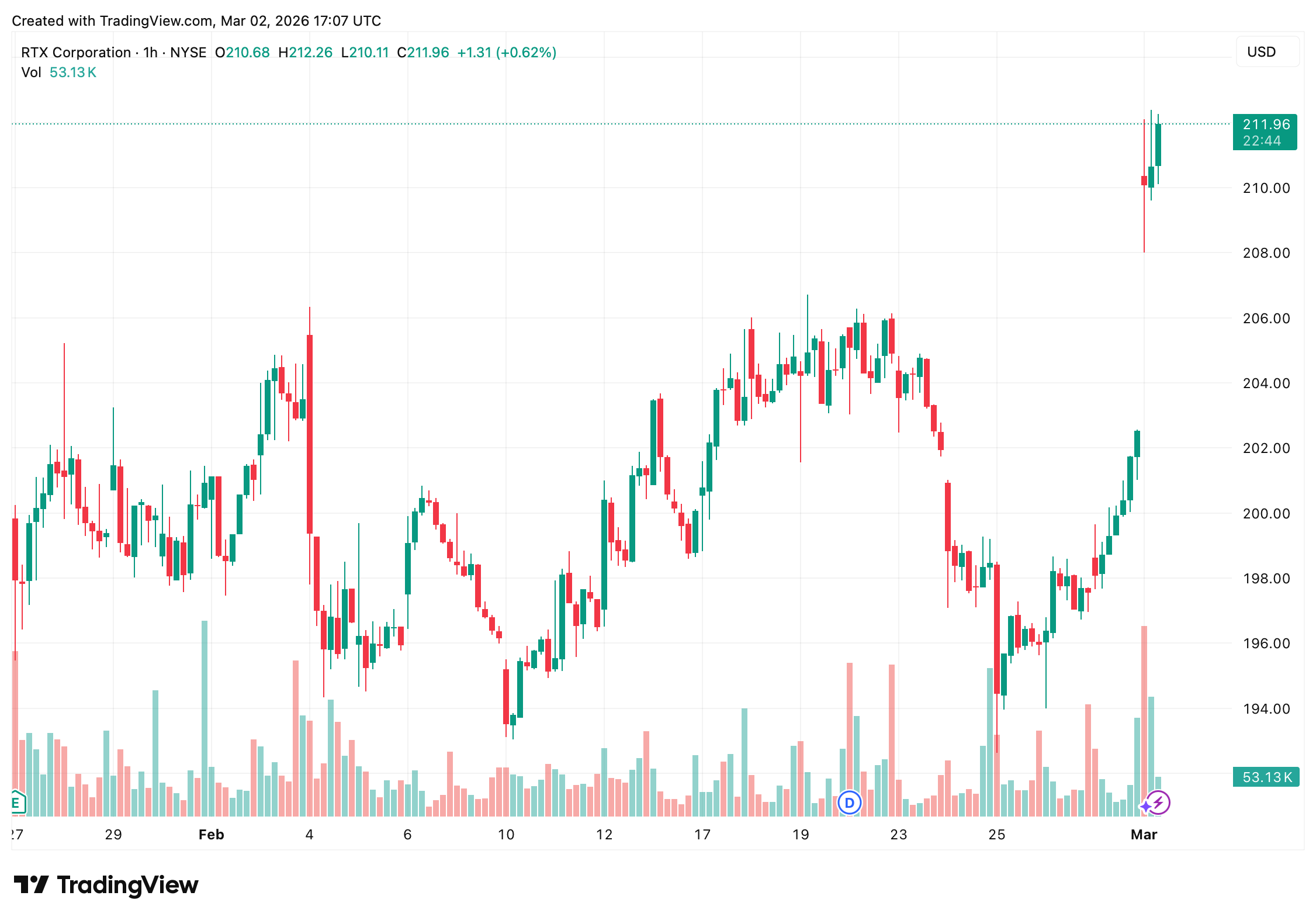
$RTX The stock price will be quoted immediately after 12:00 pm (EST) on March 2nd.
Analysts expect U.S. defense spending to rise to about $961.6 billion in fiscal year 2026 from the previous year, as the administration seeks budget expansion. Some strategists cautioned that sharp single-session moves could reflect positioning adjustments as well as longer-term earnings revisions.
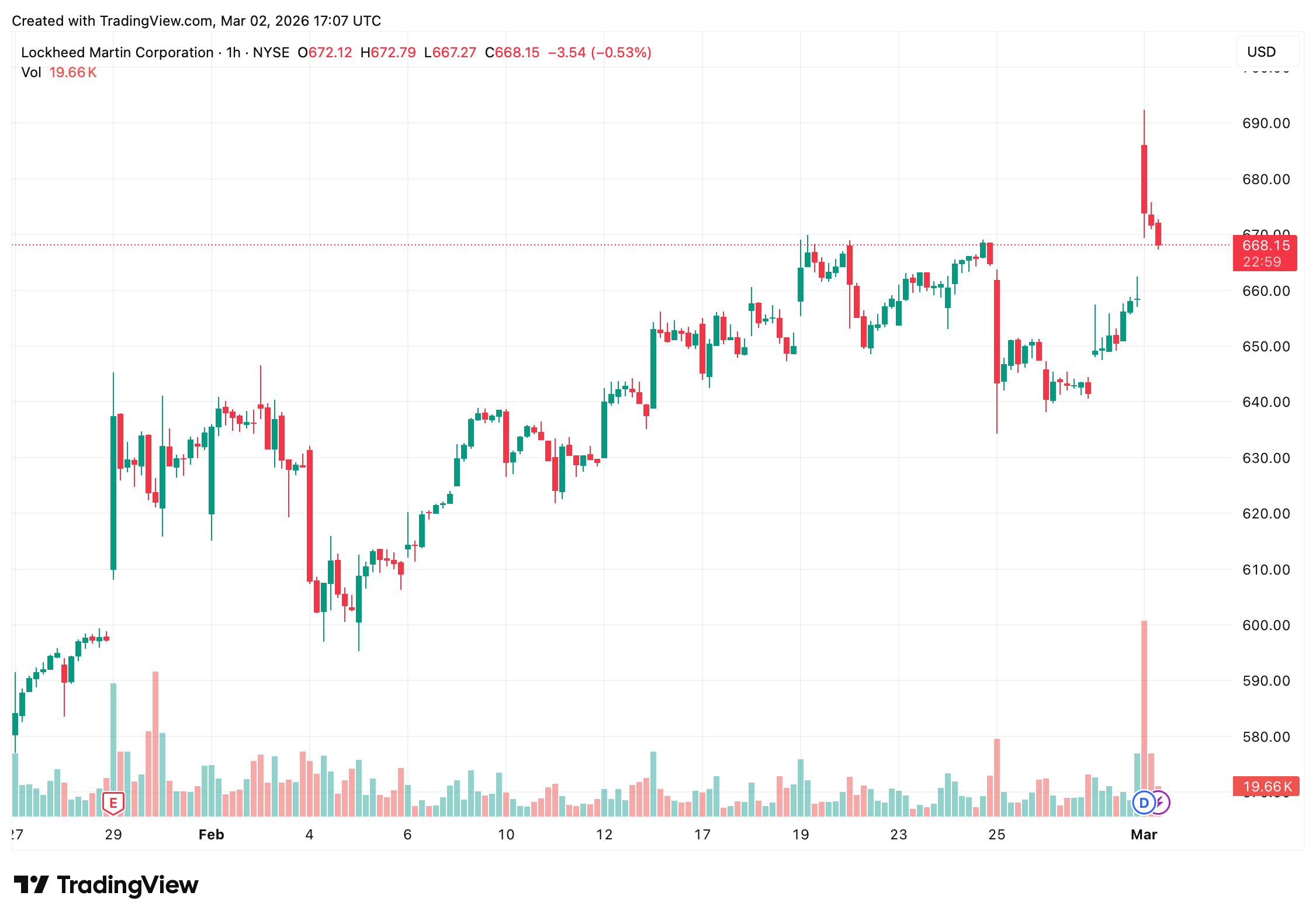
Lockheed Martin went public just after 12pm ET on March 2nd.
Energy was the best performing S&P sector, rising 1.4%. Exxon Mobil rose about 4%, Chevron rose about 3% and Occidental Petroleum rose 6.7% as oil prices neared an eight-month high of $78 a barrel. In contrast, travel stocks fell on concerns about rising fuel costs and possible flight disruptions. United Airlines fell 5.8%, Delta Air Lines fell 5.7%, and cruise lines Carnival and Norwegian Cruise Line each fell more than 7%. Technology stocks were mixed. Nvidia fell 1.3%, but other large-cap stocks recovered from early losses.
Economic indicators provided a more stable background. The Japan Institute for Supply Management announced that the Manufacturing Purchasing Managers’ Index fell from 52.6 to 51.5 in February, indicating continued expansion, albeit at a modest pace. The employment index improved to 48.8, but remains below 50, the dividing line between growth and contraction.
Investors are now focused on Wednesday’s ISM service report and Friday’s non-farm jobs report, with economists expecting payrolls to rise by about 60,000 in February and the unemployment rate to be near 4.3%. Retail sales are expected to post a modest 0.1% increase in the second half of this week.
Rising energy prices have also reignited inflation concerns. Key consumer spending inflation was recently 2.6% year over year, but analysts said persistent oil gains could complicate the Fed’s policy. The central bank is widely expected to leave interest rates unchanged at its March 18 meeting, and markets are not pricing in any immediate rate cuts.
For the rest of the week, traders will be balancing upcoming economic reports with geopolitical developments. Historically, major U.S. indexes have recovered from initial geopolitical shocks, but volatility often persists in the short term. Sector rotation is likely to continue to characterize trading in early March, with energy and defense stocks gaining momentum and consumer stocks under pressure.
Frequently asked questions 🔎
- Why did the stock market move on March 2, 2026? U.S. and Israeli attacks on Iran pushed oil and gold higher, increasing volatility and sector rotation in U.S. stocks.
- Which sectors have driven today’s market? Energy and defense stocks outperformed, while airlines and cruise lines lagged.
- How did the Dow, S&P 500, and Nasdaq close? The Dow fell 0.08%, the S&P 500 rose 0.06% and the Nasdaq rose 0.35%.
- What economic data are investors watching this week? Traders are watching the ISM services data and Friday’s U.S. jobs report for clues on growth and Federal Reserve policy.